 By admin
 Many women in their late 30s or early 40s suddenly notice their periods becoming unpredictable or waves of heat sweeping over them without warning. These shifts can quickly bring frustration, exhaustion, and a sense of confusion that affects work, sleep, and even close relationships. The uncertainty often leaves you feeling isolated as your body seems to change faster than expected.
But here’s the surprising part most women miss until later: recognizing these early signals can open the door to simple daily habits that help you feel more prepared and in tune with your body, and we’ll share one often-overlooked connection at the very end of this guide.
What Is Early Menopause?
Early menopause happens when a woman’s menstrual cycles stop before age 45, while premature menopause occurs before age 40. According to the Cleveland Clinic, this transition is defined as going 12 months without a period, and it affects about 5 percent of women. The ovaries produce less estrogen and progesterone earlier than usual.
While the average age of natural menopause is around 51, early cases share the same symptoms as typical menopause but arrive sooner. Research from the Mayo Clinic notes that changes can start subtly in perimenopause and accelerate if menopause begins early.
10 Common Signs of Early Menopause to Watch For
The symptoms of early menopause can vary from woman to woman, but certain patterns appear frequently in medical studies. Here are 10 key signs compiled from sources like the NHS and Yale Medicine:
- Irregular or missed periods: Your monthly visitor playing hide-and-seek? Cycles getting shorter, longer, or just ghosting you completely? This is usually the first red flag, ladies!
- Hot flashes and night sweats: Suddenly feeling like you’re on fire, flushing beet-red, and sweating buckets? These unwelcome guests crash your day and steal your sleep.
- Vaginal dryness and discomfort: Down there feeling like the Sahara Desert? This can cause irritation and make intimacy a real drag, as countless health diagrams subtly hint at.
- Mood changes: One minute you’re fine, the next you’re a raging she-beast or a teary mess? Blame those hormone swings playing havoc with your head.
- Sleep disturbances: Counting sheep doing nothing? Tossing, turning, or waking up drenched from night sweats? Your peaceful slumber is officially on notice.
- Fatigue and low energy: Feeling absolutely wiped out, even after a solid 8 hours? That’s not just ‘busy’; it’s a deep, soul-crushing exhaustion.
- Skin and hair changes: Your skin feeling like sandpaper, hair thinning out, and those fine lines around your eyes and face suddenly screaming ‘hello’? It’s not just age, honey.
- Headaches or migraines: Hormones doing a dance number in your head, bringing on more frequent or killer headaches? Yeah, that’s a classic move.
- Joint and muscle aches: Waking up feeling stiff as a board or with new back pain that just won’t quit? Your bones might be sending you a message about density changes.
- Brain fog: Losing your train of thought mid-sentence, forgetting why you walked into a room, or struggling to focus? Welcome to the ‘brain scramble’ club.
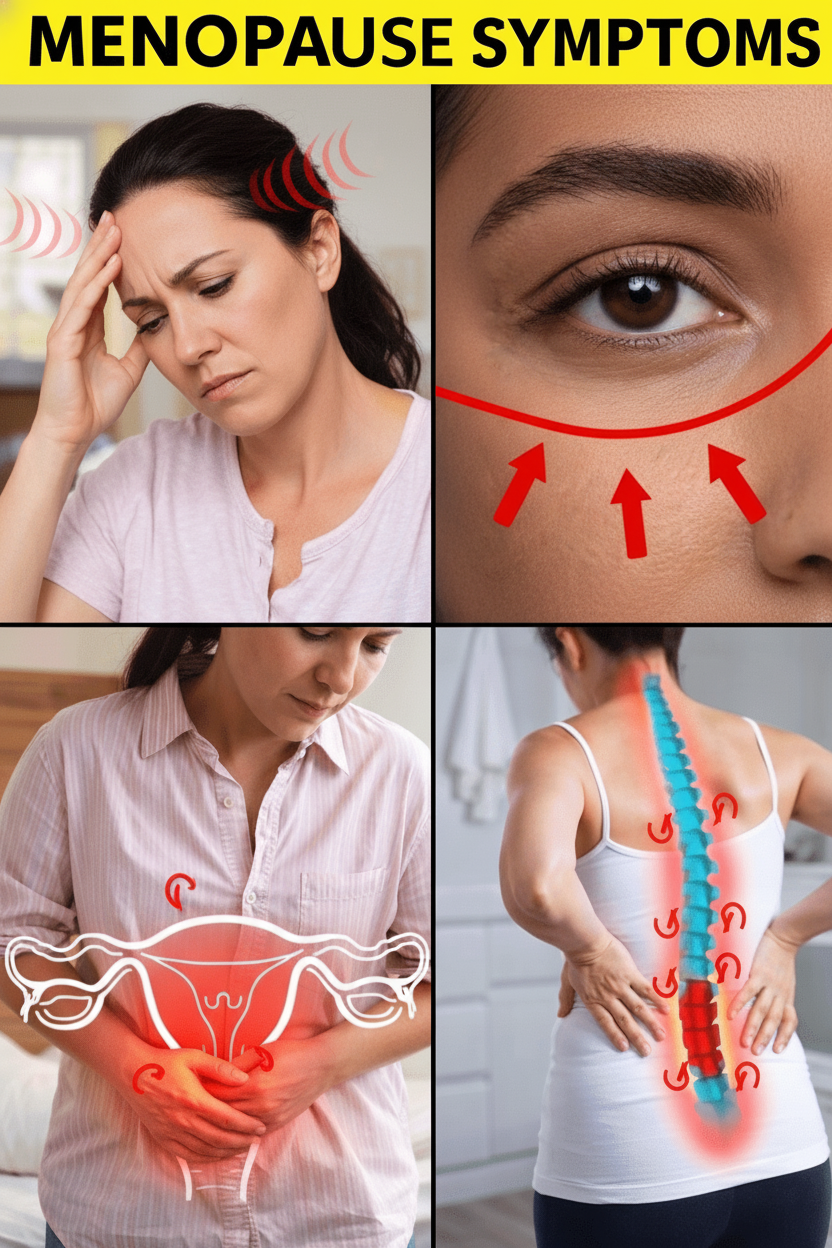
These signs align closely with common visual depictions of menopause, such as head tenderness, under-eye skin shifts, pelvic area sensitivity, and spine discomfort. But wait—there’s more to the story.
Not every woman experiences all 10 signs, and their intensity can ebb and flow. Your body keeps you guessing!
Why Early Menopause Happens and Why It Matters
Causes often remain unknown, though family history, smoking, certain medical treatments like chemotherapy, autoimmune conditions, or surgery can contribute, per the Office on Women’s Health.
Early menopause may bring unique long-term considerations for bone and heart health because estrogen levels drop sooner. Studies highlight the importance of staying informed so you can have productive conversations with your healthcare provider.
Practical Steps You Can Take Right Now to Track Your Symptoms
Here is a simple, step-by-step approach many women use to stay on top of changes:
- Keep a daily symptom journal: Grab a notebook or a phone app and start logging everything. Period dates, how often those hot flashes hit, your mood swings, your energy levels – track it all like a detective!
- Schedule a check-in: If you’re under 45 and your body’s sending you multiple SOS signals, don’t wait! Book that doctor’s appointment pronto to chat about blood tests and hormone levels. Be your own advocate!
- Build supportive habits: This isn’t rocket science, but it works. Get moving consistently, eat like you love your body (balanced meals, duh!), and find routines that actually chill you out. Small steps, huge payoffs!
These steps empower you to understand your body without waiting for symptoms to intensify.
Foods and Everyday Ingredients Worth Exploring
Some women pay attention to certain nutrient-rich foods during this time, based on general wellness research. Here are a few commonly discussed options:
- Flaxseeds: These little powerhouses are often tossed into smoothies or yogurt. Think of them as tiny natural helpers.
- Leafy greens and calcium sources: Load up on spinach, kale, and fortified plant milks. Your bones will thank you, seriously!
- Soy foods: Tofu and edamame in your stir-fries aren’t just tasty; some studies are checking out their plant-based mojo. Worth a shot!
- Omega-3 rich options: Get your dose of fatty fish or walnuts. These brain and body boosters are always a good idea.
So there you have it, the real talk on early menopause signs and what you can do about them. Don’t let your body’s changes catch you off guard – be informed, be proactive, and be kind to yourself! Your amazing journey continues, and we’re here to help you every step of the way.
Want more no-nonsense health insights and tips? Dive into our other articles on Herbal Medicine, Home Tips, and living a Healthy Life. We’ve got your back!
Stay strong, stay savvy, and keep thriving!
The team at dogpjs.com