 By admin
 Navigating the demands of modern life often leaves us burdened by persistent stress. From the persistent ache in our shoulders due to prolonged desk work to the relentless mental chatter that hinders true relaxation, many experience a pervasive feeling of being perpetually ‘on.’ This constant strain can deplete your energy, create physical tension, and cloud your mental clarity, sometimes even after adequate rest. Fortunately, accessible and gentle practices, such as certain yoga postures, provide effective avenues to help your body naturally de-stress and regain equilibrium. Among these, one particular pose is widely celebrated for its profound calming properties and straightforward execution. What precisely makes this specific posture so remarkably potent for fostering deep relaxation? Continue reading to discover the scientific evidence and practical methods for integrating this powerful ‘reset button’ into your daily regimen – you may be astonished by its rapid impact.
What Is Child’s Pose (Balasana)?
Balasana, universally recognized as Child’s Pose, is a fundamental restorative yoga posture that gently emulates a natural fetal position. While frequently utilized as a tranquil transitional or resting posture within yoga sequences, its therapeutic advantages extend far beyond the yoga mat. To perform this pose, one kneels on the floor, allowing the hips to settle back onto the heels, then folds the upper body forward to rest over the thighs. Arms can be extended forward or comfortably positioned alongside the body. The forehead softly connects with the mat (or a supportive cushion), fostering a profound sense of introspection and gentle release. Extensive research and expert consensus underscore how such forward-folding postures intrinsically promote deeper, more regulated breathing, thereby facilitating the body’s natural transition into a state of profound relaxation. Esteemed health organizations, including the Cleveland Clinic, emphasize that Child’s Pose uniquely engages the parasympathetic nervous system – commonly referred to as the ‘rest and digest’ system – which is crucial for mitigating the physiological impacts of daily stress.
How Child’s Pose Supports Neurological Balance
Emerging research into yoga’s comprehensive practices consistently reveals compelling links to enhanced emotional well-being and a significant reduction in feelings of tension. For instance, a notable randomized controlled study featured in the Journal of Alternative and Complementary Medicine (Streeter et al., 2010) demonstrated that participants engaging in a 12-week yoga regimen experienced superior improvements in mood and anxiety indicators, alongside elevated brain GABA levels – a key neurotransmitter associated with promoting calmness – when compared to a walking group. Although this particular study encompassed a broader yoga program rather than isolating a single posture, restorative poses such as Child’s Pose are widely advocated for their distinct tranquilizing properties. The gentle forward bend inherent in Balasana plays a vital role by encouraging slower, more profound respirations and actively alleviating physical tightness often accumulated in the back, hips, and shoulders – common repositories for stress stemming from sedentary lifestyles. Furthermore, specialists highlight that the simple act of resting the forehead against the mat can induce a profoundly soothing sensation, potentially modulating heart rate and fostering holistic relaxation via innate physiological reflexes. This positions Child’s Pose as an effortlessly gentle method to guide the body into a state of deep unwinding. Yet, its power extends further: the synergistic effect of physical liberation combined with conscious, mindful breathing offers a remarkably potent moment of stillness amidst the daily rush.
The Physical and Mental Relief You Might Notice
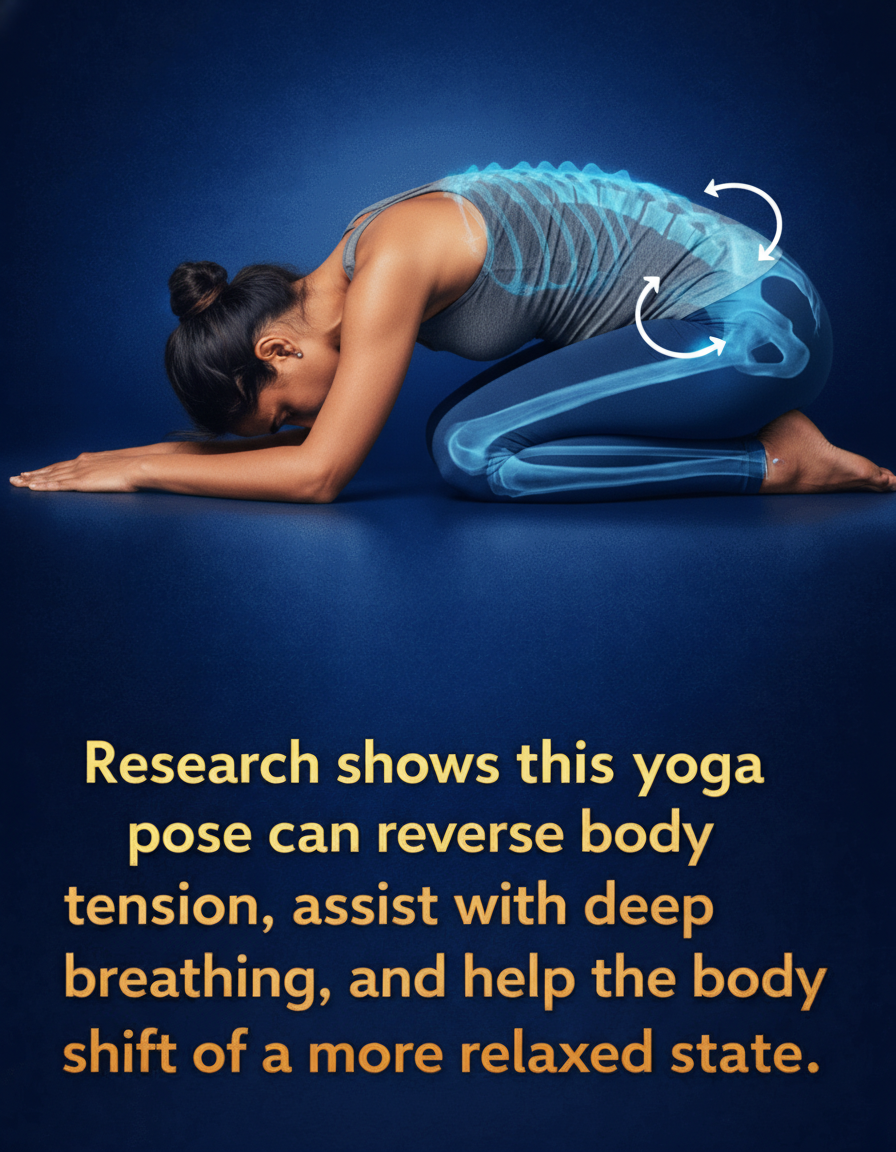
Regularly integrating Child’s Pose into your routine can yield significant and tangible benefits for both your physical and mental well-being:
- Alleviates Accumulated Tension: The subtle yet effective stretch along the spinal column, hips, and shoulders actively works to dissipate tightness often resulting from extended periods of sitting or screen engagement.
- Fosters Deeper Respiration: The forward-folding nature of the pose intuitively guides your breath into the posterior aspects of your torso, facilitating fuller, more tranquil inhalations and exhalations, which are key to stress reduction.
- Cultivates Inner Tranquility: A multitude of individuals who regularly practice Balasana report experiencing a profound sense of inner centeredness and reduced feelings of overwhelm, even after brief periods in the posture.
- Enhances Restful Sleep: Incorporating this restorative pose into your evening ritual can effectively signal to your body that it’s time to decelerate, thereby preparing you for a more profound and rejuvenating sleep.
- Sharpens Mental Acuity: The inherent inward focus of Child’s Pose helps to quiet distracting mental chatter, enabling you to approach subsequent tasks with heightened clarity and improved concentration.
These positive outcomes are consistent with the extensive body of research detailing yoga’s profound efficacy in stress management. Reputable institutions such as Johns Hopkins Medicine and the National Center for Complementary and Integrative Health (NCCIH) frequently underscore yoga’s potential to bolster overall wellness, encompassing crucial aspects like superior emotional regulation and improved sleep quality.
Step-by-Step Guide: How to Practice Child’s Pose Safely
Prepared to experience its calming effects? Follow this beginner-friendly guide to safely practice Child’s Pose:
- Begin on your hands and knees on a supportive surface, such as a yoga mat or a soft rug.
- Bring your big toes together to touch, then gently spread your knees wide apart to a comfortable distance – typically hip-width, or even wider if you experience tightness in your hips.
- As you exhale, slowly lower your hips back towards your heels, allowing them to rest there or just above.
- Fold your upper body forward, letting your torso gently settle between your thighs.
- Extend your arms forward with palms down, or bring them back alongside your body with palms facing up, resting them comfortably.
- Gently rest your forehead on the mat, or use a cushion or block for support if the floor is too far away.
- Breathe deeply and evenly, allowing your body to soften and release any tension. Hold for several breaths, or for as long as feels comfortable and restorative.
”
}
“`