 By admin
 Enhance Posture After 60: A Gentle 4-Minute Routine Rooted in Japanese Wisdom
Many individuals over the age of 60 frequently observe a noticeable forward shift in their head posture, often leading to discomfort during everyday activities such as reading, walking, or even just sitting. This prevalent postural change commonly arises from years of habitual movements, like prolonged screen time or carrying heavy items, which contribute to increased tension in the neck and shoulders. Consequently, simple movements can begin to feel more strenuous. It’s understandable to feel discouraged when attempts to sit or stand straighter quickly revert to old patterns. However, what if there was a straightforward, equipment-free method that gently guided your body towards improved alignment? Keep reading, as we’ll unveil a surprising element in the final step that brings everything together for lasting ease and better posture.
Understanding Forward Head Posture and Its Impact on Seniors
Forward head posture (FHP) occurs when the head extends forward beyond the shoulders, a pattern that typically develops gradually over an extended period. Research published in reputable journals, such as The Spine Journal, indicates a strong correlation between FHP and heightened neck discomfort, often linked to sensations of fatigue or instability in older adults. Beyond mere discomfort, studies further suggest that this posture can negatively affect balance and daily energy levels, making routine tasks feel significantly more challenging. The encouraging news is that incorporating gentle, consistent routines can support gradual improvements without forcing sudden, potentially harmful changes. Interestingly, many often overlook how daily habits significantly contribute to the development of this postural shift.
Why Conventional Posture Correction Methods Often Fall Short
You’ve likely encountered advice to “sit up straight” or tried quick neck exercises, only to find them ineffective in the long run. The primary reason for their limited success is that these methods can feel strenuous and effortful, leading to rapid fatigue or a quick return to slouching. Posture braces, while offering passive support, might inadvertently foster dependence rather than helping to build natural, self-sustaining postural habits. Aggressive stretches, particularly for an aging body, carry the risk of triggering tightness or even injury if the muscles and joints are not adequately prepared. For individuals over 60, sustainability is paramount; gentle, mindful methods are far more harmonious with the body’s nervous system, promoting lasting change without undue stress.
The Benefits of a Gentle Approach Inspired by Japanese Senior Care
Japanese medical professionals frequently advocate for mindful, low-effort practices, especially when it comes to senior care. This particular 4-minute routine exemplifies safety and heightened body awareness over forceful manipulation. It draws upon principles of nervous-system communication, where slow, deliberate movements signal relaxation and encourage natural alignment. Studies focusing on senior mobility consistently demonstrate that rhythmic, gentle drills can significantly enhance proprioception—the body’s intrinsic sense of its position and movement in space. As a direct result, participants frequently report feeling more balanced, stable, and experiencing reduced physical strain. Now, let’s delve into the specific steps that make this routine exceptionally effective for improving posture.
Step-by-Step Guide to the Gentle 4-Minute Posture Routine
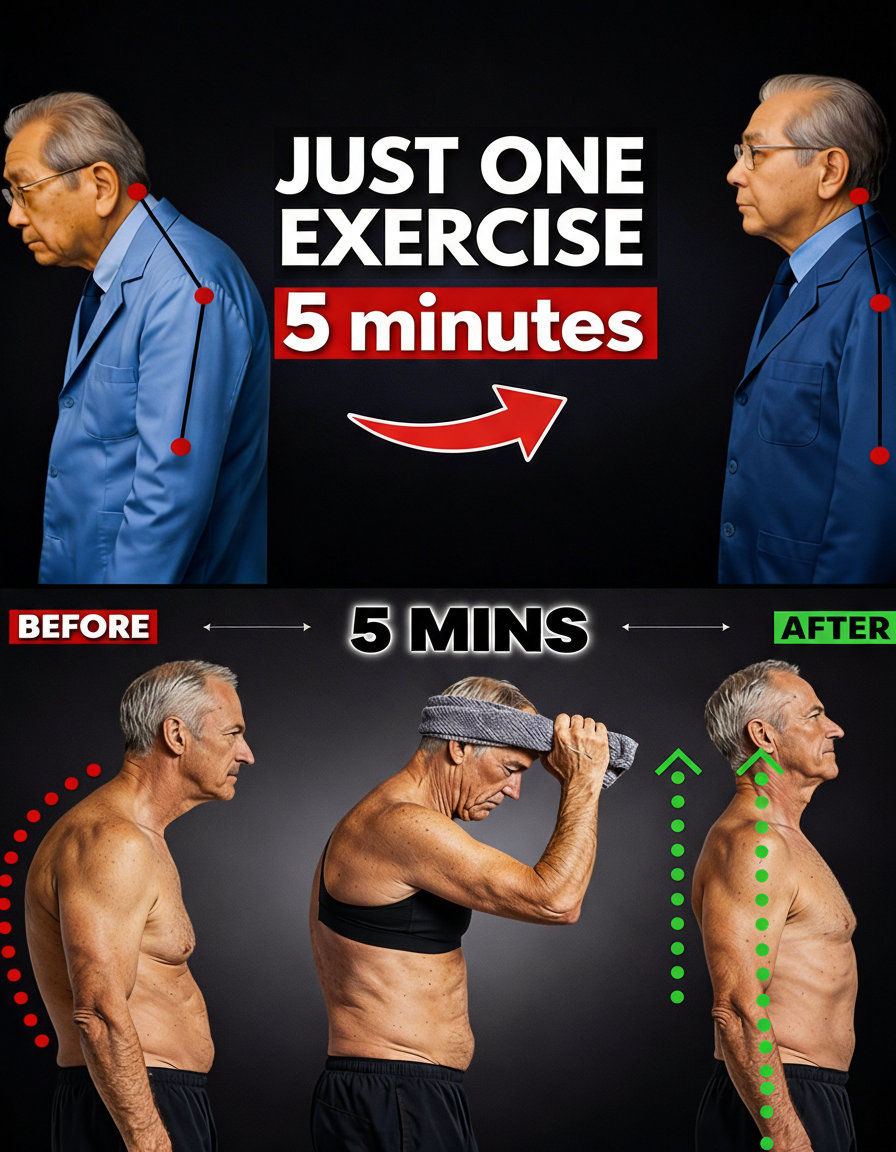
Ready to experience the benefits? Begin in a comfortable position, either seated in a chair or standing upright. No specialized equipment is necessary, though a small rolled towel can be beneficial for one of the steps. Integrate these phases into your daily routine, perhaps in the morning or after prolonged periods of sitting.
Step 1: Sensory Warm-Up to Reconnect and Release (60-90 seconds)
- Start by sitting or standing with your hands resting gently on your thighs.
- Slowly and mindfully rotate your head from side to side, then gently nod it up and down, and finally, tilt each ear towards its corresponding shoulder.
- Ensure all movements remain within a comfortable range, avoiding any strain or pushing. Breathe slowly and deeply with each exhale.
- Dedicate 60-90 seconds to these smooth, flowing cycles. This phase gently awakens body awareness without forcing limits. Research from institutions like Tohoku University indicates improved neck mobility in seniors after engaging in similar gentle practices.
Step 2: Integrated Retraction for Whole-Body Alignment (60 seconds)
- Clasp your hands together behind your back or rest them gently on your lap.
- Gently draw your shoulder blades together, ensuring your shoulders remain relaxed and down, not hunched.
- Consciously slide your head backward in an even motion, creating a subtle ‘double chin’ effect.
- Hold this retracted position for 10-15 seconds while maintaining calm, steady breathing.
- Repeat this sequence three times, totaling approximately 60 seconds. This step effectively engages key postural muscles for improved support. A study in Physical Therapy Science observed measurable angle improvements in older adults with consistent daily application of this technique.
Step 3: Passive Traction for Gentle Lengthening (60 seconds)
- Sit firmly in a sturdy chair, placing a small rolled towel at the base of your skull (the occipital ridge).
- Allow your head to gently rest back against the towel, letting gravity create a soft, natural pull and decompression through your cervical spine.
- Relax your arms forward and breathe deeply, focusing on expanding your rib cage with each inhale.
- Hold this position for 15-20 seconds per repetition, completing three repetitions. This promotes effortless spinal decompression. Geriatric studies conducted in Japan have highlighted significant benefits for spinal curvature over several weeks of consistent practice.
Step 4: Thoracic Opening to Enhance Mobility and Breathing (30-60 seconds)
- Lie comfortably on your back on a firm surface, placing a rolled towel horizontally below your shoulder blades (mid-back).
- Bend your knees with your feet flat on the floor, and open your arms out to your sides, palms facing up.
- Allow your chest to gently expand with deep, diaphragmatic breaths, feeling the gentle arch over the towel.
- Hold this position for 30-60 seconds, then slowly and carefully roll off the towel to one side. This exercise effectively restores flexibility in the mid-back (thoracic spine). A recent study in Geriatric Physical Therapy linked improved thoracic mobility to enhanced respiratory capacity.
By integrating this gentle, Japanese-inspired 4-minute routine into your daily life, you can actively work towards improving your posture, reducing discomfort, and enhancing your overall well-being after 60. Consistent practice is key to experiencing these lasting benefits.