 By admin
 Heads Up, Ladies! These 9 Breast Cancer Warning Signs Are Non-Negotiable – Your Life Depends On Knowing Them.
Alright, let’s get real. As women, our bodies are constantly changing, and that’s just a fact of life. But when it comes to your breasts, even the smallest shift can send your mind racing, right? That little niggle, that weird feeling – it can mess with your head, leaving you wondering if it’s serious or just ‘one of those things.’ Here’s the kicker: knowing what to look for isn’t just about being aware; it’s about taking back control and having a no-nonsense conversation with your doctor. But hold up, there’s one sneaky sign most people totally miss – stick with us ’til the very end to uncover that game-changer!
Understanding Your Girls: The Breast Health Basics
Your breast tissue is on a wild ride, shifting with hormones, age, and everything in between. But here’s the golden rule: know your normal. Seriously, get intimately familiar with how your breasts usually look and feel. Research ain’t lying – regular self-checks are your secret weapon for spotting changes early. The American Cancer Society backs this up: if you know your ‘normal,’ anything ‘abnormal’ screams for attention. So, here’s the deal: carve out some time each month, ideally right after your period, for a quick, no-fuss self-exam. But that’s just the warm-up act – let’s get down to the nitty-gritty of what specific breast cancer warning signs you absolutely need to be on the lookout for.
Sign 1: That New Lump – Don’t You Dare Ignore It!
Let’s cut to the chase: feeling a new lump is often the first red flag that makes you freeze. It could be chilling in your breast or lurking in your armpit. Hard or soft, painful or not – it doesn’t matter. The CDC isn’t playing around when they say this is a key symptom you must pay attention to. If you find one, don’t spiral into a panic attack – most lumps are benign. But listen up: get it checked out by a doctor, pronto. Seriously, don’t wait. Actionable tip: Lay down, lift one arm, and use the opposite hand’s fingers to gently press in small circles. Get exploring!
Sign 2: Thickening or Swelling – It’s Not Always a Clear Lump
Sometimes, it’s not a distinct lump you can point to. Instead, a section of your breast might just feel… different. Thicker. Swollen. You might not see it, but you’ll feel it. The pros at Mayo Clinic describe it as tissue that just isn’t like the rest. Sure, hormones can play tricks, making things feel a bit off, but if that feeling sticks around, it’s a call to action. The real talk? Keeping tabs on these changes over time is how you separate the harmless from the potentially serious breast health concerns.
Sign 3: Skin Dimpling or Irritation – Think Orange Peel, But Worse
Time for a visual check: are you seeing any skin that’s puckering or dimpling? You know, that tell-tale ‘orange peel’ texture? That’s called peau d’orange, and it’s a serious indicator of underlying issues. The Susan G. Komen foundation flags this as a major warning sign for women. It can pop up on your breast surface even if you don’t have other symptoms. Quick check-in: Stand in front of a mirror, raise your arms high, and give your breasts a thorough once-over.
Sign 4: Redness or Flaky Skin Around the Nipple – It’s Not Just a Rash
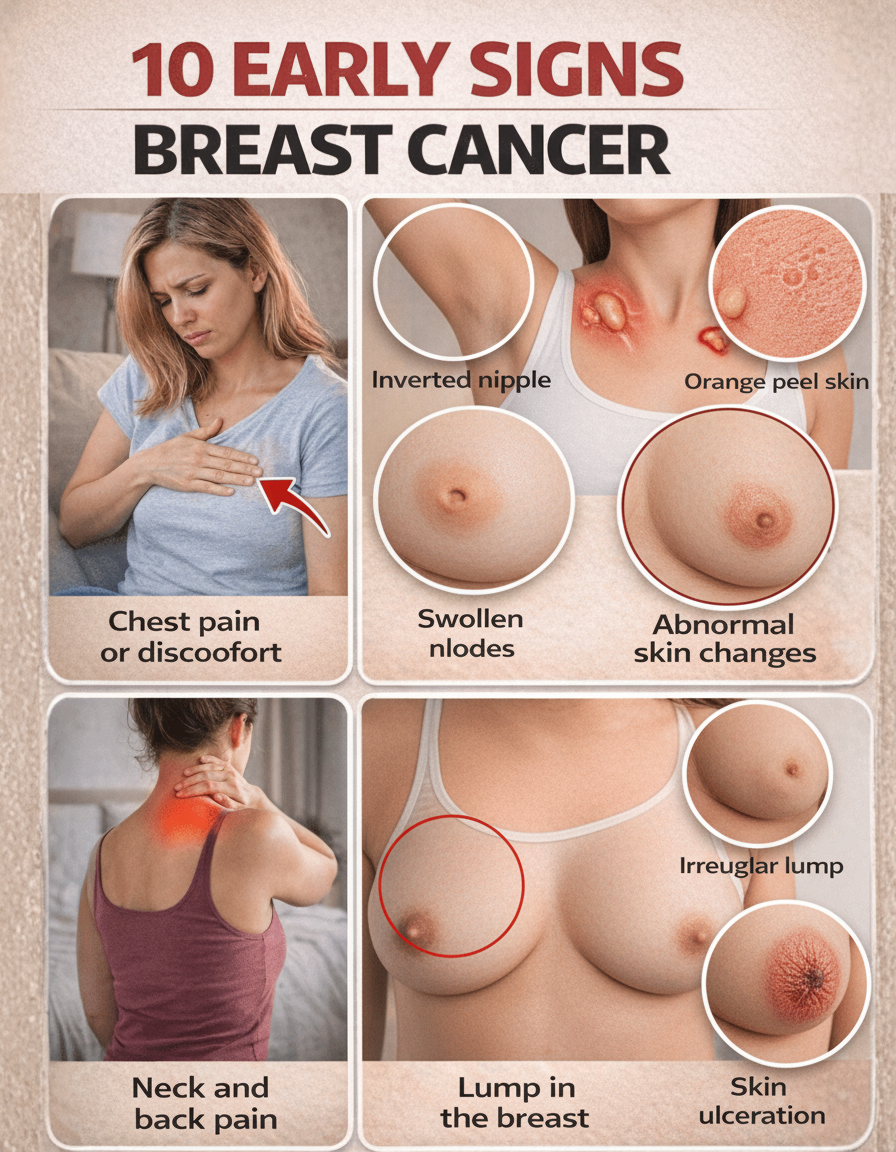
If you spot red, irritated, or scaly skin on your nipple or breast, don’t just shrug it off as a harmless rash. This kind of irritation often mimics a rash but won’t budge with your usual creams. WebMD points to it as dry, flaking skin. While eczema or infections can look similar, a professional eye is absolutely crucial to rule out anything sinister. And trust us, when it comes to skin changes, there’s always more to unpack.
Sign 5: Nipple Retraction or Inversion – A New Inward Turn
Did your nipple suddenly decide to turn inward or flatten out? If one side has taken a new dive, pay attention. The KU Cancer Center lists this nipple change as an early signal. Look, some folks are born with inverted nipples, and that’s their normal. But if this is a new development for you, it’s a different story entirely. Hot tip: During your self-exam, gently squeeze around the nipple to check its usual position.
Sign 6: Nipple Discharge (That’s Not Milk) – Don’t Look Away!
Any unexpected gunk oozing from your nipple – especially if it’s bloody or clear – is a massive red flag. And no, you don’t even need to squeeze it for it to happen. The CDC isn’t mincing words when they highlight this symptom. Sure, meds or other benign stuff can cause it, but you absolutely, positively need to get it investigated. The real lowdown? The color and consistency of that discharge are huge clues – make sure you spill all the details to your doctor.
Sign 7: Changes in Breast Size or Shape – Your Silhouette Speaks Volumes
Take a good, hard look. Are your breasts playing a new game of ‘odd one out’? Noticeable changes in how one breast looks or feels overall? Maybe one’s suddenly bigger, or sitting lower than its partner? The American Cancer Society flags this as a potential symptom. While weight fluctuations can definitely alter your shape, any new, unexplained asymmetry deserves a serious once-over. Actionable step: Get in front of a mirror, arms at your sides, then raise them high. Compare both sides critically.
Sign 8: Persistent Breast or Nipple Pain – It’s Not Always Just ‘Aches’
We all get those cyclical breast pains – totally normal. But if you’re experiencing pain that’s just there, relentlessly, in your breast or nipple area, and it’s not tied to your cycle, that’s less common and more concerning. Mayo Clinic includes this in