 By admin
 Ovarian cancer, folks, it’s a brutal reality that hits far too many, often sneaking in at advanced stages when options feel thin and standard treatments can just knock you flat. We’re talking about a disease that leaves women and their families scrambling for any glimmer of hope, any new angle that might flip the script.
Now, hold onto your hats! A recent lab study has thrown a spotlight on some compounds from the cannabis plant, showing some seriously intriguing moves against ovarian cancer cells in those early tests. But what exactly did these brainy researchers eyeball, and why should YOU even care? Stick around, because we’re about to peel back the layers and reveal an unexpected finding that’s got scientists buzzing about what’s next.
Understanding Ovarian Cancer: Why New Research is a Game-Changer
Let’s be real: Ovarian cancer ain’t no walk in the park. It’s still one of the toughest gynecological conditions out there, notorious for coming back with a vengeance and sometimes just shrugging off common therapies. Recent studies are screaming for fresh approaches, because, frankly, what we’ve got isn’t always cutting it for the long haul. And that, my friends, is exactly where plant-based compounds step into the ring.
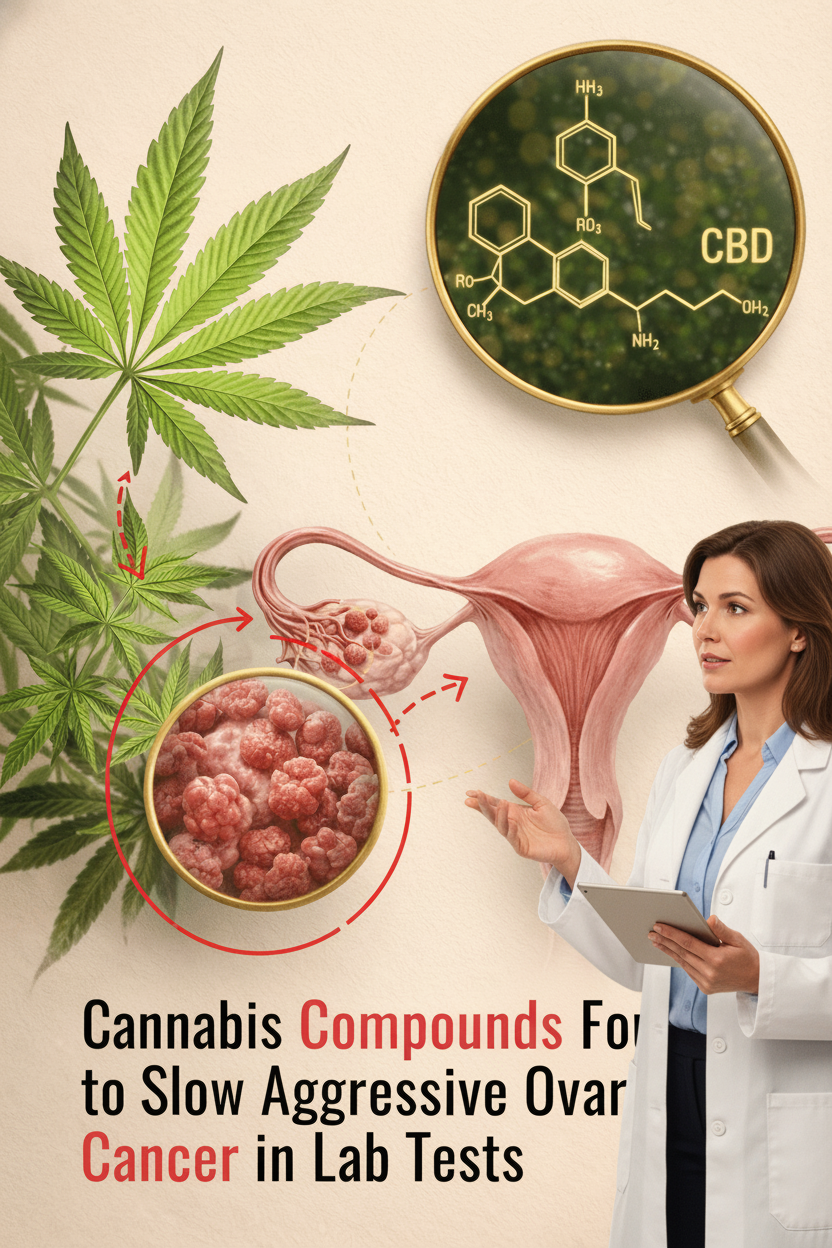
Researchers are digging deep, exploring natural substances to see what role they might play in the ongoing fight against cancer. One recent lab investigation took a hard look at two heavy-hitters from the cannabis plant: CBD (cannabidiol, the non-psychoactive chill-out compound) and THC (delta-9-tetrahydrocannabinol, the one that gets you high, if you catch my drift). Published in the prestigious Frontiers in Pharmacology and highlighted on ScienceDaily, this groundbreaking work put these compounds to the test on various ovarian cancer cell lines. And here’s where it gets juicy…
Key Observations from the Laboratory Study: What Went Down in the Petri Dish
In those tightly controlled lab settings, scientists basically set up a showdown, exposing ovarian cancer cells—including both the easy-to-treat and the stubbornly resistant types—to CBD, THC, or a powerful combination. The results? They weren’t just “interesting”; they showed some seriously notable shifts in how these cancer cells behaved:
- Colony Formation Got Knocked Down: These sneaky cancer cells formed fewer and smaller groups, suggesting their long-term growth potential took a major hit. We’re talking about slowing down the enemy’s ability to build an army.
- Cell Migration Was Crippled: The compounds seemed to put the brakes on the cells’ ability to move around—a massive deal, considering migration is a key factor in how cancer spreads throughout the body.
- Healthy Cells Played Hard to Get: Here’s the kicker! Normal ovarian cells needed way, way higher doses to feel similar impacts, which is a big flashing sign of selectivity. It means these compounds might be able to target the bad guys without wrecking the good guys.
But wait, there’s more to this story! The most jaw-dropping observations came when CBD and THC teamed up, especially in a balanced 1:1 ratio. This dynamic duo showed a synergy that reduced cell viability far more effectively than either compound going solo. Researchers specifically pointed out that this combination messed with a notorious signaling pathway (PI3K/AKT/mTOR) that’s often in overdrive in ovarian cancer, helping to bring things back to a more balanced state. Now, before you get too hyped, remember: these are preliminary lab findings—super promising, yes, but we’re still a long way from clinical application.
How the Cannabis Compounds Played Hardball with Cancer Cells vs. Healthy Ones
To make this crystal clear, let’s break down the fight with a simple comparison straight from the study’s findings:
| Aspect | Ovarian Cancer Cells | Healthy Ovarian Cells |
|---|---|---|
| Growth Inhibition | Significant at lower doses | Required 4-5 times higher doses |
| Colony Formation | Fewer and smaller colonies | Minimal impact |
| Migration/Invasion | Strongly reduced | Largely unaffected |
| Cell Death Induction | Increased apoptosis (programmed death) | Low toxicity |
See that? This selectivity is precisely what’s got researchers buzzing with excitement—the potential to actively go after cancer cells with less collateral damage to the normal, healthy ones. That’s the dream, right?
Why the Combination Effects Are the Real Showstopper
Sure, individual compounds showed some action, but the real fireworks happened when they worked together. This synergy is the undeniable highlight. Let’s recap:
- CBD Alone: It did its job, reducing proliferation (cell growth) and migration. Good stuff.
- THC Alone: Showed similar inhibitory effects. Also solid.
- Together: BOOM! Amplified results, including a much stronger modulation of that critical pathway and cranking up oxidative stress specifically in cancer cells.
This isn’t a one-off either; this pattern of combination therapies outperforming single compounds has been observed in other lab cancer models. But, and this is a big BUT, experts can’t stress this enough: these are in vitro (test tube) results. The next crucial steps? We’re talking animal and human studies to see if these promising lab findings can translate to real-world impact.
Practical Steps While We Wait for the Big Guns of Research
So, if you’re feeling intrigued by these cannabis compounds for health reasons, listen up: you need to make informed, smart choices. Don’t go rogue!
- Talk to Your Doc FIRST: Seriously, consult your oncologist or healthcare provider—especially if you’re already undergoing treatment. Your health is not a DIY project.
- Know Your Sources: Get educated on legal, high-quality sources in your area. Many places offer lab-tested CBD products, so you know what you’re getting. Don’t buy questionable stuff off the street.
- Start Low, Go Slow: Begin with a low dose and carefully monitor how your body responds. Everyone’s different.
- Keep a Journal: Track your symptoms and any changes in a journal so you have solid info to discuss with your doctor.
- Stay in the Loop: Keep yourself updated through reputable sources like ScienceDaily or respected medical journals. Don’t fall for internet rumors.
Many folks are already tapping into CBD for general wellness—think supporting relaxation or just managing the daily grind’s discomfort. Combining that with rock-solid, evidence-based habits—like eating well, staying active, and getting those regular check-ups—can really make you feel more in control and empowered on your health journey.
Everyday Ways to Champion Women’s Health Research Awareness
Want to make a difference while we wait for more breakthroughs? Here’s how you can throw your support behind women’s health research:
- Follow the Frontlines: Keep up with updates from trusted organizations (e.g., American Cancer Society) that are leading the charge.
- Be a Voice: Get involved in awareness campaigns for ovarian cancer screening. Your voice matters!
- Open Your Wallet (If You Can): Consider donating to research funds, especially those exploring natural compounds and innovative treatments. Every dollar helps push the science forward.
- Spread the Word: Share reliable articles like this one with your loved ones. Spark meaningful conversations and help others stay informed. Knowledge is power!
Thanks for diving deep into this critical research with us! We’re committed to bringing you the most impactful health insights. Don’t stop here – explore more of our cutting-edge articles and tips on dogpjs.com to empower your healthy life today!