 By admin
 In our daily interactions, from casual conversations to unavoidable coughs or sneezes, microscopic viral particles are frequently expelled from our mouths, easily traversing through the air. This common occurrence becomes particularly concerning during peak cold and flu seasons or amidst widespread respiratory virus outbreaks, silently fueling the transmission of pathogens such as influenza, herpes simplex viruses, and coronaviruses. The notion that routine activities like speaking could inadvertently spread germs is indeed unsettling, especially within confined environments like homes, workplaces, educational institutions, or public transit systems. However, promising laboratory research is now shedding light on a remarkably straightforward solution: a unique plant-based chewing gum engineered to potentially capture and neutralize viral particles directly within the oral cavity, specifically in saliva. Imagine the impact if a simple piece of gum could contribute to significantly lowering this transmission risk. Scientists at the University of Pennsylvania have been diligently investigating this groundbreaking concept, and their initial discoveries are generating considerable excitement about how everyday habits might bolster oral health strategies during public health crises. Stay tuned, as an upcoming update on the future trajectory of this research promises to redefine our understanding of preventative measures.
What Makes This Chewing Gum Different?
Unlike conventional chewing gums that primarily offer breath freshening or a sweet treat, this innovative experimental gum stands apart through its strategic inclusion of natural, plant-derived proteins specifically engineered to engage with particular viruses. The core mechanism isn’t to eradicate viruses directly, but rather to effectively trap them, thereby impeding their ability to spread or infect human cells. Under the leadership of Dr. Henry Daniell at the University of Pennsylvania’s School of Dental Medicine, researchers have pioneered two distinct yet powerful strategies:
- One approach utilizes a plant-synthesized variant of ACE2, a protein naturally present in the human body that serves as a crucial receptor for SARS-CoV-2—the virus responsible for COVID-19. By introducing an abundance of this plant-grown ACE2, cultivated in common greens such as lettuce, the gum functions as a molecular decoy. Viruses are then attracted to and bind with this supplementary ACE2, diverting them from attaching to human cells.
- The second strategy leverages proteins derived from lablab beans, also known as hyacinth beans, which naturally contain a protein identified as FRIL. This lectin-like protein possesses the remarkable capacity to bind to specific sugar molecules found on the surface of various enveloped viruses. This includes prominent influenza strains (like H1N1 and H3N2) as well as herpes simplex viruses (HSV-1 and HSV-2).
In rigorous laboratory testing, these specialized proteins have demonstrated their efficacy by either aggregating viral particles, making them less mobile, or actively blocking their entry into host cells. This dual action holds the potential to significantly diminish the concentration of active virus present in saliva, a key vector for transmission.
How the Research Shows Promising Lab Results
Extensive laboratory experiments have rigorously evaluated the efficacy of this specialized gum within controlled environments, utilizing both patient-derived samples and sophisticated viral models. The findings are notably compelling:
- For SARS-CoV-2, preclinical investigations demonstrated that chewing gum infused with plant-grown ACE2 dramatically lowered viral levels in saliva and swab samples by an impressive margin exceeding 95%.
- Similarly, the bean-based gum incorporating FRIL yielded comparable reductions—also surpassing 95%—against influenza and herpes viruses. These significant results were observed even when minimal quantities (approximately 40 mg of the gum material) were employed in testing scenarios.
Crucially, the gum is engineered to consistently release these beneficial proteins throughout the chewing process. Furthermore, the material exhibits remarkable stability, remaining viable at room temperature for several years, thereby adhering to stringent clinical-grade benchmarks for both safety and quality. It is important to note, however, that while these outcomes are highly encouraging, they originate from in vitro (test-tube) and simulated chewing studies, meaning they have not yet been validated through widespread human application.
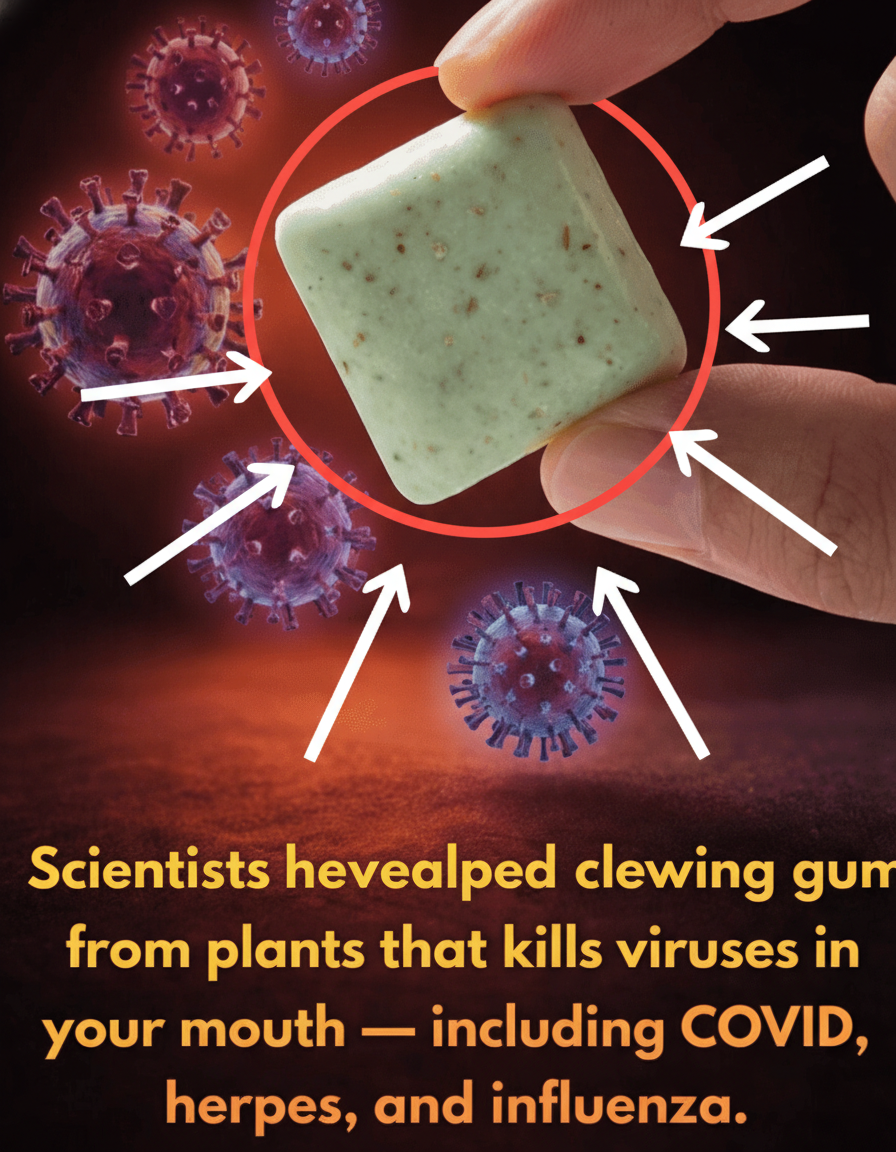
The fundamental premise of this innovative approach centers on diminishing the viral load within the mouth, an area consistently identified by research as a primary site for the replication and subsequent transmission of numerous respiratory viruses. To summarize the scope and impact of these studies:
Targeted Virus Types in Research:
- SARS-CoV-2 (including notorious variants such as Delta and Omicron, tested in specific instances)
- Influenza A strains (specifically H1N1 and H3N2)
- Herpes simplex viruses (HSV-1 and HSV-2)
Key Efficacy Measurement:
The primary metric for success involves a substantial reduction in viral infectivity or overall viral load. This is frequently quantified through advanced laboratory techniques like plaque reduction assays or other methods, consistently demonstrating over 95% neutralization at specified dosages. It is vital to clarify that this gum is designed to support a reduced potential for transmission by significantly decreasing the quantity of viruses in saliva, rather than offering complete prevention of infection.
Why the Mouth Matters in Virus Spread
One might logically inquire: why place such a concentrated focus on the oral cavity? Scientific studies consistently underscore that for certain respiratory viruses, oral transmission can be remarkably more efficient than nasal routes. Every time we engage in conversation, laugh, or cough, countless saliva droplets are expelled, acting as carriers for viral particles. By strategically targeting this primary source of emission, this innovative concept endeavors to disrupt the transmission chain at its very inception. Envision a preventative measure as straightforward as chewing a piece of gum during a bustling commute or a lively family gathering. Although this technology remains in its experimental phase, the underlying principle perfectly resonates with the increasing global emphasis on developing simple, readily accessible methods to bolster public health and oral hygiene practices.
Practical Details from the Lab
The gum is made using plant bio-engineering techniques…