 By admin
 Torn ACL Warning: Are You Ignoring Early Knee Instability Signs
Picture this: You’re just chilling, maybe grabbing a coffee, heading down the stairs, and BAM! Your knee pulls a fast one, feels like it just gives out on you. You quickly glance around, hoping nobody caught that embarrassing stumble. But let’s be real, it’s not just awkward; it’s downright unsettling, isn’t it? Here’s the gut punch: What if this keeps happening? What if it spirals out of control? The cold, hard truth is, way too many folks, especially those over 50, just shrug off these loud-and-clear warning signs as ‘oh, just getting old.’ But listen up, because here’s the bombshell most people conveniently ignore… pretending knee instability isn’t a big deal is a one-way ticket to serious, long-term joint damage down the road. And get this – there’s one sneaky habit you’re probably doing that’s making everything worse without you even realizing it… but we’ll drop that bomb on you in a bit.
What Happens Inside Your Knee When the ACL Tears
Alright, let’s cut through the medical jargon and talk straight. Your anterior cruciate ligament (or ACL, for short) isn’t just some random tendon; it’s basically the heavy-duty rope deep inside your knee. Think of it: this bad boy connects your thigh bone to your shin bone, keeping everything locked down and stable when you’re on the move. But when that ‘rope’ snaps or frays? Oh boy, things go south real fast. Here’s the real deal on what actually goes down:
- That crucial ligament gets stretched way past its breaking point, or worse, it just snaps.
- Your knee suddenly loses its natural, rock-solid stability.
- Those bones? They might start doing a little dance, shifting slightly out of alignment.
- And then the real trouble starts: other key players like your cartilage and meniscus get slammed with extra, unwelcome stress.
Now, here’s the kicker, the dirty little secret many folks completely miss… Even if it’s just a partial tear, your knee can suddenly feel totally unreliable, like it’s got a mind of its own. Sure, you might still be able to walk it off, but your joint? It’s no longer protected, not the way it was built to be. And trust me, over time, that sneaky instability just piles up, like a bad debt you can’t outrun.
Early Warning Signs Many Older Adults Overlook
Okay, this is where it gets seriously tricky, so pay attention. Not every ACL tear hits you like a ton of bricks with some dramatic, screaming pain. In fact, a shocking number of people walk around completely clueless that something major has actually gone wrong. So, wise up and keep an eye out for these subtle, often ignored signs:
- A sudden, unmistakable “POP!” sound when you’re moving – like something just snapped.
- Your knee blowing up with swelling within just a few hours.
- That terrifying sensation that your knee is just going to give out from under you.
- Suddenly struggling with simple stuff like going downstairs or trying to turn on a dime.
- Annoying, mild pain that plays hide-and-seek, coming and going as it pleases.
But here’s the brutal truth bomb… Far too many older adults just brush these off, telling themselves it’s ‘just part of getting old.’ That dangerous assumption? It’s what keeps you from getting the right care, right when you need it. And let me tell you, that’s precisely where all the real problems start piling up.
Why Ignoring a Torn ACL Can Lead to Bigger Problems
Alright, this is the section everyone wishes they’d read *before* things went south. When your ACL is messed up, your knee turns into a wobbly mess. And here’s the kicker: that instability isn’t going to just magically fix itself or stay put. Oh no, it almost always gets worse. Over time, that mess can quickly snowball into:
- Nasty meniscus damage (that vital cushion inside your knee).
- Serious cartilage wear and tear, grinding things down.
- Your joint getting stiff as a board, losing its flexibility.
- A much higher, unwelcome risk of developing osteoarthritis.
And get this: the science backs it up. Research screams that joint instability acts like a fast-forward button, accelerating the wear and tear in your knee over time. In plain English? It’s not just about the initial injury. It’s about the silent, destructive party that starts raging *after* you ignore it.
Torn ACL vs Healthy Knee: A Simple Comparison
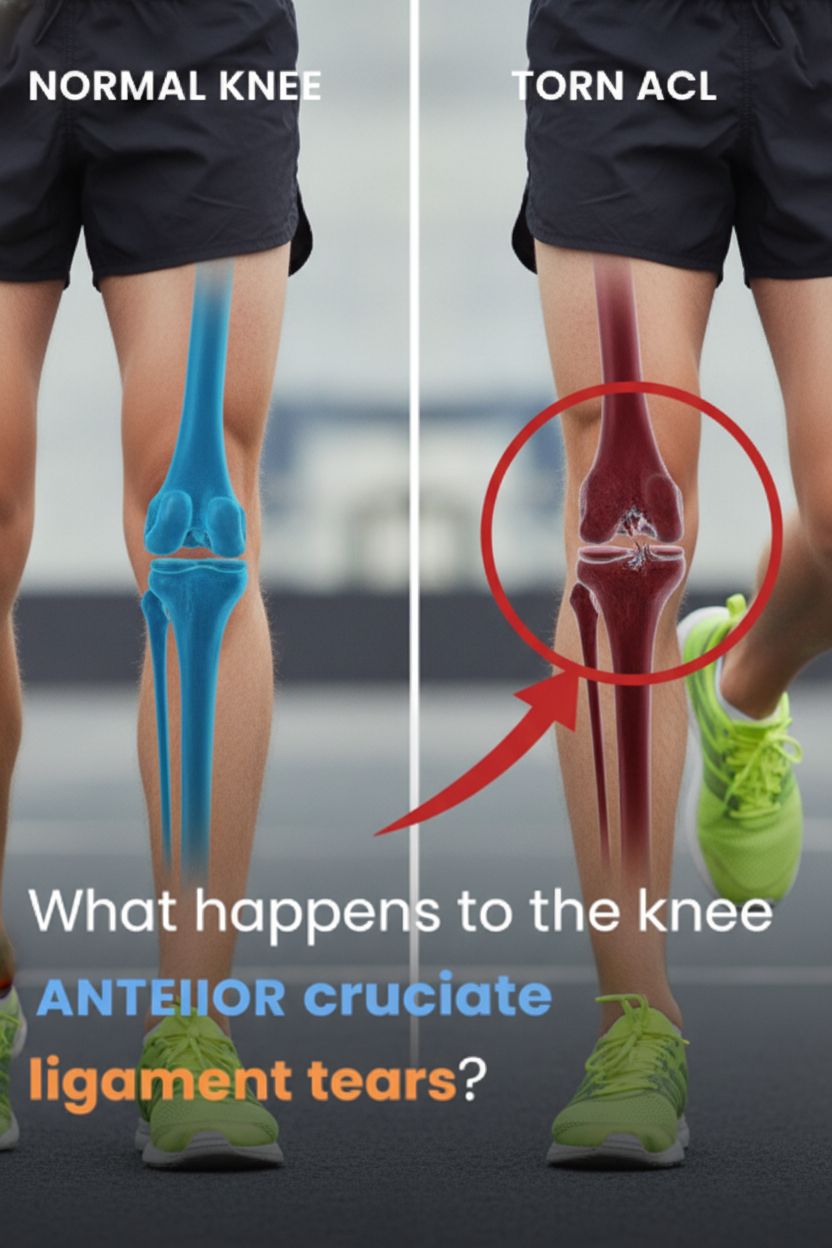
Need to wrap your head around this? Here’s a no-nonsense, quick-and-dirty comparison to really drive home the difference:
| Feature | Healthy Knee | Torn ACL |
|---|---|---|
| Knee Stability | Strong and controlled | Unstable, unpredictable |
| Movement | Smooth and balanced | Wobbly or shifting |
| Risk of damage | Low | Higher over time |
| Daily comfort | Reliable | Occasional discomfort or fear |
| Long-term joint health | Protected | Increased wear risk |
See? Simple, yet incredibly powerful. Now, for the million-dollar question:
What You Can Do Right Now to Protect Your Knee
Alright, enough with the doom and gloom, here’s the light at the end of the tunnel, the *good news*. You’re not powerless! There are straightforward, practical moves you can make *today* to shore up your knee health and dial down the strain. Kick things off with these essential habits, no excuses:
- Bulk up the muscles around your knee. Seriously, hit those gentle exercises for your thighs and hamstrings. These are your knee’s personal bodyguards, crucial for keeping that joint stable.
- Cut out sudden twisting movements. Those quick turns or sharp pivots? They’re like a wrecking ball to a weakened ligament. Just don’t do it.
- Invest in some killer supportive footwear. Shoes with solid grip and cushioning aren’t just for comfort; they’re your first line of defense against instability.
- Keep that weight in check. Every extra pound is extra pressure on your knees, and that means more wear and tear over the long haul.
- Think about guided physical therapy. A pro can show you the ropes, teach you to move safely, and help you build back that crucial strength. Don’t play doctor with your own body.
But hold up, here’s the absolute shocker, the hidden habit that’s silently sabotaging your knees that most people totally miss… The hidden habit that makes things worse: Yep, just sitting on your butt for hours on end, day after day, is actively weakening the very muscles that are supposed to protect your knee. You heard that right! Even something as seemingly harmless as too much couch time can slowly but surely erode your knee’s stability over time. Mind-blowing, isn’t it?
Conclusion: Don’t Ignore What Your Knee Is Trying to Tell You
So, let’s wrap this up. That little scare, that moment your knee decides to play dead and “gives out” on you? That’s not just a clumsy moment, folks. That’s your body screaming a warning. A torn ACL won’t always put you in a wheelchair tomorrow, but if you ignore it, if you just let it fester, it will quietly, relentlessly, lead to some nasty long-term joint problems. The game-changer? It’s all about being aware, taking swift action, and sticking to those good habits. Trust me, that’s where the real magic happens, that’s what truly makes all the difference.
Frequently Asked Questions (FAQ)
Got questions? We’ve got answers, no sugarcoating!
- Can you still walk with a torn ACL?
Yeah, surprisingly, many folks can still get around, especially if it’s just a partial tear. But don’t get it twisted – that knee will likely feel like a wobbly mess and desperately needs attention to stop things from getting even worse.
- Does a torn ACL always mean going under the knife?
Not always, thankfully! Some people actually do pretty well just beefing up their strength and making smart lifestyle changes, depending on how active they are and how bad the tear really is.
Thanks for sticking with us and arming yourself with this crucial knowledge. Your knees will thank you! For more no-nonsense advice on keeping your body in top shape, dive into our other articles on dogpjs.com/healthy-life!