 By admin
 Picture this: You’re absolutely crushing it in your favorite sport, pulling off a killer cut or sticking a huge landing. Then, BAM! You hear or feel this sickening POP right in your knee. The pain? It’s instant, like a gut punch. Swelling kicks in fast, and suddenly, your leg feels like a wet noodle, ready to buckle at any second. This nightmare scenario usually screams one thing: a torn Anterior Cruciate Ligament, or ACL – one of the absolute bedrock cables keeping your knee joint locked down. Thousands of active folks get slammed with this injury every year, leaving you reeling, wondering what the hell just happened inside your knee and how you’re ever gonna get back in the game. The frustration? It’s a tidal wave. Simple stuff like walking or climbing stairs turns into Mount Everest, sports become a distant memory, and the fear of being messed up for good? That shadow just hangs there. But hold up, here’s the real talk: wrapping your head around what actually goes down with an ACL tear is your first weapon in fighting back, setting you up for a smarter comeback and even dodging future bullets. Stick with me, because by the end, I’m gonna drop some serious knowledge bombs on practical ways to bulletproof your knee health that most people totally miss.
Your ACL: What Is This Bad Boy and Why Is It Such a Big Deal?
Alright, so what’s the lowdown on this ACL thing? Think of the Anterior Cruciate Ligament (ACL) as a super-tough, thick rope woven deep inside your knee joint. Its main gig? To strap your thigh bone (that’s your femur) to your shin bone (your tibia), teaming up with other ligaments to keep everything moving smoothly and, more importantly, securely. Science backs this up: the ACL is basically your knee’s bouncer, putting up about 85% of the fight to stop your shin bone from jetting too far forward past your thigh bone. It also acts like a brake on crazy twisting, especially when you’re making those lightning-fast pivots or slamming on the brakes. Take away its full power, and your knee? It’s suddenly lost its damn anchor, waving goodbye to crucial stability.
When Your ACL Bites the Dust: The Brutal Internal Breakdown
So, what’s the gory truth when that ACL finally gives up the ghost? Usually, it’s a sudden, nasty twist, a botched landing, or a non-contact pivot where your knee just gets overwhelmed. The ligament stretches past its breaking point, and then – snap – you’re looking at either a partial or, more often, a full-blown complete tear. When it’s a complete tear (the real nasty one everyone dreads), those strong ligament fibers literally explode, typically right in the middle. That “pop” you heard? That’s the sound of your knee tissue giving way under pressure. Inside the joint, it’s a mess: tiny blood vessels rupture, causing internal bleeding (fancy word: hemarthrosis) and your knee blows up like a balloon in no time. Doctors often spot bone bruises on your thigh bone’s outer edge or the back of your shin bone on scans – clear signs of the trauma. That rock-solid knee stability? Poof, it’s gone. Your shin bone starts sliding forward like it’s on ice, and any twist or turn brings on that terrifying “giving way” sensation. Research screams it loud and clear: this kind of instability isn’t just a nuisance; it puts massive stress on other vital parts like your meniscus or cartilage, wearing them down over time. But wait, there’s more to this horror show. Your body, trying to play hero, immediately floods the area with inflammation to protect itself, which is exactly why you’re hit with that excruciating pain and can’t move your knee worth a damn right after.
The Telltale Signs: How You’ll Know Your ACL Just Got Wrecked
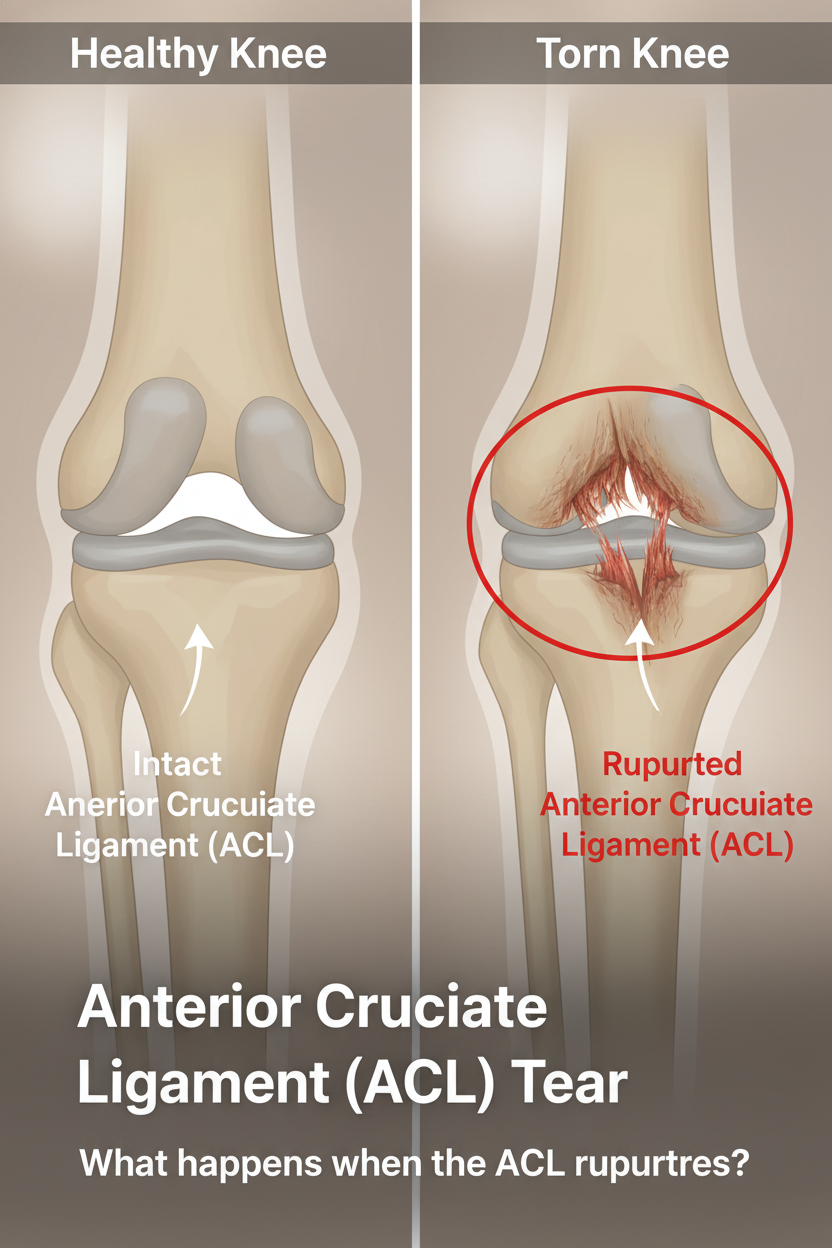
- That unmistakable, sickening POP or a distinct popping sensation in your knee
- Your knee blowing up like a balloon with rapid swelling, usually within just a few hours
- Stabbing, sharp pain that absolutely shuts down any chance of continuing whatever you were doing
- Trying to put any weight on that leg feels like walking on broken glass – pure agony
- That terrifying feeling of your knee giving out, buckling, or just being totally unstable when you try to move it
That swelling? It hits its peak fast, thanks to all that internal bleeding, and your ability to move your knee freely often goes straight into the toilet. Sure, some tough cookies can still hobble around after the initial shock wears off, but try to pivot or make any quick turns? Forget about it – it’s a disaster waiting to happen.
Your Life After the ACL Blowout: Daily Grind and Getting Back in the Game
Once your ACL is out of commission, forget about “normal” everyday movements – they’re totally different now. Just walking on a bumpy sidewalk, tackling a flight of stairs, or even trying to change direction slightly can trigger that gut-wrenching, unstable sensation. For athletes, it’s a constant nightmare: they’ll tell you their knee just “gives out” mid-play, which isn’t just frustrating, it’s a huge red flag for more falls or even worse damage. Let this instability fester for months, and you’re practically inviting wear and tear on your cartilage or a whole heap of meniscus problems. Studies don’t mince words: leaving that instability unchecked is a fast track to your joint breaking down and degenerative changes taking hold.
So, You Tore Your ACL – What’s Your Battle Plan for Recovery?
Listen up, because not every ACL tear is created equal, and neither is the road back. Your recovery