 By admin
 Picture a typical day: you’re unwinding at home or perhaps enjoying a leisurely stroll, when an unexpected discomfort arises—a peculiar chest pain or a persistent, unyielding cramp in your leg. These sensations often emerge subtly, easily mistaken for the minor aches and pains that are a normal part of life. Yet, such seemingly innocuous symptoms could signal a serious condition: a blood clot. Whether it’s a deep vein thrombosis (DVT) in the legs or the more severe pulmonary embolism (PE) in the lungs, these clots pose a significant, life-threatening risk if not identified promptly. Individuals over 45, those with a history of prolonged immobility, recent surgical procedures, or specific underlying health issues face an elevated risk. The challenge lies in the fact that many early indicators of a blood clot are frequently dismissed until critical complications develop. Understanding these crucial early warning signs could be instrumental in safeguarding your health. Let’s explore the vital symptoms that can empower you to stay safe, drawing upon credible information from reputable health organizations such as the Mayo Clinic, CDC, and Cleveland Clinic.
Understanding Why Blood Clots Are Difficult to Detect
Blood clots develop when blood coagulates and begins to accumulate within veins, most frequently in the deep veins of the lower limbs. Deep vein thrombosis (DVT), which commonly affects the legs, often presents without pronounced warning signs; indeed, nearly half of all DVT cases initially manifest with no overt symptoms. Should a clot detach, it can migrate to the lungs, leading to a pulmonary embolism (PE), a far more critical and potentially fatal medical emergency. The initial indicators of a blood clot often mimic common discomforts such as muscle aches, general fatigue, or even typical signs of aging. Consider how frequently a minor leg discomfort might be dismissed, assumed to resolve on its own. Paying close attention to subtle shifts and ongoing patterns in your health is paramount, as this awareness can be vital for maintaining your overall well-being.
Critical Blood Clot Symptoms That Demand Your Attention
Here are the most vital blood clot warning signs you should never overlook:
Unexplained Swelling in a Single Limb
Experiencing swelling in only one limb—most commonly affecting the calf, thigh, or arm—can be a primary indicator that a blood clot is obstructing normal circulation. Leading health authorities, including the Mayo Clinic and the CDC, consistently emphasize this as a crucial symptom of deep vein thrombosis (DVT).
Persistent Ache or Cramping Sensation
A sensation of persistent pain or cramping in your calf, thigh, or even your arm can mimic a muscle cramp that simply refuses to subside. Should this discomfort worsen with physical activity, it signals a significant concern. While many individuals might attribute this to ordinary muscle soreness, its failure to alleviate with rest warrants immediate medical evaluation.
Localized Warmth in the Impacted Region
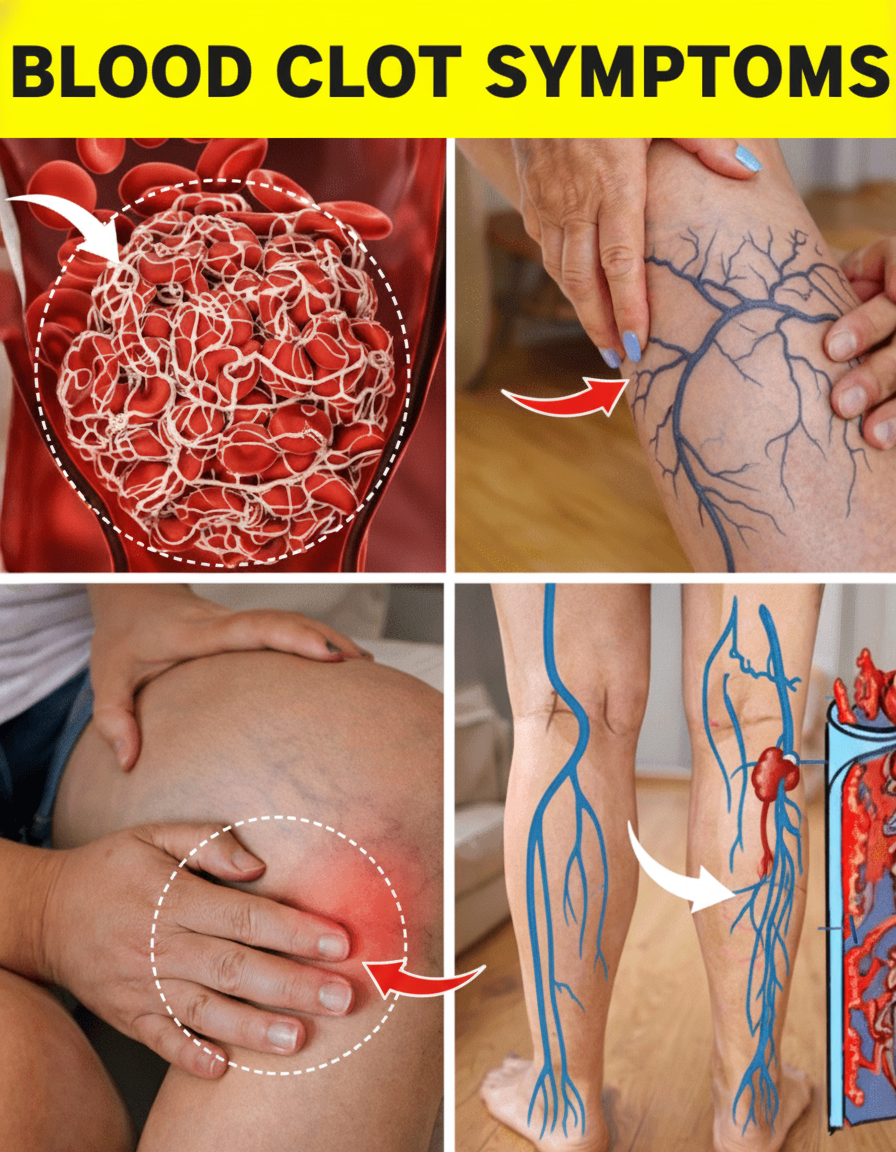
It’s possible to observe that the skin overlying the swollen area feels distinctly warmer to the touch compared to the adjacent tissue. This increased temperature is a typical indication of inflammation surrounding a blood clot. A simple comparison between both limbs can often reveal this difference, with one feeling notably warmer.
Skin Discoloration or Visible Changes
The skin in the vicinity of the clot can exhibit altered coloration, appearing reddish, purplish, or bluish. Additionally, the skin might develop a shiny appearance or feel unusually taut. For individuals with darker skin tones, these color shifts can be less pronounced, making it crucial to vigilantly observe for any uncharacteristic alterations in skin texture or shade. These visual changes are a direct consequence of the blood clot impeding the flow of oxygenated blood.
Abrupt Shortness of Breath (Dyspnea)
Experiencing a sudden and inexplicable shortness of breath, particularly if this symptom intensifies during physical activity or exertion, stands as one of the most critical indicators of a pulmonary embolism (PE). This constitutes a medical emergency demanding immediate professional attention.
Acute Chest Pain Aggravated by Respiration
Should you encounter a sharp, stabbing chest pain that becomes more severe with deep breaths, coughing, or movement, this strongly suggests the possibility of a pulmonary embolism (PE). Such pain can be mistaken for a heart attack and must never be disregarded.
Accelerated or Erratic Heart Rate
A noticeably rapid or an irregular heart rhythm can serve as an indicator of an obstructed artery within the lungs. This phenomenon occurs when a blood clot impedes adequate blood circulation. This particular symptom may manifest even during periods of