 By admin
 Noticing new brown spots on your chest, especially when they appear suddenly, can understandably be a cause for alarm. This unexpected skin change often prompts immediate concern about serious conditions like melanoma, creating anxiety as you anticipate a doctor’s visit. The comforting truth is that many such instances are benign and represent common skin alterations. However, understanding the potential causes can provide peace of mind until you receive professional medical advice. In this comprehensive guide, we’ll explore the various factors behind these spots, explain how to identify when a skin change requires attention, and suggest simple steps you can take right now to protect your skin. Keep reading, as we’ll also share practical habits that many find useful for monitoring skin health and proactively addressing changes.
Understanding Sudden Brown Spots on the Skin
Brown spots, medically referred to as hyperpigmentation, occur when there’s an accumulation of melanin—the natural pigment responsible for skin color—in specific regions. While some pigmented lesions manifest gradually over extended periods, others can seemingly emerge quite rapidly, often prompted by factors such as intense sun exposure or hormonal fluctuations. The chest area is particularly prone to these alterations due to its frequent exposure to sunlight, especially during warmer seasons or when wearing open attire. Studies, including those cited by reputable institutions like the Mayo Clinic, emphasize the significant role of ultraviolet (UV) light in overstimulating melanocytes (pigment-producing cells), resulting in concentrated dark patches. However, not all sudden appearances of brown spots are identical. Some may present as flat and uniformly colored, whereas others might exhibit a slightly elevated or textured surface. Recognizing these distinctions can contribute to a more informed and less anxious approach to observing your skin.
Common Benign Causes of Multiple Brown Spots Appearing Quickly
Here are some of the most frequent non-serious explanations for the sudden emergence of brown spots on your chest:
- Sun Damage and Age Spots (Solar Lentigines): Prolonged periods of sun exposure can lead to the aggregation of pigment cells, forming flat brown spots that might appear abruptly, particularly after significant UV radiation. These commonly manifest on areas like the chest, shoulders, and upper back.
- Seborrheic Keratoses: These are non-cancerous, often waxy or scaly lesions that can have a brown, “stuck-on” appearance. Although typically slow-growing, multiple seborrheic keratoses can develop quite noticeably, especially with advancing age or a genetic predisposition.
- Post-Inflammatory Hyperpigmentation (PIH): Following an episode of skin irritation—such as a rash, friction from apparel, or even a mild sunburn—residual pigment can surface as brown spots once the initial inflammation subsides.
- Hormonal or Other Triggers: Fluctuations in hormone levels, certain prescription medications, or conditions like melasma (though more typically observed on the face) can result in areas of patchy skin darkening.
It’s crucial to understand that the majority of sudden brown spots appearing on an adult’s chest are linked to these common, everyday factors rather than indicating a serious health threat. Nevertheless, this does not imply that such skin changes should be completely disregarded.
When to Pay Closer Attention: The ABCDE Guide for Skin Changes
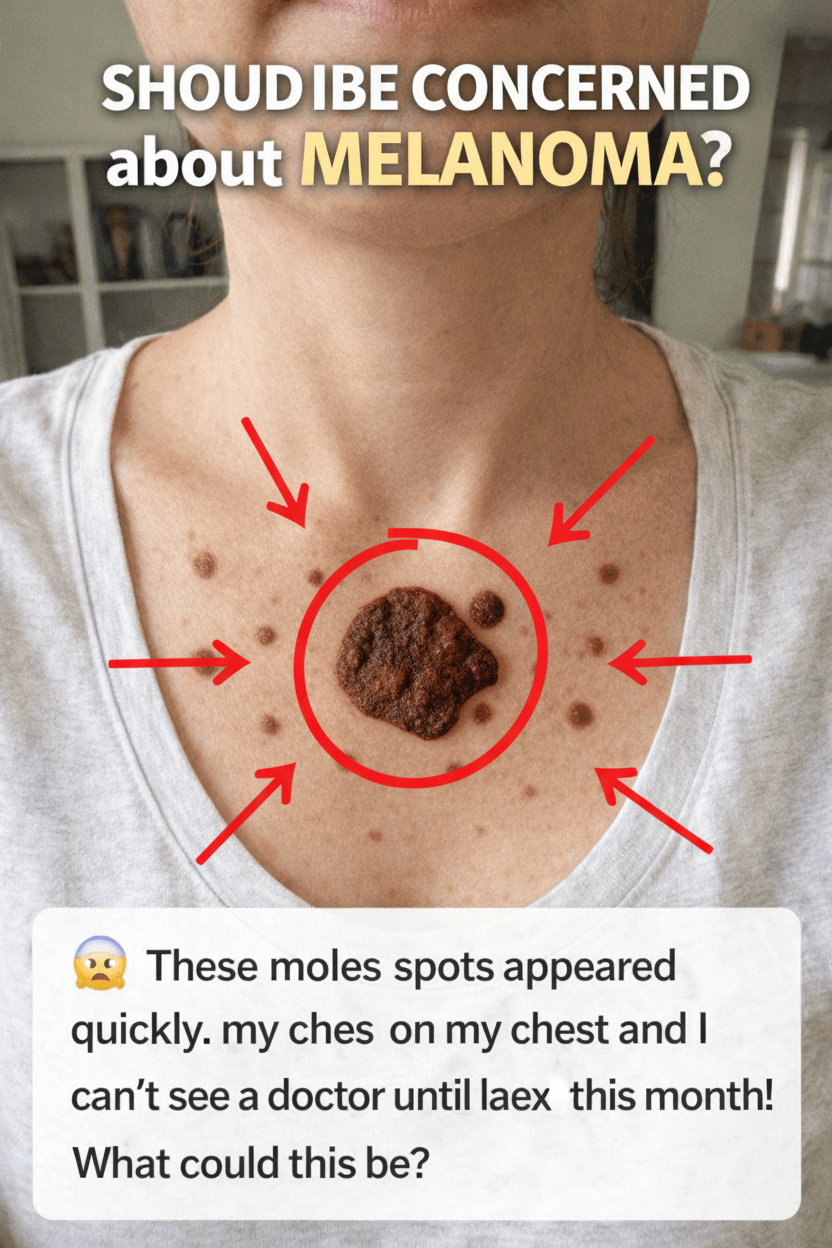
Dermatologists frequently advise using the ABCDE rule as a vital tool for identifying potentially worrisome characteristics in pigmented skin lesions, particularly when evaluating for melanoma:
- Asymmetry: Observe if one half of the spot fails to mirror the other half.
- Border Irregularity: Check for edges that are uneven, jagged, or poorly defined.
- Color Variation: Look for inconsistent coloring within the spot, including shades of brown, black, red, white, or blue.
- Diameter: Be mindful of spots larger than approximately 6 millimeters (roughly the size of a pencil eraser), though smaller lesions that are changing should also be noted.
- Evolving: Any noticeable alteration in the spot’s size, shape, color, or the development of new symptoms such as itching, tenderness, or bleeding, warrants immediate attention.
Generally, if your brown spots on the chest are largely uniform in color, round or oval in shape, and remain stable over time, they are less likely to align with patterns indicative of serious conditions. Nevertheless, the sudden appearance of multiple new spots still merits a professional assessment. In rare instances, an explosive eruption of seborrheic keratoses, known as the Leser-Trélat sign, can be associated with underlying systemic health issues—though this phenomenon is uncommon. Research consistently underscores that prompt medical evaluation can offer significant reassurance, even when all findings confirm a benign diagnosis.
Practical Steps You Can Take While Waiting for Your Appointment
You don’t need to feel powerless while awaiting your medical consultation. Here are actionable tips to help you feel more proactive and in control:
- Capture well-lit, clear photographs of the affected area immediately, including a ruler for accurate scaling. Review these images weekly to monitor any potential alterations.
- Protect your chest from direct sunlight by wearing appropriate clothing or consistently applying a broad-spectrum sunscreen with an SPF of 30 or higher, even when indoors near windows.
- Cleanse the skin gently, avoiding abrasive scrubs or harsh products that could cause irritation and potentially exacerbate pigmentation issues.
- Document any accompanying symptoms you experience, such as itching, flaking, or recent prolonged sun exposure. This information will be valuable for your healthcare provider.
- Maintain good hydration and incorporate antioxidant-rich foods, like berries and leafy greens, into your diet to foster overall skin health. While this won’t eliminate existing spots, it contributes to skin resilience.
Implementing these simple practices can significantly ease the anxiety associated with uncertainty regarding your skin changes. Remember, being prepared and informed is key.