 By admin
 For those managing 4C natural hair, challenges like sluggish growth, persistent dandruff, and an irritating itchy scalp are all too familiar. Individuals with coily, densely textured strands frequently contend with issues such as breakage, excessive shedding, and flaky scalp conditions, making length retention a significant hurdle, particularly when conventional hair products prove ineffective or lead to undesirable buildup. The quest for gentle, natural solutions often guides us toward time-honored home remedies, and among these, papaya leaves consistently emerge as a notable contender. While not a miraculous cure, this segment of the tropical papaya plant has garnered considerable interest for its capacity to nurture the scalp and foster optimal hair health. What makes papaya leaves particularly compelling is the synergy between their traditional applications and promising preliminary scientific findings, suggesting benefits beyond mere anecdotal evidence. Join us as we delve into two straightforward methods for integrating papaya leaves into your hair care regimen, alongside a glimpse into the current scientific understanding.
What Makes Papaya Leaves Interesting for Hair Care?
Sourced from the Carica papaya plant, best recognized for its succulent fruit, the leaves themselves hold significant value in traditional medicine and holistic beauty practices. These potent leaves are packed with a rich array of beneficial compounds, including flavonoids, alkaloids, and key enzymes like papain, alongside powerful antioxidants such as vitamins A, C, and E. Studies indicate that these diverse components contribute to the plant’s overall properties, which can positively influence skin and scalp conditions. Preliminary investigations, including animal models and in vitro (test-tube) experiments, have explored extracts from various papaya parts. These studies have identified activities potentially relevant to hair follicle well-being, such as potent antioxidant effects and enzyme inhibition, which are often associated with specific hair concerns. Nevertheless, it’s crucial to acknowledge that prominent health resources, including Healthline, underscore the current scarcity of robust clinical evidence specifically supporting the topical application of papaya leaf for human hair growth. The particular allure of papaya leaves for 4C hair types often lies in their potential to deliver much-needed moisture, alleviate scalp irritation, and promote a healthier, cleaner scalp environment. The embedded antioxidants may assist in counteracting oxidative stress, a factor known to impact follicle function, while antifungal characteristics observed in laboratory settings could contribute to the effective management of issues leading to dandruff. Yet, the full scope of benefits continues to be explored. Let’s further examine the reasons behind the popularity of this natural remedy and its place within a comprehensive natural hair care regimen.
Potential Benefits for Scalp and Hair Health
The bounty of nutrients found within papaya leaves is widely believed to foster a harmonious and healthy scalp environment. Here are the standout potential advantages:
- Robust Antioxidant Action: Potent compounds like flavonoids and vitamin E actively work to neutralize damaging free radicals. Emerging research suggests this action is linked to superior scalp health and, by extension, potentially enhanced hair retention.
- Gentle Enzymatic Exfoliation: Papain, the primary enzyme present, functions as a mild exfoliant, particularly in traditional applications. This can effectively assist in dislodging product buildup and dead skin cells from the scalp without causing harsh stripping.
- Deep Moisture and Revitalization: For the inherently dry and coily nature of 4C hair, which is highly susceptible to dehydration, the natural hydrating components within fresh papaya leaf preparations can leave strands feeling considerably softer, more pliable, and easier to manage.
- Soothing Scalp Relief: While limited to test-tube observations, certain studies point towards antifungal properties. These could potentially offer relief from intermittent flakiness and scalp discomfort, though comprehensive human clinical trials are still required to solidify these claims.
It is important to remember that these potential benefits are largely extrapolated from historical usage and preliminary scientific inquiries. Individual outcomes can differ significantly, and extensive human trials are yet to definitively confirm dramatic alterations in hair growth.
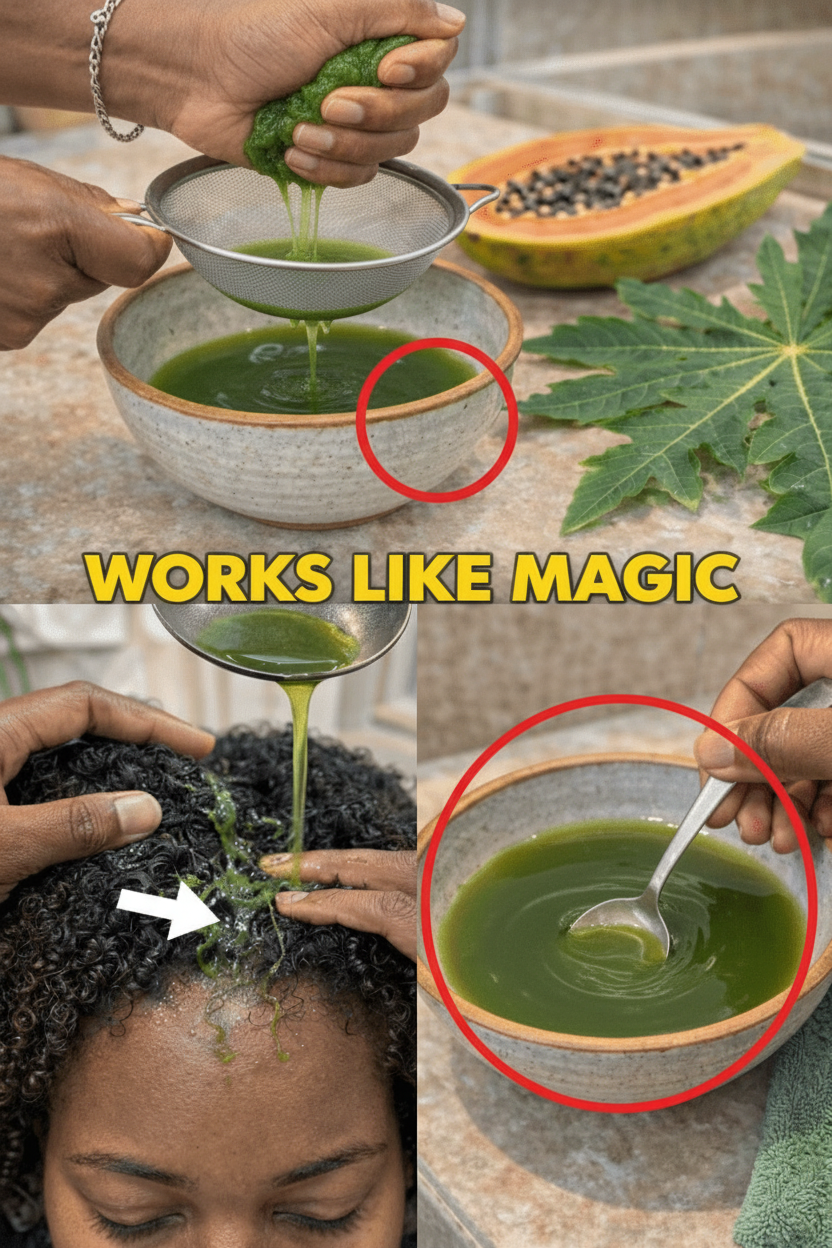
Two Easy Ways to Use Papaya Leaves for Your Hair Routine
To help you safely explore the advantages of this tropical plant, here are two straightforward, beginner-friendly methods specifically adapted for 4C natural hair. Prioritize safety by always performing a patch test on a small skin area to rule out any sensitivities.
Method 1: Fresh Papaya Leaf Juice Rinse (For Optimal Scalp Nourishment and Promoting Potential Growth)
This technique centers on extracting the potent juice from papaya leaves for direct application to your scalp.
- Select 10-15 vibrant, young papaya leaves, ensuring they are free from any signs of age or damage.
- Rinse them meticulously under cool, running water to remove any dirt or residue.
- Combine the cleaned leaves with a minimal amount of water in a blender, processing until a uniformly smooth paste is achieved.
- Pass this paste through a fine-mesh sieve or a piece of cheesecloth, pressing firmly to extract the rich green liquid.
- If the extracted juice appears overly concentrated, dilute it with an equal volume of water.
- Divide your freshly washed, damp hair into manageable sections. Apply the diluted juice directly to your scalp using either a spray bottle or your fingertips, gently massaging the area for 5-10 minutes to stimulate circulation.
- Allow the treatment to penetrate for 20-30 minutes before rinsing thoroughly with cool water.
- Complete your routine by applying your preferred conditioner or leave-in moisturizer.
- Incorporate this rinse into your regimen 1-2 times weekly. Users frequently report experiencing a revitalized and invigorated scalp sensation, alongside improved manageability and a reduction in flakiness. Consistent application is key to observing potential benefits.