 By admin
 Pediatric Stroke: Recognizing 4 Critical Warning Signs to Protect Your Child
Imagine the shock of waking up to find your young child struggling to move one side of their body or communicate clearly. This terrifying scenario is every parent’s worst fear. While strokes in children are thankfully uncommon, their sudden onset, often occurring in the morning hours, leaves a narrow window for life-saving intervention. This harsh reality recently impacted a family when their 6-year-old son experienced a stroke immediately after rising from bed, underscoring how quickly circumstances can change.
Leading medical institutions, including Johns Hopkins Medicine and the American Stroke Association, consistently emphasize that early identification of symptoms can dramatically alter outcomes. What might surprise many parents is that subtle indicators are frequently overlooked because strokes are not typically expected in pediatric populations. By the end of this article, you will be equipped with crucial knowledge on what specific signs to monitor and why immediate action is paramount.
Understanding Stroke in Children: Why It Can Happen Unexpectedly
A stroke occurs when the blood supply to a portion of the brain is disrupted, either by a clot blocking blood flow or by a blood vessel rupturing and causing bleeding. In adults, strokes are often linked to lifestyle factors. However, the causes of pediatric stroke are vastly different and can include congenital heart defects, various infections, blood disorders, or even develop without any identifiable reason. In fact, studies suggest that in approximately one-third of childhood stroke cases, no clear underlying cause is ever found.
Diagnosing strokes in children presents unique challenges because their symptoms can easily be mistaken for more common childhood ailments, such as severe migraines or ear infections, leading to potentially dangerous delays in care. Despite these complexities, organizations like the American Heart Association stress that the core warning signs often mirror those seen in adults, with some additional nuances specific to younger patients. The good news is that awareness is steadily increasing, and practical tools like the F.A.S.T. acronym (developed for adults but widely adapted for children) empower families to quickly identify potential trouble. Let’s delve deeper into the specific indicators every parent should be aware of.
The 4 Key Warning Signs Parents Need to Know
Experts from renowned institutions such as Cincinnati Children’s Hospital and the American Stroke Association highlight these common indicators in school-aged children. If you observe any of these signs appearing suddenly, do not hesitate – call emergency services immediately.
Here are the four critical warning signs:
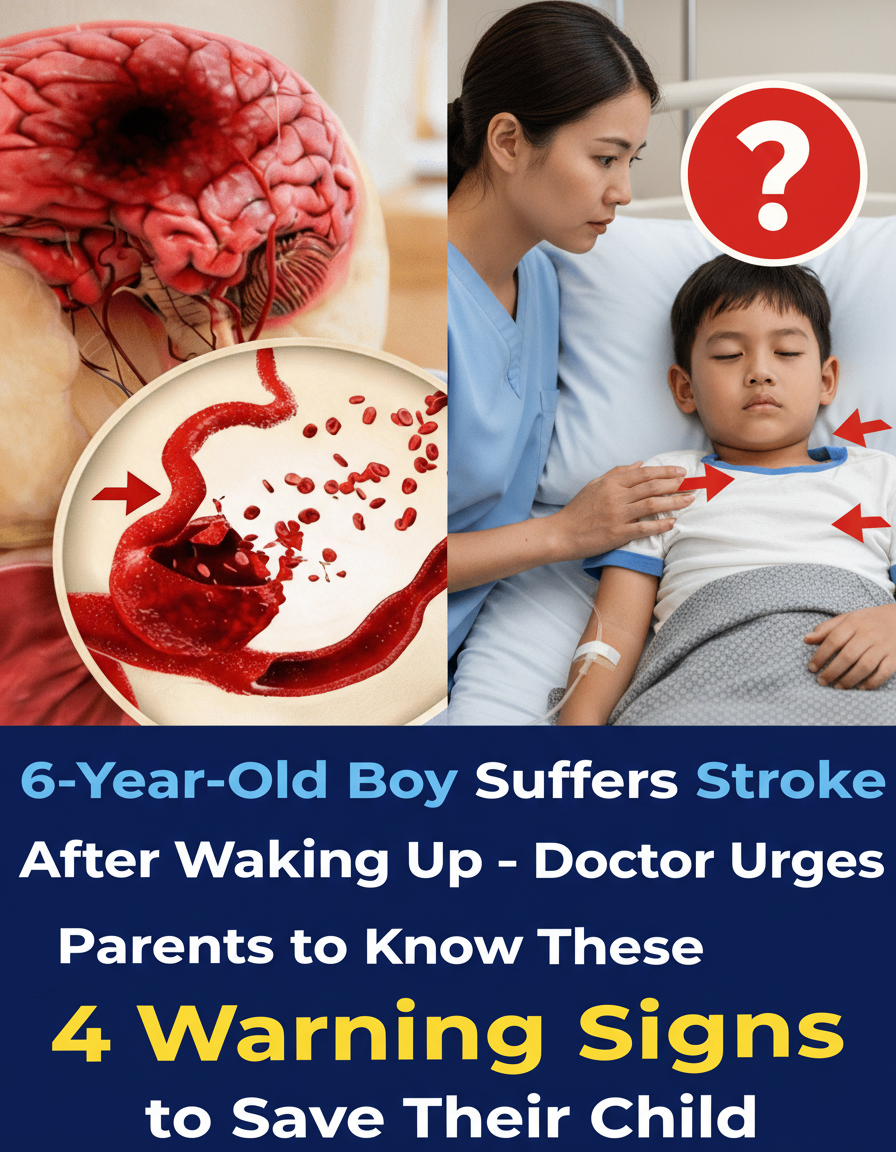
- Sudden Weakness or Numbness, Especially on One Side of the Body: This is among the most frequently reported symptoms. Your child might struggle to lift an arm, one side of their face could droop noticeably when they smile, or they might complain that one leg feels unusually heavy or unresponsive. In the case of the 6-year-old boy who suffered a stroke upon waking, this sudden weakness was a critical clue that prompted urgent medical attention.
- Difficulty Speaking or Understanding Speech: Watch for slurred words, an inability to form coherent sentences, confusion when responding to questions, or a sudden struggle to comprehend simple instructions. Children might appear uncharacteristically quiet or become visibly frustrated while attempting to communicate.
- Severe Headache, Often Accompanied by Vomiting or Extreme Sleepiness: A sudden, intense headache – frequently described as the worst they’ve ever experienced – paired with nausea, vomiting, or unusual drowsiness is more prevalent in pediatric stroke cases than in adults. Research indicates this combination is a common presentation in children and should never be dismissed as merely “just a headache.”
- Sudden Trouble with Vision, Balance, or Coordination: Symptoms can include blurred or double vision, sudden dizziness, difficulty walking in a straight line, or a noticeable loss of balance. Your child might stumble unexpectedly, mention that things look “funny,” or appear unsteady on their feet.
Quick Checklist: Remember F.A.S.T. and Beyond
To help you quickly assess a potential situation, keep this checklist handy:
- F – Face Drooping? Ask your child to smile. Is one side of their face uneven or drooping?
- A – Arm Weakness? Have them raise both arms. Does one arm drift downward?
- S – Speech Difficulty? Ask them to repeat a simple sentence. Is their speech slurred, confused, or difficult to understand?
- T – Time to Call Emergency Services: If any of these signs appear, even if they seem minor or resolve quickly, call 911 (or your local emergency number) immediately.
Other Red Flags: Also be vigilant for a severe headache accompanied by vomiting, sudden changes in vision, unexplained dizziness, or new-onset seizures. If any of these symptoms manifest – even just one – remember that every minute counts when it comes to brain health.
Why Morning Strokes Can Feel So Shocking
Many parents are particularly caught off guard when stroke symptoms emerge right after their child wakes up. During the transition from sleep to wakefulness, blood pressure and circulation patterns undergo natural shifts. In rare, vulnerable children, these physiological changes can unfortunately trigger a stroke event. Stories like that of the young boy who experienced a stroke after waking serve as a powerful reminder that strokes do not always follow predictable patterns; they can strike without any prior warning signs, sometimes even during the night.
The emotional toll on families is immense, often leading to feelings of guilt and helplessness. However, by understanding these critical warning signs and knowing when to act swiftly, parents can play a vital role in protecting their children and significantly improving recovery prospects. Early recognition and immediate medical attention are the most powerful tools we have against pediatric stroke.
”
}
“`