 By admin
 Thursday, March 26 2026
Facebook Twitter Pinterest Home Herbal Medicine Home Tips Garden Tips Healthy Life Search Search for: Account Thursday, March 26 2026 Search Search for: Menu Home » Healthy Life » Why Do Many Adults Wake Up with a Damp Pillow? Exploring 8 Common Reasons for Nighttime Drooling
Pillow Puddle Mystery Solved: 8 Shocking Reasons Adults Can’t Stop Drooling at Night!
Let’s be real: waking up with a soggy pillow, face sticky, skin feeling weird from a night of drooling? It’s not just embarrassing; it’s downright frustrating. You’re trying to get that deep, restorative sleep, and instead, you wake up feeling like you just swam through a swamp. Most of us just shrug it off, thinking, ‘Oh well, just one of those things.’ But what if I told you there’s more to it? We’re about to dive deep into the everyday culprits, and trust me, there’s a simple game-changer at the end of this article that’ll make you rethink your entire night.
Think you’re alone in this nightly drool-fest? Think again! This ‘nocturnal sialorrhea’ — yeah, that’s the fancy name for it — hits more adults than you’d believe. Your body’s salivary glands are still clocking in overtime even when you’re out cold, keeping your mouth healthy and helping with digestion. But here’s the kicker: as your muscles chill out, your swallowing reflex takes a vacation. Mix that with how you’re sprawled out or if you’re a notorious mouth breather, and boom – a saliva puddle forms, ready to make a break for your pillow. Big players like the Cleveland Clinic confirm this ain’t rare, especially when you’re sucking air through your mouth. But hold up, that’s just the tip of the iceberg. Get ready, because we’re about to expose the real patterns behind that dreaded damp pillow every single morning.
Why Does Drooling Tend to Happen More at Night?
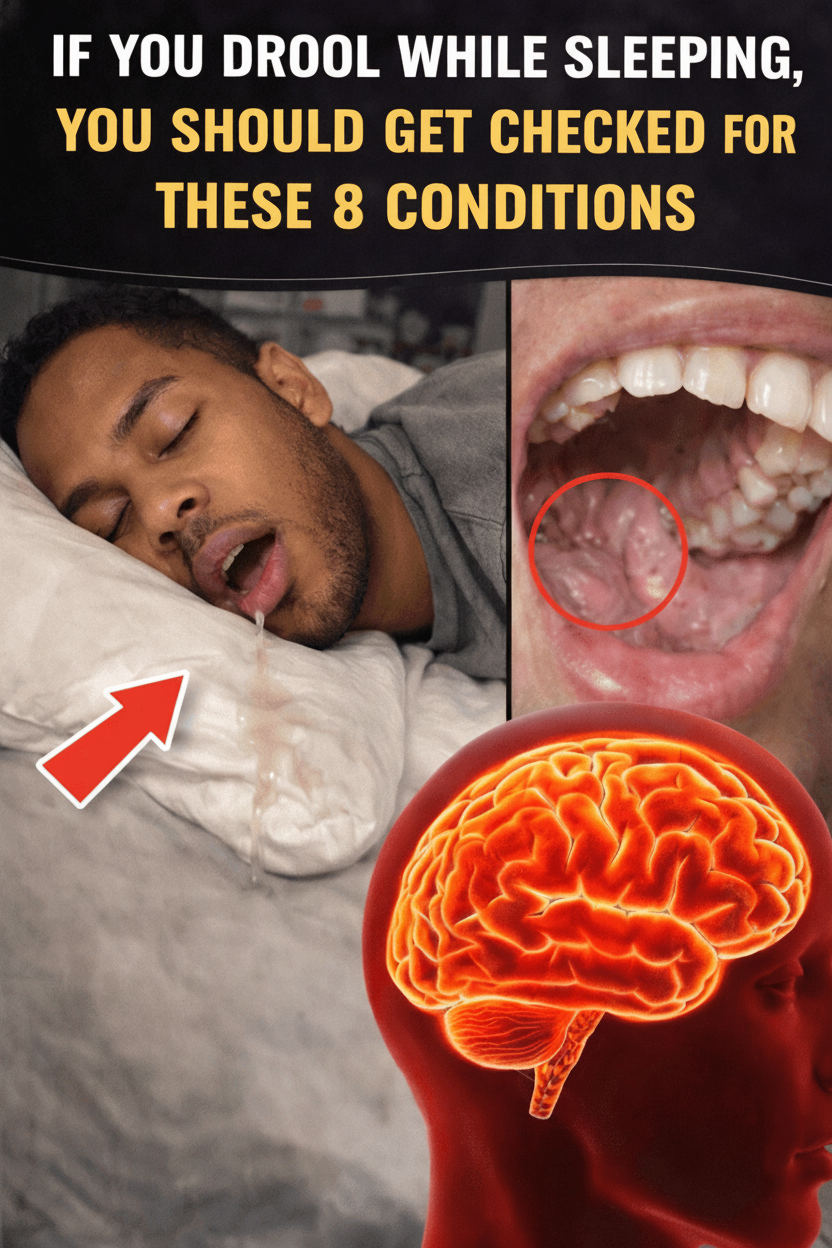
So, what’s the deal with all this nighttime drooling? When you finally crash, your body goes into full-on chill mode. And guess what? Gravity, your lazy swallowing reflex, and even how you’re sprawled across the bed are all in on the conspiracy. If you’re a side sleeper or a stomach sleeper, you’re practically inviting that slobber to make a run for your pillow instead of going down the hatch. Experts are screaming it: anything that makes you breathe through your mouth – think stuffy nose, allergies – just supercharges the whole drooling drama. Sure, sometimes it’s just bad luck with your sleep position. But when that damp pillow becomes a regular thing, it’s a huge red flag. It’s time to connect the dots. We’ve got eight common culprits, straight from the health pros, that are likely behind your nightly Niagara Falls.
The 8 Common Reasons Linked to Nighttime Drooling in Adults
Alright, buckle up. These aren’t just random guesses; these are the heavy hitters, the reasons you’ll find plastered across top-tier health sites like Sleep Foundation and Cleveland Clinic. Before you freak out, remember: a little drool now and then? Totally normal. But if your pillow is consistently looking like a crime scene, these are the suspects we’re talking about. Let’s get down to business.
- 8. Nasal Congestion or Allergies Got a stuffy nose from seasonal allergies, a nasty cold, or sinus drama? Then you’re probably mouth-breathing like a champ while you sleep. And guess what? An open mouth is an open invitation for your saliva to make a grand escape. You’ll definitely notice this getting worse during peak allergy season or when that stubborn cold just won’t quit. Usually, it’s a temporary headache, but if that congestion is a constant companion, it’s time to pay attention, pal.
- 7. Acid Reflux (GERD) Feeling the burn? If acid reflux (aka GERD) is messing with you, your body might be kicking salivary glands into overdrive to fight back against that rising stomach acid. And when you’re lying flat on your back, it’s a prime setup for a drool disaster. Studies don’t lie: GERD often means more nighttime saliva, usually hand-in-hand with that hellish heartburn. If heartburn’s ruining your slumber, you just found a major clue to your wet pillow problem.
- 6. Side Effects from Certain Medications Popping pills? Some meds are notorious for either cranking up your salivary glands or messing with the muscle control around your mouth. We’re talking about some antipsychotics or drugs for neurological issues. The pros say this is a real thing, and often, a simple tweak to your prescription (with your doc, obviously!) can dry things up. If your pillow suddenly became a sponge right after you started a new medication, get on the horn with your doctor – seriously.
- 5. Sleep Apnea Think you’re just a loud snorer? Think again. Sleep apnea is a sneaky beast that makes you stop breathing for short bursts, relaxing your throat muscles and forcing that mouth-breathing habit. It’s a triple threat: drooling, snoring so loud it rattles the windows, and waking up feeling like you pulled an all-nighter. Most folks have no clue they’ve got it until a sleep doc puts them through the wringer. If this sounds like you, get checked out – pronto!
- 4. Throat Infections or Irritation Got a sore throat, swollen tonsils, or that annoying post-nasal drip? These little troublemakers can make swallowing feel like a chore, causing all sorts of mucus and saliva to just pile up while you’re sleeping. Usually, this drool-fest is a temporary guest during a cold or allergy attack. But if that irritation hangs around longer than it should, prepare for your damp pillow problem to stick around too.
- 3. Recent Stroke or Muscle Weakness Events This one’s serious, folks. If you’ve had a recent stroke or any event that suddenly weakens the muscles on one side of your face or mouth, it can absolutely mess with your ability to close your mouth and swallow properly. New, sudden drooling after something like this is NOT something to ignore. Get to a doctor ASAP, especially if you’re also having trouble speaking or other weird symptoms. This is a red-alert situation.
- 2. Parkinson’s Disease For those battling Parkinson’s Disease, the coordination in swallowing muscles can go haywire, leading to saliva pooling up. The research is clear: a huge chunk of Parkinson’s patients deal with this, and sometimes, this persistent drooling is one of the first red flags, showing up right alongside the stiffness or tremors. It’s a symptom worth noting.
- 1.