 By admin
 Reishi Mushroom and Breast Health: Exploring Natural Cellular Support
Navigating concerns about breast health can be profoundly challenging, particularly when faced with the complexities of cellular changes that impact daily life and peace of mind. Many individuals actively seek complementary strategies and natural pathways to bolster their well-being, aligning with a growing interest in holistic health. This exploration often leads to ancient remedies, among which the revered Reishi mushroom stands out. Recent scientific investigations suggest this ‘mushroom of immortality’ may offer unique insights into supporting cellular balance, potentially influencing cell behavior in ways that could redefine our approach to integrating natural elements into comprehensive health routines.
Reishi Mushroom: An Ancient Remedy Meets Modern Science
Known scientifically as Ganoderma lucidum, the Reishi mushroom holds a distinguished place in traditional Eastern medicine, often revered as the ‘mushroom of immortality’ or ‘divine fungus.’ For millennia, this distinctive, reddish-brown, kidney-shaped fungus, typically found growing on decaying hardwoods, has been cherished for its broad spectrum of potential health-promoting attributes. Its resurgence in popularity in contemporary wellness circles is largely attributable to its intricate biochemical profile. Reishi is particularly rich in bioactive compounds, including potent triterpenes, complex polysaccharides, and peptidoglycans. These constituents are currently the subject of extensive scientific inquiry, with researchers keen to unravel their roles in various physiological processes. Notably, a significant study featured in the journal Nutrition and Cancer has shed light on Reishi’s interactions with specific cellular mechanisms, providing valuable perspectives on how natural compounds might contribute to maintaining optimal cellular health.
Unveiling Reishi’s Influence on Cellular Pathways: Insights from Research
A considerable body of scientific investigation has focused on understanding Reishi’s potential effects at the cellular level, particularly concerning aggressive cell lines. Researchers have specifically examined its interaction with MDA-MB-231 cells, a widely studied model for aggressive breast cancer due to its characteristic rapid proliferation. Within controlled laboratory environments, the application of Reishi extract demonstrated intriguing results regarding cellular behavior. Crucially, the extract appeared to modulate critical intracellular signaling pathways, notably Akt and NF-kappaB. These pathways are fundamental regulators of cell survival, growth, and inflammatory responses. By influencing these intricate networks, Reishi extract seemingly prompted cells to halt their progression in the G0/G1 phase of the cell cycle—an early stage that precedes DNA replication and subsequent division. This ‘cell cycle arrest’ mechanism suggests a potential role in tempering uncontrolled cellular multiplication. Furthermore, the presence of Reishi extract was associated with a notable reduction in the expression of key proteins vital for cell division, such as cyclin D1 and cdk4.
Deconstructing the Mechanisms: How Reishi Interacts with Breast Cells
To gain a deeper understanding of these intriguing observations, let’s dissect the specific cellular mechanisms elucidated by the research:
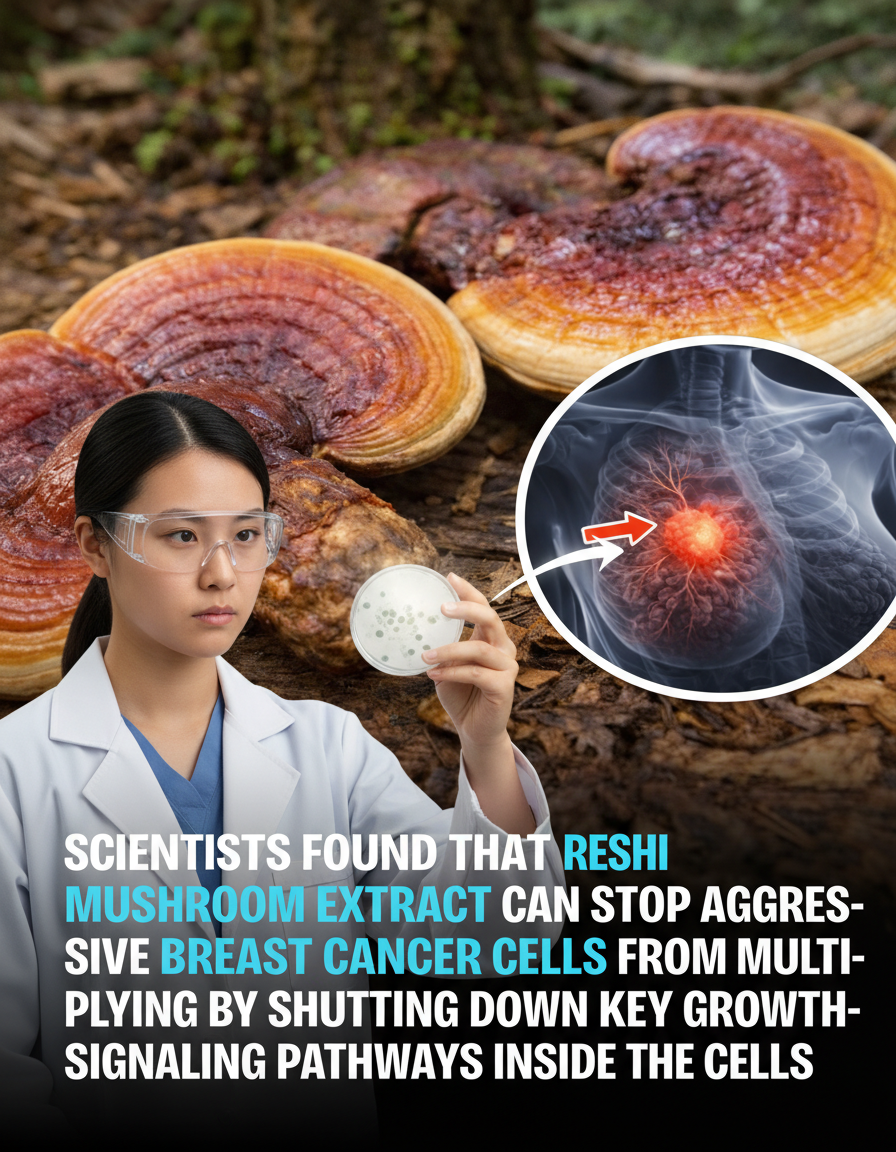
- Targeted Signal Modulation: Reishi extract demonstrated an ability to inhibit the activity of Akt, a crucial protein kinase pathway extensively involved in promoting cell survival and growth. This interference led to a significant decrease in its downstream signaling.
- Influencing Inflammatory Responses: The extract also impacted NF-kappaB, a pivotal transcription factor that plays a central role in regulating immune responses, inflammation, and cellular proliferation. Its reduced function suggests a potential influence on overall cellular dynamics and inflammatory processes.
- Inducing Cell Cycle Stasis: A key finding was the extract’s capacity to induce G0/G1 phase arrest. This means cells were effectively prevented from progressing beyond the initial ‘resting’ or ‘growth’ phase, thereby inhibiting their entry into the active DNA synthesis and division stages, which is critical for rapid multiplication.
- Downregulating Proliferation Proteins: The study revealed a noticeable reduction in the levels of essential regulatory proteins, specifically cyclin D1 and cdk4. These proteins are indispensable drivers of cell cycle progression, and their diminished presence further underscores Reishi’s potential to support balanced cellular growth.
It is crucial to emphasize that these compelling findings originate from in vitro experiments—studies conducted in controlled laboratory settings using isolated cells. While highly promising and foundational, this research underscores the imperative for further comprehensive in vivo studies, including clinical trials, to fully ascertain their real-world applicability and efficacy in human subjects.
Reishi as a Complementary Component in Holistic Wellness Strategies
Given these intriguing scientific insights, a growing number of individuals are exploring how natural health supplements, such as Reishi mushroom, might be integrated into their daily wellness regimens. It is paramount to understand that Reishi is not presented as a standalone cure or primary treatment for any health condition. Instead, its potential lies in acting as a complementary supportive element within a broader, holistic health strategy. Many choose to incorporate Reishi in various convenient forms, including potent extracts, capsules, powders for smoothies, or traditional teas. However, it is always advisable to seek guidance from a qualified healthcare professional before adding any new supplement to your routine. Furthermore, the scientific community continues to investigate how medicinal mushrooms, including Reishi, can optimally contribute to supportive care frameworks, aligning with a comprehensive approach to overall well-being and vitality.
Safe and Mindful Integration of Reishi into Your Routine
For those considering the mindful inclusion of Reishi mushroom into their personal wellness journey, a thoughtful and informed approach is key. It is imperative to consult with a healthcare professional or a qualified medical doctor before initiating any new supplement regimen. With that crucial advice in mind, here are practical steps to guide your exploration:
- Conduct Thorough Research: Empower yourself with knowledge by delving into credible scientific literature and reputable sources concerning Reishi’s historical applications and contemporary research findings. Understand its mechanisms and potential interactions.
- Prioritize Premium Quality: The efficacy and safety of Reishi supplements largely depend on their quality. Opt for products that are certified organic, undergo rigorous third-party testing for purity and potency, and are free from contaminants.
- Adopt a ‘Start Low, Go Slow’ Philosophy: Begin with a conservative dosage, typically a small amount (e.g., 1-2 grams daily if in powder or tea form), and carefully observe your body’s individual response. Gradual adjustments, if necessary, should be made