 By admin
 Sleeping on Your Right Side? You’re Probably Screwing Up Your Sleep (And Don’t Even Know It!)
Last night, you hit the hay early, did everything by the book, and still woke up feeling like a sack of bricks – heavy, bloated, and just plain exhausted. Sound familiar? Maybe you even had that annoying burn in your chest or a funky sour taste in your throat, making you toss and turn in the dark, praying it would just vanish.
Listen up: A lot of folks, especially as they get older, just shrug and blame restless nights on ‘getting old.’ But sometimes, the real culprit is way simpler, hiding in plain sight, right under your nose: the side you choose to sleep on.
Here’s the uncomfortable truth bomb: A super common sleeping habit might be silently messing with your digestion, your breathing, and even your deep sleep cycles. For a ton of people, this is a game-changer they never saw coming.
And the kicker? A tiny little shift in your position could be the secret sauce to finally getting some proper, comfortable rest. Yeah, seriously. It’s that simple.
Stick with me, because by the time you hit the end of this article, I’m going to drop a simple, no-fail trick that many of my own patients use to train their bodies into a sleep position that actually works for them. You won’t wanna miss it.
Why Your Sleep Position Becomes a Bigger Deal After 30
Most people just assume sleep problems are all about stress or, you guessed it, getting older. But hold on, the real story is a bit more nuanced than that. Once you cross that big three-zero, your body starts doing its own thing, gradually. Digestion slows down a notch. Muscles take their sweet time recovering. And what happens? Many folks start noticing that occasional heartburn, bloating, or just general nighttime discomfort.
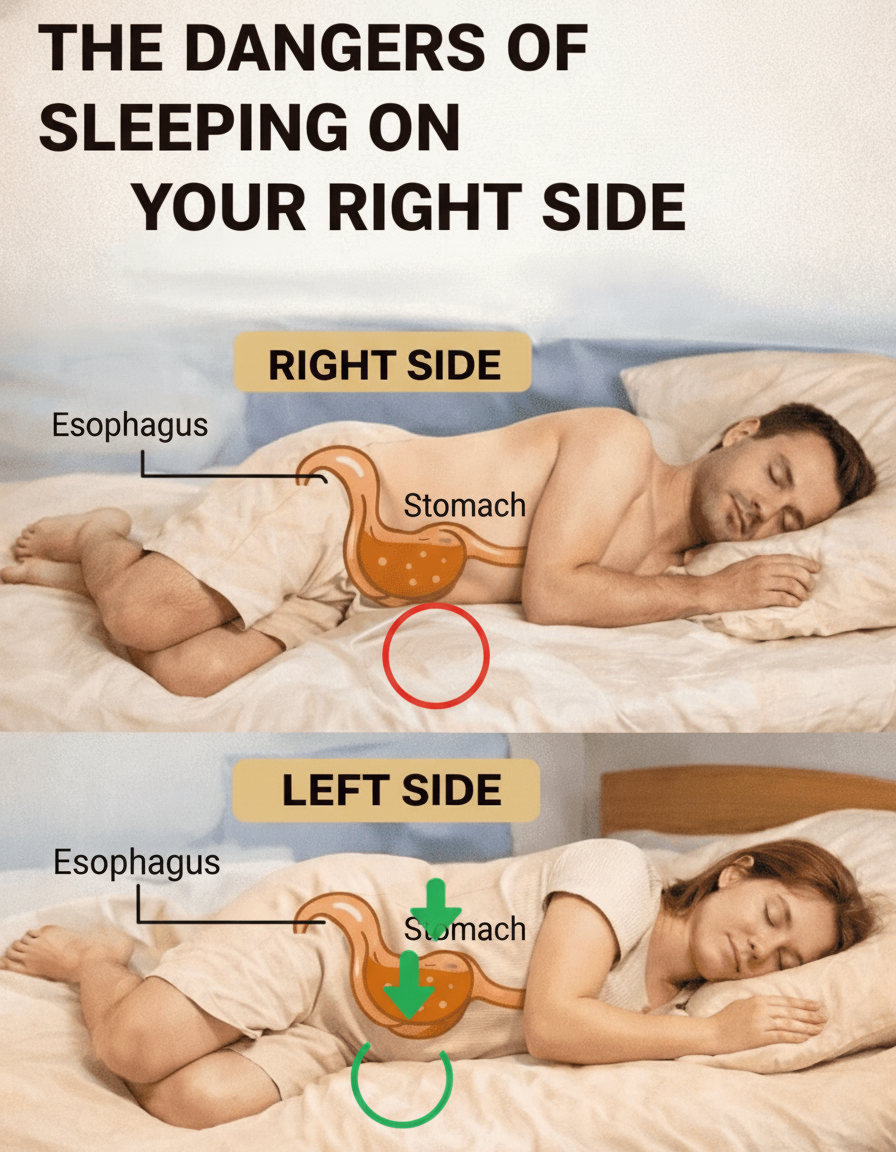
Now, here’s the juicy bit that most people totally miss. Studies suggest that over sixty percent of adults are side sleepers. But guess what? Which side you pick can seriously mess with how gravity plays with your insides while you’re catching Zs. Your stomach? It’s chilling a bit to the left. Your esophagus? It connects right above it.
So, when you’re sprawled out on your right side, gravity can sometimes be a real jerk, making it easier for stomach contents to sneak back up in some folks. Now, before you panic, this doesn’t mean sleeping on your right side is the devil for everyone. Not at all.
But for those who deal with occasional reflux, indigestion, or just general nighttime grumbles, your body position might be playing a surprisingly massive role in your sleep quality. And that, my friends, leads us straight to the first major headache many people clock.
Right Side Sleeping and Nighttime Heartburn: The Burning Truth
Ever bolt awake with that fiery feeling in your chest or throat? You’re definitely not alone in that miserable club. Research published in some serious gastroenterology journals spills the beans: your body position can directly impact how long that nasty stomach acid hangs around near your esophagus while you’re trying to sleep.
When you’re lying on your right side, for some individuals, stomach acid might just decide to kick back closer to the esophagus for longer stretches. And that, my friend, can bring on a whole parade of unwelcome symptoms like:
- A burning sensation right in your chest
- That foul, sour taste creeping into your mouth
- Waking up way too often in the middle of the night
- A scratchy, irritated throat first thing in the morning
But here’s where it gets interesting, a real lightbulb moment. Multiple studies hint that rolling over to your left side might actually help cut down on acid exposure for certain people. Why? Because it positions your stomach *below* your esophagus. In plain English, gravity starts working *for* you, not against you.
Sure, everyone’s a unique snowflake, but a ton of people report fewer nighttime interruptions when they just try switching sides. And let’s be real, better sleep isn’t just about feeling comfy; it’s about your entire body getting the reset it needs.
Your Digestion During Sleep? Yeah, Position Messes With That Too
Here’s a little mind-blower about the human body. Digestion doesn’t just hit the brakes completely when you’re asleep. Nope. Your stomach keeps doing its gentle dance, moving food along into your intestines. Plus, those crucial hormones that manage your metabolism and repair work? They’re all buzzing overnight.
But here’s the catch: your body position can totally influence how smoothly and comfortably this whole process goes down. Some sleep gurus even suggest that sleeping on your left side might let food glide through your digestive tract more easily, thanks to how your organs are naturally positioned. People who constantly battle nighttime bloating or that heavy, sluggish feeling sometimes notice a massive difference just by playing around with their sleep positions.
Common red flags that your digestion might be hijacking your sleep include:
- Feeling like a balloon at night
- Waking up with a stomachache or general discomfort
- That rock-in-your-gut feeling after a late dinner
- Indigestion saying ‘good morning’ with you
But guess what? Digestion is only one piece of this complex puzzle. How you breathe while you’re asleep also matters way more than most folks ever realize.
Breathing and Snoring: Your Sleep Position Can Change Everything
When you talk about snoring, everyone’s first thought is usually, ‘Oh, it’s gotta be back sleeping!’ And yeah, you’re not wrong there. Lying flat on your back often makes your airway collapse more easily for certain individuals, leading to those annoying chainsaw noises.
But don’t get it twisted; even side sleeping variations can seriously impact your breathing patterns. Some sharp sleep specialists have actually noticed that certain people breathe way more comfortably when they’re snoozing on their left side compared to their right. Wanna know why that might be? A few small but mighty factors could be at play:
- How your lungs are positioned
- The movement of your diaphragm
- How relaxed your airway gets during deep sleep
For anyone dealing with mild snoring or that nagging nighttime breathing discomfort, just experimenting with your body position can sometimes make a noticeable, night-and-day difference. But there
Thanks for diving deep into the secrets of sleep with us! We hope this no-nonsense guide helps you unlock better rest. Don’t stop here – we’ve got a ton more expert tips and tricks waiting for you. Explore more articles on healthy living, herbal medicine, and home tips right here on dogpjs.com. Sweet dreams!