 By admin
 Stop Getting Faked Out! Johns Hopkins Reveals How Your Arm Position Screws Up Blood Pressure Readings
Hold up, listen closely! A brand-new Johns Hopkins study just dropped a bombshell, proving that something as basic as where you park your arm during a blood pressure check can totally flip your numbers on their head. Seriously, it’s a game-changer!
Most folks just kick back, arm flopped on their lap or dangling like it’s taking a nap, thinking they’re doing it right. Then BAM! The doctor hits them with the dreaded news: their blood pressure is higher than expected. Here’s the kicker: that tiny detail in your arm’s hangout spot can tack on several extra points to your reading, potentially pushing a perfectly normal result into the ‘high blood pressure’ zone. Talk about a sneaky move!
Researchers dug deep and found that if your arm isn’t properly supported during measurement, you’re getting overestimated readings. And guess what? That can seriously mess with how healthcare providers interpret your results and what they tell you to do next. But don’t sweat it! The good news is, by just following some simple, standard guidelines for arm position, you can make a huge difference in snagging a much more reliable blood pressure measurement. Keep your eyes glued to this page to uncover the jaw-dropping findings from this research, why this whole arm thing is a big deal for your everyday health checks, and the practical moves you can make next time you’re getting your blood pressure taken.
What the Johns Hopkins Study Revealed About Arm Position
This wasn’t just some casual peek. A serious crossover randomized clinical trial, published in the heavyweight journal JAMA Internal Medicine, put 133 adults through the paces. They compared three common arm positions during blood pressure measurements. The gold-standard, reference position? Arm supported on a desk or table, with the middle of the cuff chilling right at heart level – exactly like the guidelines say.
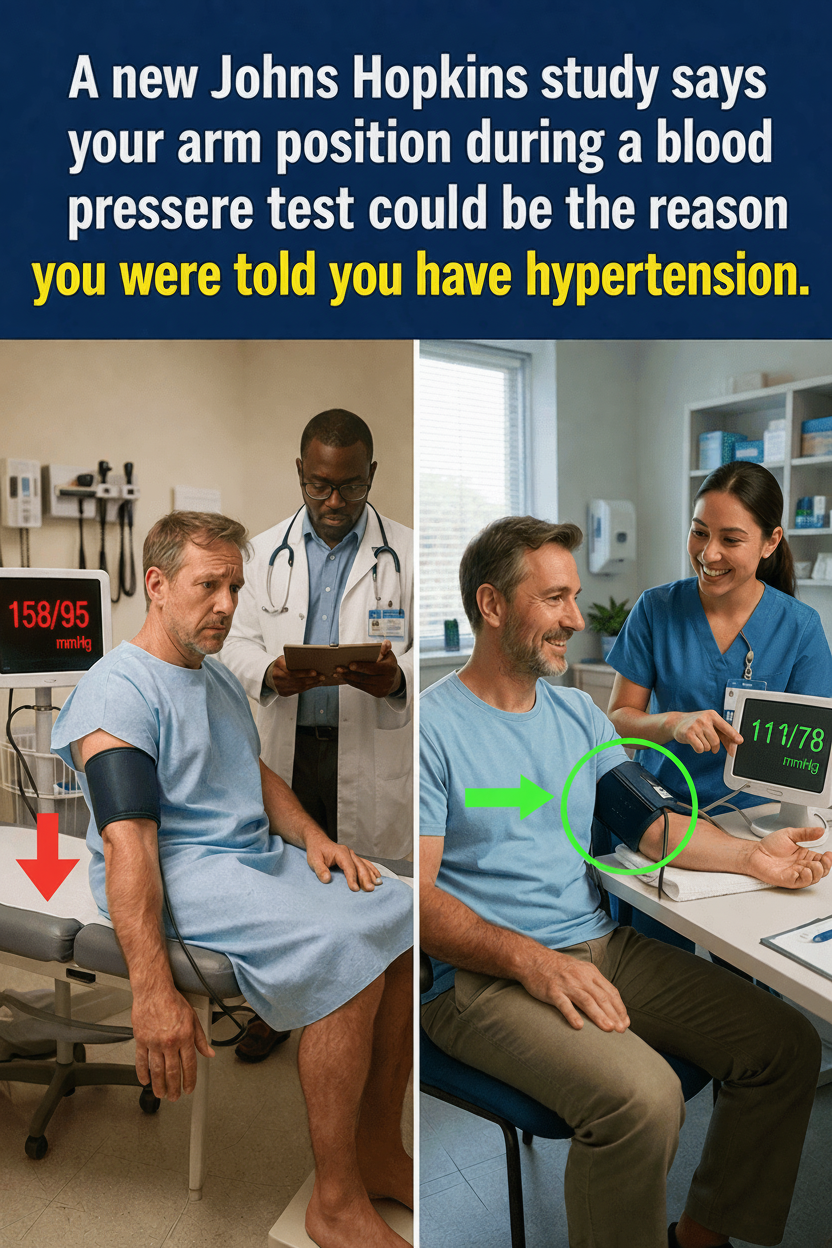
Now, here’s where it gets wild: when participants just let their arm rest on their lap instead, their systolic blood pressure (that’s the top number, folks) was overestimated by about 3.9 mmHg. And the diastolic (the bottom number)? That jumped by 4.0 mmHg. Just from a lap rest!
But wait, there’s more! An unsupported arm, just hanging there at the side, showed even bigger discrepancies. Systolic readings shot up by a whopping 6.5 mmHg, and diastolic by 4.4 mmHg, all compared to that proper, supported desk position. Mind-blowing, right?
You might be thinking, “Eh, a few points? No biggie.” WRONG! These differences are no joke. Imagine a healthy 123 mmHg systolic reading suddenly looking like 129 or 130 mmHg because your arm was in the wrong spot. That slight bump can push you into categories that scream for closer monitoring or even land you in a serious chat with your doctor about potential high blood pressure issues you don’t even have!
The brains behind the study, including the big boss Dr. Tammy Brady from Johns Hopkins, didn’t mince words: arm position makes a “huge difference” in accuracy. These findings aren’t just some random discovery; they perfectly line up with established guidelines from giants like the American Heart Association, who’ve been shouting about proper support to dodge these overestimated readings.
Why Arm Position Affects Blood Pressure Readings
Okay, so why does your arm’s position matter so much? It all boils down to how blood pressure measurements work. The cuff is trying to detect the pressure in your brachial artery. When your arm is below heart level or just flopping around unsupported, gravity and muscle tension gang up to mess with your blood flow and those crucial pressure readings. Supporting your arm on a solid surface, right at heart level, helps keep everything consistent with the standard protocols, giving you the real deal numbers.
But here’s the part that most people, and even some busy clinics, totally overlook: people often just relax in whatever position feels easiest – letting that arm dangle or resting it in their lap. We get it, comfort is king! But research clearly shows these lazy habits are super common and can lead to consistently higher blood pressure readings over time. Don’t get played!
And that’s not all the sneaky stuff! Subtle factors like having your back supported, your feet flat on the floor, and even an empty bladder also play roles in getting accurate measurements. But make no mistake, this study screamed it loud and clear: arm position is a KEY player in this whole accuracy game.
Comparing Arm Positions: A Quick Breakdown
To make it crystal clear, here’s the lowdown on how the different arm positions stack up, straight from the Johns Hopkins findings:
- Arm supported on a desk/table (recommended): This is your baseline, your accurate reading zone, with the cuff right at heart level. No tricks, just truth.
- Arm resting on lap: Expect your systolic blood pressure to jump by +3.9 mmHg and your diastolic by +4.0 mmHg on average. That’s a sneaky bump!
- Arm hanging unsupported at side: This is the worst offender! Your systolic readings will skyrocket by +6.5 mmHg and your diastolic by +4.4 mmHg on average. You’re practically asking for a misdiagnosis here!
And just so you know, these overestimations weren’t just a fluke. They were consistent across every age group, gender, and other subgroups in the study. This isn’t just for some people; it’s for EVERYONE.
Practical Tips for More Accurate Blood Pressure Checks
Alright, so next time you’re getting your blood pressure measured, whether you’re at the doctor’s office or using your trusty home monitor, you’ve got the power to ensure better accuracy. Follow these simple, no-nonsense steps:
- Demand support: Don’t be shy! Ask for your arm to be comfortably supported on a table or desk, with that cuff perfectly positioned at heart level. It’s your health, your right!
- Sit like a boss: Make sure your back is straight against the chair, your feet are flat on the floor, and your legs are uncrossed. No slouching, no pretzel legs!
- Chill out: Give yourself a few minutes to rest quietly before the measurement even begins. No rushing, no stress.
- Silence is golden: During the reading, zip it! Avoid talking, crossing your legs, or tensing any muscles. Just breathe and relax.
- Home monitor? Same rules apply: If you’re using a device at home, stick to these exact positioning guidelines and take your readings at consistent times. Consistency is key, folks!
These adjustments are ridiculously easy to implement, and they can seriously help you get numbers that truly reflect your usual blood pressure, not some inflated fake-out. Don’t let a simple arm position fool you!
Why This Matters for Your Health Monitoring
Getting accurate blood pressure readings is absolutely crucial for your health monitoring and making informed decisions about your well-being. Don’t let a simple arm position trick you into unnecessary worry or treatments. Your health is too important to leave to chance or a dangling arm!
Stay sharp, stay informed, and keep those numbers honest! Want more insider tips on keeping your health in check? Dive deeper into our other articles and arm yourself with knowledge!