 By admin
 Discovering a sudden cluster of brown spots on your chest can be unsettling, particularly when they seem to emerge rapidly. This unexpected development often triggers immediate concern about serious conditions such as melanoma, leading to anxiety while awaiting a medical consultation. Fortunately, a significant number of these instances are attributed to harmless, common skin changes. Nevertheless, gaining insight into the potential origins of these skin spots can provide reassurance until you receive professional guidance. This comprehensive guide will delve into the various factors that might cause these brown spots on the chest, explain how to identify when medical attention is warranted, and outline immediate actions you can take to safeguard your skin. Stay with us as we also reveal effective strategies for proactively monitoring skin changes and maintaining optimal skin health.
Understanding Sudden Brown Spots on the Skin
Brown spots, medically termed hyperpigmentation, arise from an accumulation of melanin—the natural pigment responsible for skin color—in localized areas. While some pigmented lesions manifest gradually over extended periods, others can appear quite abruptly, often triggered by factors such as significant sun exposure or hormonal fluctuations. The chest area is particularly susceptible to these skin changes due to its frequent exposure to sunlight, especially during warmer seasons or when wearing open attire. Extensive research, including insights from reputable institutions like the Mayo Clinic, underscores the substantial role of ultraviolet (UV) light in overstimulating pigment-producing cells, which can result in the formation of clustered dark patches. It’s important to note, however, that not all sudden appearances of brown spots are identical. Some may present as flat and uniformly colored, while others might exhibit a slightly raised or textured feel. Recognizing these distinctions can contribute to a sense of calm and better inform your understanding.
Common Benign Causes of Multiple Brown Spots Appearing Quickly
Several common, non-alarming reasons can explain the rapid emergence of multiple brown spots on your skin. These often include:
- Solar Lentigines (Sun Damage and Age Spots): Extended periods of UV exposure can lead to an aggregation of pigment cells, resulting in flat brown spots that might appear suddenly, particularly after intense sun exposure. These are frequently observed on the chest, shoulders, and upper back.
- Seborrheic Keratoses: These benign, often waxy or scaly growths can present as brown, ‘stuck-on’ lesions. Although they typically develop slowly, clusters can become noticeable, particularly with advancing age or genetic predisposition.
- Post-Inflammatory Hyperpigmentation (PIH): Following an episode of skin irritation—such as a rash, friction from clothing, or even a minor sunburn—residual pigment can manifest as brown spots once the initial inflammation subsides.
- Hormonal Fluctuations or Other Triggers: Alterations in hormone levels, certain medications, or conditions like melasma (though more prevalent on the face) can contribute to localized skin darkening.
Crucially, the majority of sudden brown spots on the chest in adults are linked to these benign, everyday factors, rather than indicative of a serious underlying condition. Nevertheless, a cautious approach is always recommended.
When to Pay Closer Attention: The ABCDE Guide for Skin Changes
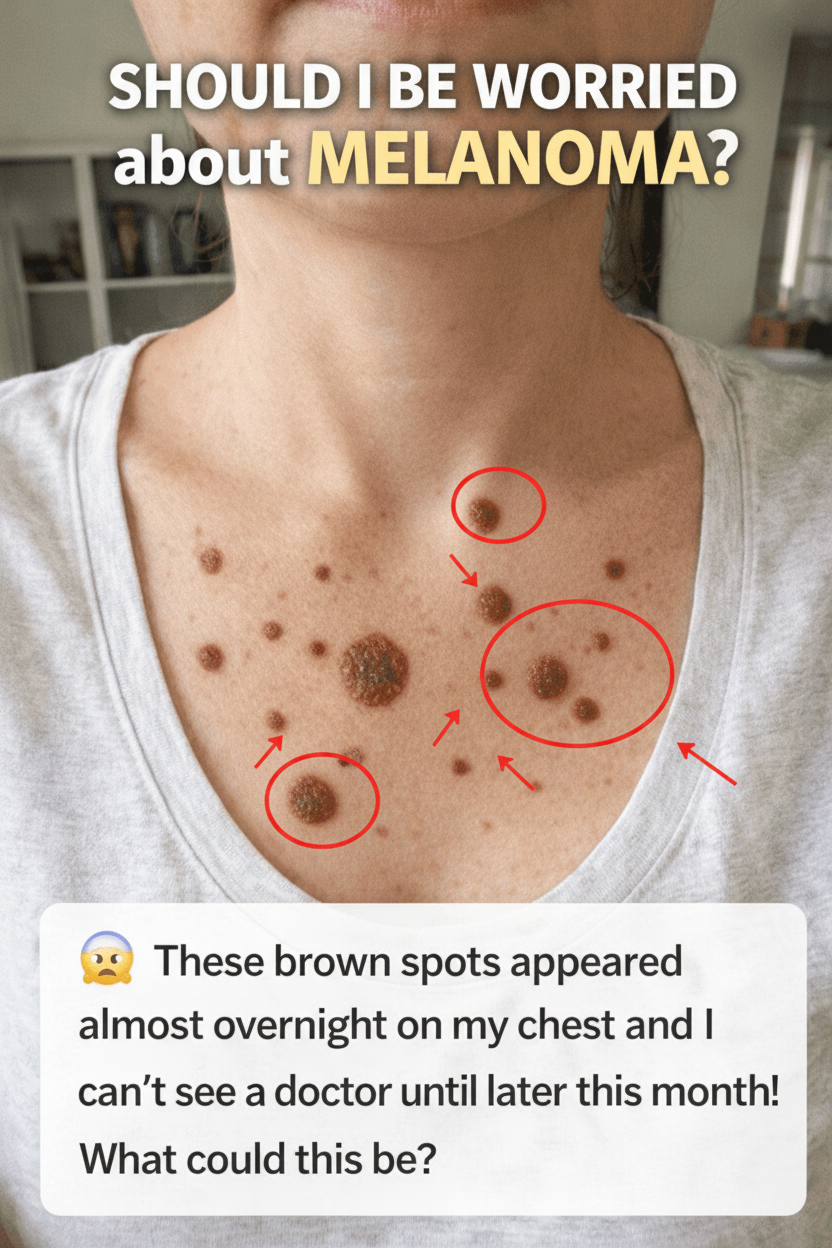
To help individuals identify potentially worrisome skin changes, dermatologists frequently advise using the well-known ABCDE rule for assessing pigmented lesions:
- Asymmetry: Observe if one half of the spot fails to mirror the other.
- Border: Look for edges that appear irregular, jagged, or indistinct.
- Color: Note the presence of varied hues (e.g., shades of brown, black, red, white, or blue) or inconsistent pigmentation within the spot.
- Diameter: Pay attention if the spot exceeds approximately 6mm in size (roughly the diameter of a pencil eraser), though smaller lesions warrant attention if they are actively changing.
- Evolving: Any noticeable alteration in the spot’s size, shape, color, or the onset of new symptoms such as itching, tenderness, or bleeding necessitates prompt evaluation.
Generally, if your brown spots are predominantly uniform in color, exhibit a rounded shape, and remain unchanged over time, they are less likely to indicate a concerning issue. Nevertheless, the sudden appearance of multiple new spots still warrants a professional medical assessment. It’s important to remember that in rare instances, conditions like the Leser-Trélat sign—characterized by an explosive onset of seborrheic keratoses—can be associated with underlying health concerns, although this is quite uncommon. Research consistently emphasizes that early medical evaluation provides significant peace of mind, even when findings confirm a benign diagnosis.
Practical Steps You Can Take While Waiting for Your Appointment
While awaiting your medical consultation, you can adopt several proactive measures to feel more empowered and informed. Consider these actionable tips:
- Capture high-quality photographs of the affected area immediately, ensuring good lighting and including a ruler for scale. Review these images weekly to monitor for any subtle skin changes.
- Minimize direct sun exposure to your chest. Opt for protective clothing or apply a broad-spectrum SPF 30+ sunscreen daily, even when indoors near windows, to prevent further UV damage.
- Cleanse the area with a mild, gentle product, avoiding abrasive scrubs that could cause irritation and potentially exacerbate skin pigmentation.
- Document any accompanying symptoms: Is there persistent itching, flaking, or have you had recent significant sun exposure? Record these observations for your healthcare provider.
- Prioritize hydration and incorporate antioxidant-rich foods (such as berries and leafy greens) into your diet to foster overall skin health. While these won’t eliminate existing spots, they contribute to skin resilience.
Implementing these simple habits can significantly enhance your ability to manage uncertainty and prepare effectively for your appointment. Remember, proactive care is key to maintaining healthy skin.