 By admin
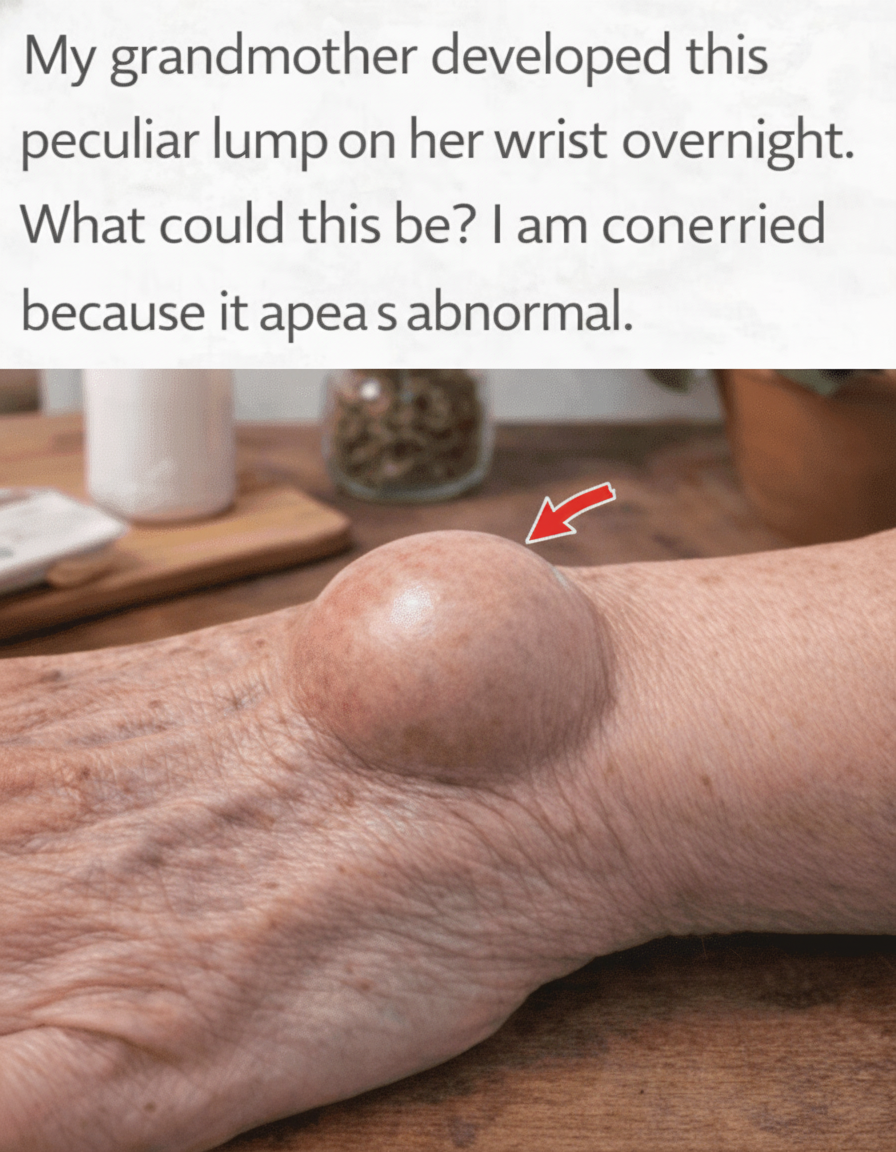
 One moment, everything seems perfectly normal. The next, you or an older loved one might notice an unexpected bump on the wrist. This sudden appearance can be unsettling, even alarming, especially when it seems to have materialized overnight. It’s natural for thoughts to immediately jump to serious possibilities, creating a palpable sense of unease.
However, it’s important to remember that not every sudden lump indicates a dangerous condition. In fact, many common wrist lumps, particularly in older adults, stem from frequently encountered medical issues. By the end of this article, you’ll be familiar with a key indicator that medical professionals often look for first, which can help demystify these sudden appearances.
Why an Unexpected Wrist Lump Can Be So Concerning
Our natural instinct is to worry when a new physical change appears without warning. This reaction is entirely normal. A lump on the wrist can seem particularly dramatic because the skin in this area is relatively thin, and the joint undergoes frequent movement. Even minor changes beneath the surface can quickly become noticeable.
Common Reasons for Anxiety:
- The lump was absent just yesterday.
- Its shape appears unusual or distinctly rounded.
- It may feel firm or solid to the touch.
- The affected area might feel sensitive or tight.
What many people don’t realize is the intricate anatomy of the wrist, which comprises numerous small joints, tendons, and fluid-filled spaces. This complex structure means that small accumulations of fluid can sometimes form a noticeable bump. Surprisingly, one of the most prevalent causes of such bumps is a condition commonly referred to by doctors as a ganglion cyst. Yet, this is just one potential explanation, and understanding the specifics is key.
Understanding Ganglion Cysts
A ganglion cyst represents one of the most frequent reasons individuals discover a lump on their wrist. It is essentially a small, benign sac filled with a thick, jelly-like fluid that develops adjacent to a joint or tendon. While these cysts often manifest on the back of the wrist, they can also appear on the palm side.
Orthopedic research consistently highlights that ganglion cysts account for a substantial percentage of wrist lumps evaluated in clinical settings. Here are the typical characteristics medical practitioners observe:
- A distinct round or oval shape.
- A smooth texture beneath the skin’s surface.
- Size ranging from that of a pea to a grape.
- It may feel firm or slightly compressible.
- Its size can fluctuate over time.
Many individuals experience no pain whatsoever from these cysts. Others might report mild pressure, especially during wrist movement. What often surprises families is how rapidly these cysts can emerge, making it seem as though they developed overnight.
Indicators Suggesting a Ganglion Cyst
When assessing a wrist lump, doctors typically start with straightforward observations. Specific signs can strongly suggest the presence of a ganglion cyst rather than a more serious condition. These common indicators include:
- The lump exhibits slight mobility beneath the skin.
- It becomes more prominent when the wrist is flexed.
- The skin overlying the lump appears normal, without discoloration or inflammation.
- Its size might temporarily increase following physical activity.
Remarkably, some ganglion cysts even resolve spontaneously. However, there’s a crucial caveat: if the cyst presses on nearby nerves, it can lead to:
- Tingling sensations.
- Localized mild pain.
- Weakness when attempting to grip objects.
For these reasons, medical evaluation is often advised if symptoms change or worsen.
Other Potential Causes of a Wrist Lump
While ganglion cysts are frequently encountered, they are not the sole explanation for a wrist lump. Several other conditions can also result in such formations. Here are a few possibilities that doctors consider:
- Lipoma: A soft, benign growth composed of fatty tissue situated just beneath the skin.
- Bone Spur: A small, bony projection, often associated with degenerative joint changes over time.
- Rheumatoid Nodules: Firm lumps that are characteristic of certain inflammatory joint conditions like rheumatoid arthritis.
- Localized Infection: Swelling and a lump can sometimes arise from bacterial irritation or inflammation within the tissue.
For a clearer understanding, here’s a brief comparison of some common wrist lump causes:
| Condition | Texture | Pain Level | Growth Speed |
|---|---|---|---|
| Ganglion Cyst | Firm or slightly rubbery | Usually mild or none | Can change size, sometimes rapid onset |
| Lipoma | Soft and movable | Rarely painful | Slow, gradual growth |
| Bone Spur | Hard, bony | May cause pain, especially with movement | Slow development over time |
| Infection | Tender, warm, swollen | Often painful | Typically faster onset and progression |
This information naturally leads to a vital question: When should one be genuinely concerned?
Warning Signs Requiring Medical Attention
The majority of wrist lumps do not signify an emergency. Nevertheless, certain accompanying symptoms should never be overlooked. Prompt medical evaluation is crucial if the lump is accompanied by any of the following:
- Intense or worsening pain.
- Noticeable redness or warmth around the lump.
- Fever.
- Rapid increase in the lump’s size.
- Numbness or persistent tingling in the fingers.
- Significant difficulty or limitation in moving the hand or wrist.
These signs could indicate an infection, nerve compression, or other conditions that demand immediate professional assessment and treatment. Healthcare providers always prefer to evaluate potential issues early rather than waiting.
When to Consult a Doctor
If you or an older adult notices a new or changing lump on the wrist, the most prudent course of action is to seek medical advice. A doctor can accurately diagnose the cause through a physical examination, and if necessary, imaging tests like ultrasound or MRI. Early and accurate diagnosis ensures appropriate management and provides peace of mind, confirming whether the lump is benign or requires further intervention.