 By admin
 Imagine waking up to an agonizing, piercing pain in one testicle – a sensation unlike anything you’ve ever experienced. It’s sharp, relentless, and refuses to subside. Many individuals initially dismiss it, attributing it to a minor strain or a temporary discomfort that will eventually pass. However, such a delay can have profound consequences. Testicular torsion is a critical medical emergency where the testicle twists upon itself, critically cutting off its own blood supply. In this time-sensitive condition, every moment is crucial for determining whether the affected testicle can be preserved. The encouraging news is that prompt recognition of the symptoms and immediate arrival at an emergency room significantly enhance the likelihood of a favorable outcome. Continue reading, as we will outline the precise steps to take should this critical situation ever arise for you or someone you know.
What Exactly Is Testicular Torsion?
Testicular torsion occurs when a testicle undergoes rotation around the spermatic cord. This vital structure functions as a lifeline, delivering essential blood, oxygen, and nerve signals to the testicle. When this twisting motion takes place, it completely obstructs blood flow. Without this continuous supply of blood, the testicular tissue rapidly becomes deprived of oxygen, leading to progressive damage. Medical research unequivocally categorizes this as a true urological emergency demanding urgent intervention. It’s also important to note that while injury can sometimes be a factor, in many instances, testicular torsion manifests spontaneously without any apparent cause.
Why Is Testicular Torsion So Dangerous?
The spermatic cord is indispensable for testicular health. It is responsible for transporting:
- Fresh, oxygenated blood
- Vital nutrients
- Nerve signals
When the testicle twists, this crucial lifeline is effectively pinched off. The tissue immediately begins to suffer from ischemia – a severe lack of oxygen – which can lead to cell death. Numerous studies underscore the critical adage: “time equals testicle.” The longer the delay in treatment, the greater the risk of irreversible damage and permanent loss of the testicle. This isn’t merely about the physical loss of an organ; delayed care can have significant implications for future fertility, hormone production, and overall emotional well-being.
The Critical Time Window: What Medical Research Reveals
You may have heard of a “6-hour window” for treatment. Medical literature consistently emphasizes that the highest probabilities for salvaging the testicle are achieved when treatment is administered swiftly. Comprehensive studies, including systematic reviews analyzing thousands of cases, report approximate testicle salvage rates as follows:
- Within the first 6 hours: Up to 97% chance of saving the testicle in certain reports.
- 6–12 hours: The success rate drops to approximately 79%.
- Beyond 12 hours: Salvage rates decline significantly, with some data indicating 50–54% between 13–24 hours.
- After 24 hours: Success rates are often much lower, frequently around 18% or less in aggregated findings.
However, a key insight from more recent analyses suggests that testicle survival can sometimes extend beyond the traditional 6–8 hour timeframe in various situations. Despite this, medical experts unanimously agree: *do not wait*. The sooner you seek emergency medical help, the substantially better the odds for a positive outcome.
| Time Since Symptom Onset | Approximate Testicle Salvage Rate (Based on Studies) |
|---|---|
| <6 hours | High (often 90–97%) |
| 6–12 hours | Moderate to high (around 79%) |
| 13–24 hours | Variable (around 50–54%) |
| >24 hours | Low (often <20%) |
These figures are derived from reviews of real patient outcomes and unequivocally underscore why immediate emergency care for testicular torsion is absolutely non-negotiable.
What Causes Testicular Torsion?
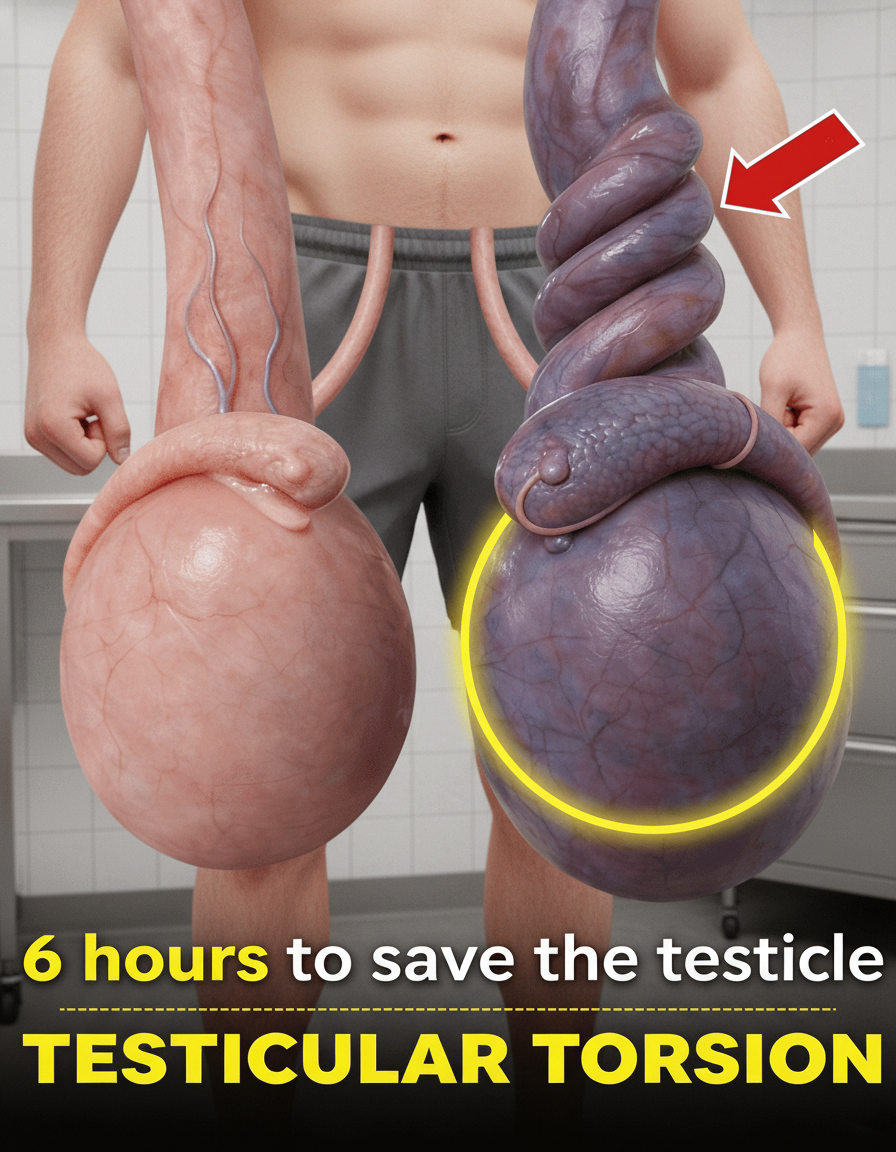
While testicular torsion most commonly affects adolescent boys and young men, it can occur at any age, including in newborns. A primary predisposing factor is a congenital anatomical variation known as the “bell-clapper” deformity. In individuals with this anatomy, the testicle is not securely attached within the scrotum and hangs more freely, much like a clapper inside a bell, making it highly susceptible to twisting. Other potential triggers can include:
- Sudden, vigorous movements during athletic activities or exercise.
- Minor trauma or injury to the groin area.
- Twisting or turning motions during sleep.
- Exposure to cold temperatures.
Quite often, however, there is no discernible trigger; the condition simply occurs without warning.
Warning Signs You Should Never Ignore
The cardinal symptom of testicular torsion is the sudden onset of severe, excruciating pain in one testicle. This pain typically appears abruptly and is intensely discomforting. Other frequently observed signs include:
- Noticeable swelling or redness in the scrotum.
- One testicle appearing to be positioned higher than the other, or at an unusual angle.
- Accompanying nausea and vomiting.
- Pain that radiates into the lower abdomen.
- The scrotal skin appearing taut or discolored.
If you experience any combination of these symptoms – particularly sudden, severe testicular pain – do not hesitate or wait for the pain to “resolve itself.” Proceed directly to the emergency room without delay.
How Doctors Diagnose Testicular Torsion
The diagnostic process typically begins with a thorough physical examination. The physician will assess for characteristic signs such as a testicle that is elevated within the scrotum or an absent cremasteric reflex (the normal reflex where the testicle pulls upward when the inner thigh is gently stroked). To definitively evaluate blood flow issues, a Doppler ultrasound is routinely employed. This quick and non-invasive imaging technique can effectively visualize whether circulation to the testicle is compromised or completely blocked. Crucially, if there is a high clinical suspicion of testicular torsion based on the patient’s symptoms and physical exam findings, many surgeons will proceed directly to emergency surgery without waiting for imaging results. In these critical cases, time is far too precious to risk any delays.
The Only Effective Approach: Emergency Surgery
For testicular torsion, there is only one definitive and effective treatment: emergency surgery. This surgical procedure, known as an orchiopexy, involves untwisting the spermatic cord to restore blood flow to the testicle. Once untwisted, the surgeon will then secure both testicles to the inside of the scrotum with sutures to prevent future episodes of torsion. This fixation is performed on both testicles, even if only one was affected, as the underlying anatomical predisposition (like the bell-clapper deformity) often exists in both. The success of this surgery is directly linked to how quickly it is performed after the onset of symptoms, reinforcing the urgent need for immediate medical attention.