 By admin
 The Hidden Health Clues: What Your Tongue Color Says About Your Well-being
Imagine a typical morning scene. You wake up, head to the bathroom, brush your teeth, and glance at your reflection. Suddenly, you notice something unusual about your tongue – perhaps it looks paler than usual or is covered with a thick coating. Most people might quickly brush it off as trivial and forget about it. However, the reality is that your tongue often provides a subtle window into your body’s internal state. Overlooking these seemingly minor signals could mean missing crucial early indicators related to hydration, nutritional status, or even circulatory health.
The encouraging news is that by learning to observe your tongue, you can gain valuable insights into your body’s daily requirements and proactively enhance your health habits. By the end of this article, you will also discover a remarkably simple routine that many medical professionals recommend for maintaining optimal tongue health.
1. The Normal Tongue: What a Healthy Tongue Usually Looks Like
A healthy tongue typically presents as light pink, adorned with tiny bumps known as papillae, which are uniformly distributed across its surface. These papillae house your taste buds and are fundamental for detecting various flavors. A healthy tongue generally exhibits the following characteristics:
- Light pink coloration: A vibrant, soft pink hue is ideal.
- Moist surface: Indicating adequate hydration.
- Thin, transparent coating: A very subtle, almost invisible film is normal.
- Small, evenly distributed bumps (papillae): Essential for taste and texture.
These signs are generally indicative of good hydration and a well-balanced nutritional intake. Yet, a crucial point many tend to overlook is that your tongue’s appearance can shift quite rapidly. Factors such as your diet, hydration levels, current medications, or daily oral hygiene practices can all influence its look. For instance:
- Consuming sufficient water helps maintain its natural moisture.
- A diet rich in fruits and vegetables supports healthy blood circulation.
- Consistent brushing aids in removing bacterial buildup.
When these fundamental habits falter, your tongue may begin to display noticeable differences. This brings us to our first common warning sign.
2. White Coating: Possible Sign of Infection or Oral Imbalance
A pale or thickly coated white tongue is among the most frequently observed changes. This often occurs when bacteria, fungi, or food debris accumulate excessively on the tongue’s surface. Common contributing factors include:
- Suboptimal oral hygiene practices.
- Recent use of antibiotics.
- Experiencing dry mouth (xerostomia).
- A weakened immune system.
In certain instances, persistent white patches might be associated with oral thrush, a fungal imbalance caused by an overgrowth of yeast. However, it’s important to note that this doesn’t always signify a serious underlying condition. Often, its appearance can be significantly improved with simple daily habits, such as:
- Gently brushing your tongue.
- Increasing your daily water intake.
- Utilizing an alcohol-free mouthwash.
- Incorporating probiotic-rich foods, like yogurt, into your diet.
However, a white coating is just one of many potential color shifts people might experience.
3. Bright Red Tongue: Possible Reaction to Irritation or Allergy
A bright red or noticeably inflamed tongue can sometimes manifest quite suddenly. Individuals often describe this sensation as:
- A burning or stinging feeling.
- Increased tenderness or soreness.
- Swelling of the tongue.
- Heightened sensitivity, especially to spicy foods.
This reaction can occur following exposure to particular foods or medications. Potential triggers include:
- Specific food allergies.
- Consumption of excessively spicy foods.
- Deficiencies in certain vitamins (e.g., B vitamins).
- General irritation within the mouth.
Interestingly, research indicates that deficiencies in B vitamins can sometimes impact the tongue’s appearance, leading to redness. Here’s a key distinction: if irritation appears abruptly and resolves within a few days, it may simply be a temporary inflammatory response. However, persistent redness warrants further investigation. And the next color change might truly surprise you.
4. Yellow Tongue: Bacterial Buildup and Lifestyle Habits
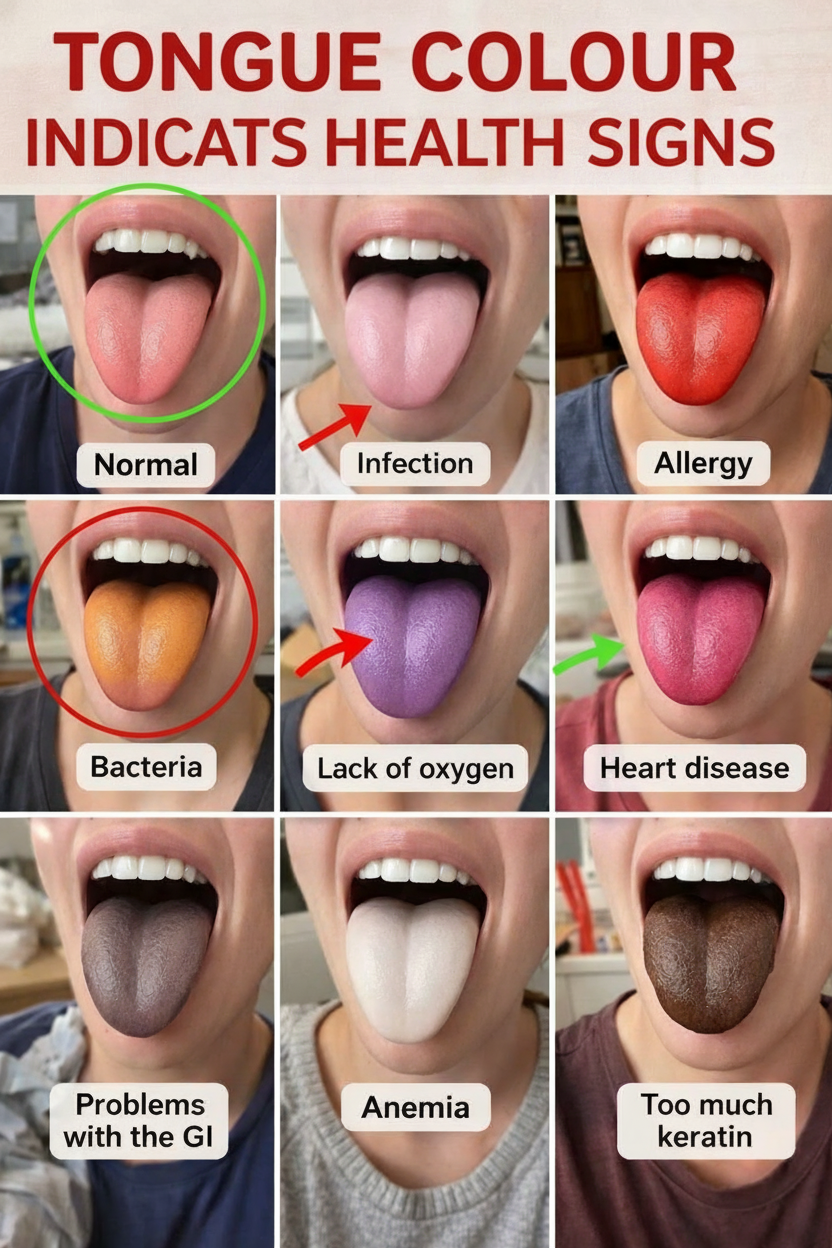
A yellow coating on the tongue is frequently associated with bacterial accumulation. It typically develops when bacteria multiply on the tongue’s surface, and pigments from food or tobacco subsequently stain it. Several everyday habits can contribute to this phenomenon:
- Smoking or tobacco use.
- Inadequate tongue cleaning practices.
- Chronic dry mouth.
- Insufficient hydration.
The encouraging aspect here is that a yellow tongue is often reversible. Simple adjustments to your routine can significantly improve its appearance:
- Clean your tongue daily, ideally with a tongue scraper.
- Ensure consistent hydration throughout your day.
- Reduce or eliminate tobacco use.
- Increase your intake of fiber-rich foods.
Minor lifestyle modifications can frequently lead to a noticeable improvement within just a few days. Yet, on occasion, the tongue may display even darker hues.
5. Bluish or Purple Tongue: Possible Circulation Concerns
A bluish or purple tint on the tongue can be a concerning sign, often indicating reduced oxygen circulation within the body. Medical professionals sometimes link this unusual appearance to conditions that impact breathing or blood flow. Potential contributing factors may include:
- Exposure to extremely cold environments.
- Underlying circulatory challenges.
- Conditions affecting the lungs or respiratory system.
- Significant cardiovascular stress.
However, context is vital. Temporary color changes might occur in very cold settings or during periods of intense physical exertion. Nevertheless, persistent bluish discoloration should always be promptly evaluated by a healthcare professional. This is because such a change can sometimes be your body’s urgent plea for medical attention. And the next tongue color might signal digestive issues.
6. Gray Coating Tongue: Indicative of Digestive Imbalance
A gray or thickly coated tongue can emerge when the delicate balance of your digestive system is disrupted. Some individuals observe this alongside other symptoms, such as acid reflux or indigestion. This coating often suggests an accumulation of toxins or a sluggish digestive process, preventing the natural shedding of tongue cells. Factors that may contribute to a gray tongue include:
- Poor digestion or malabsorption.
- Dehydration.
- Certain dietary habits.
- Stress, which can impact gut health.
Addressing the root cause of digestive imbalance, improving hydration, and maintaining diligent oral hygiene can often help restore the tongue to its normal appearance.
A Simple Routine for a Healthy Tongue
As promised, here’s a surprisingly simple routine recommended by many doctors to maintain a healthy tongue:
- Daily Tongue Cleaning: Use a tongue scraper every morning before brushing your teeth. Gently scrape from the back to the front of your tongue 2-3 times to remove bacteria and debris.
- Stay Hydrated: Drink plenty of water throughout the day to keep your mouth moist and aid in flushing away bacteria.
- Balanced Diet: Incorporate a wide variety of fruits, vegetables, and whole grains to support overall health and digestion.
- Good Oral Hygiene: Brush your teeth twice a day and floss daily to maintain a clean oral environment.
- Regular Check-ups: Visit your dentist regularly for professional cleanings and examinations, as they can spot early signs of oral health issues.
Conclusion: Listen to What Your Tongue is Telling You
Your tongue is far more than just a tool for tasting and speaking; it’s a dynamic indicator of your overall health. By taking a few moments each day to observe its color and texture, you empower yourself with valuable insights into your body’s needs. While many changes are minor and easily remedied with lifestyle adjustments, persistent or concerning alterations should always prompt a consultation with a healthcare professional. Paying attention to these subtle signals can be a powerful step towards proactive health management and maintaining your overall well-being.