 By admin
 Many people notice small white or yellow spots tucked in the back of their throat and struggle with persistent bad breath that brushing and mouthwash never seem to fix completely. Let’s be real, these little formations can leave you feeling seriously self-conscious in conversations or create a scratchy, downright uncomfortable sensation when swallowing. But here’s the good news, the encouraging part, if you will: simple everyday habits and gentle approaches can absolutely help manage the buildup and support a fresher feeling overall. Stick around until the end because I am sharing one surprising daily routine that many people find makes a noticeable, game-changing difference in keeping these nasty little invaders under control!
What Exactly Are Tonsil Stones?
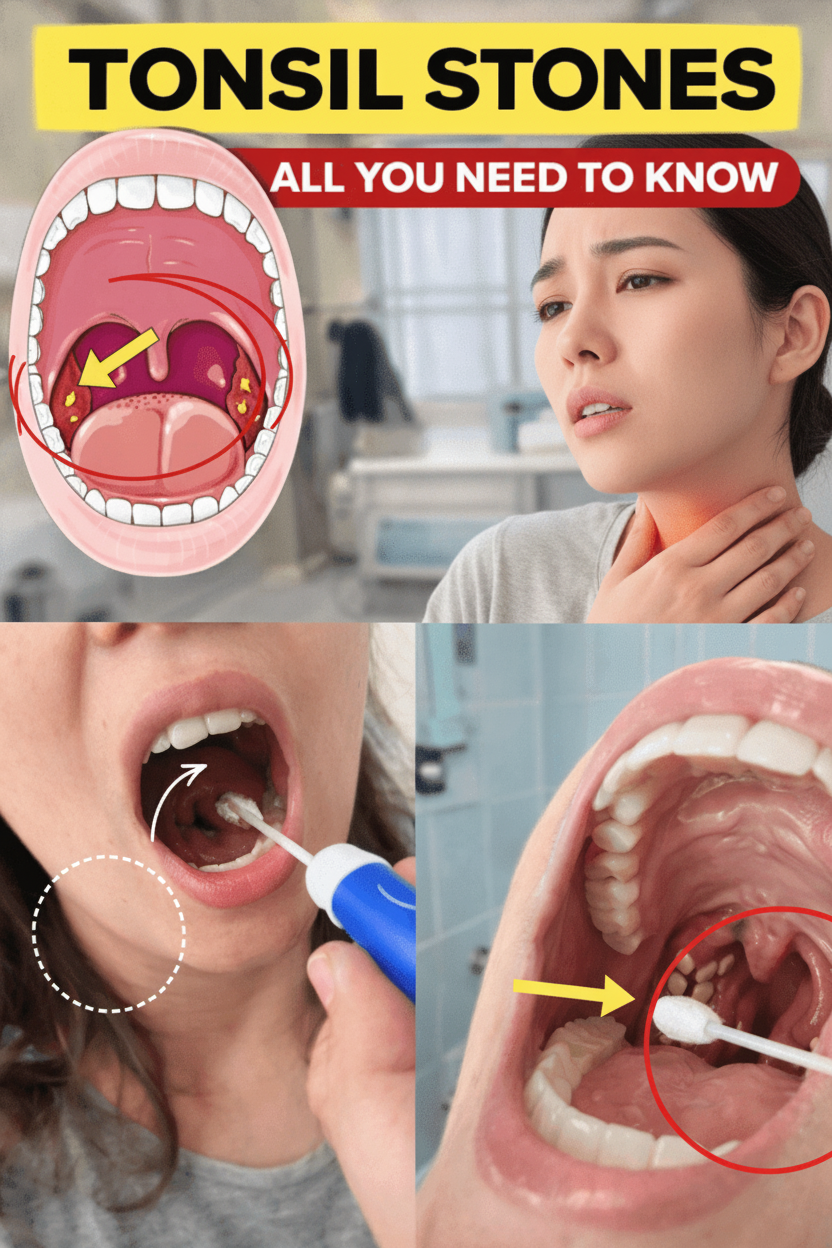
Alright, let’s get down to brass tacks. Tonsil stones, or as the fancy folks call ’em, tonsilloliths, form when bits of debris get trapped in the natural pockets and crevices on your tonsils. Imagine tiny caves in your throat – perfect hiding spots. Over time, bacteria, food particles, dead cells, and mucus decide to throw a party there, hardening into small, calcified lumps that look like white or yellowish pebbles. Yeah, it’s as gross as it sounds. They sit right where your tonsils meet the back of your throat, being sneaky little troublemakers. Research shared by experts at places like the Cleveland Clinic shows these formations are far more common than most realize, often appearing in people with deeper tonsil crevices. The image many recognize shows exactly where they hide, with yellow arrows pointing to the spots on the tonsils. They are usually small and harmless, but don’t let that fool you – they can build up and become more noticeable, making you wonder what the heck is going on back there. Understanding what they are helps take away some of the mystery and, let’s face it, a lot of the worry.
Common Causes Behind Tonsil Stone Formation
So, why do these unwelcome guests set up shop? Your tonsils naturally have small folds and crypts, basically tiny traps designed to catch bacteria and particles as part of your immune system. Problem is, when debris hangs around too long and calcium from your saliva decides to join the mix, the material hardens. Think of it like a tiny concrete mixer in your throat. Poor oral hygiene plays a massive role here because leftover food and bacteria just linger longer, giving them more time to calcify. Dehydration makes your saliva thicker, making it easier for particles to stick around. Chronic post-nasal drip or even just having naturally larger tonsils with deeper pockets can also contribute, according to information from Mayo Clinic resources. But here’s the kicker, the part many people completely miss: even with good brushing habits, certain lifestyle factors like smoking or a diet high in sugary foods can feed the very bacteria that help these stones form faster. The good news? Small, strategic changes in your daily routine can actually interrupt this whole nasty process before it even starts!
Key Symptoms That Might Indicate Tonsil Stones
You might not always see them, but trust me, your body often gives off some pretty clear distress signals. Persistent bad breath absolutely tops the list because the bacteria trapped inside these stones release some seriously unpleasant odors – the kind no amount of mints can truly conquer. Some people feel a mild sore or irritated throat, especially when swallowing, making every gulp a minor ordeal. Others notice a metallic taste or that annoying sensation that something is perpetually stuck in the back of the throat. In certain cases, you might even experience ear pain or a slight cough, even though the real issue is right there in your tonsils. Here is a quick look at the most common signs people report:
- Ongoing bad breath that brushing does not fully eliminate (the dreaded “halitosis”!)
- White or yellow visible spots on the tonsils (the smoking gun!)
- A feeling of something caught in the throat (that annoying lump!)
- Mild discomfort or swelling around the tonsil area (a subtle ache)
- Occasional ear pain or coughing (the surprising side effects)
If several of these sound familiar, take a deep breath – you are definitely not alone. Studies suggest up to forty percent of adults experience them at some point, yet many never connect the dots, suffering in silence. But not anymore, right?
Safe and Gentle Methods for Addressing Tonsil Stones at Home
The image you see often shows practical tools like a water flosser and a soft cotton swab, and for good reason! This isn’t brain surgery, but the key is to work gently so you avoid irritating that delicate tissue in your throat. Trust me, you don’t want to make things worse. Start with the easiest options and only move to others if absolutely needed. Here are simple, step-by-step approaches that many people use safely and effectively:
- Gargle with warm salt water. Mix one teaspoon of salt in a cup of warm water and swish gently for thirty seconds, twice a day. This bad boy not only helps loosen that stubborn gunk but also soothes any irritation like a charm.
- Use a water flosser on the lowest setting. Aim that gentle stream right at the tonsil area, keeping your distance, to blast out those loose particles without ever touching a thing. It’s like a mini power wash for your throat, but gentle!
- Try a soft cotton swab if you can see the stone clearly. Dampen the tip and press super lightly around the edge to coax it out. And listen up: NEVER, EVER push hard or use anything sharp – you’ll regret it! Your tonsils are sensitive, so treat them with respect.
But this is where it gets really interesting, where you can level up your game. Many find that combining these methods with consistent daily hydration works even better. Why? Because moist tissues are simply less likely to trap debris in the first place, making it harder for those nasty stones to form their little hideouts. It’s a simple hack, but a powerful one!
Helpful Daily Habits to Support Better Throat Health
Look, prevention really comes down to consistent, smart habits that make your throat an unwelcome environment for tonsil stones. Good oral care is non-negotiable. Brushing and flossing regularly is your first line of defense. Think of it as keeping your internal castle clean. Avoid sugary drinks and processed foods that feed bacteria. And remember that hydration tip? Drink plenty of water throughout the day – it keeps your saliva flowing and your throat moist, washing away potential stone-forming debris before it has a chance to settle. Regular gargling, even without salt, can also help keep things clear. It’s all about creating an environment where these annoying little pebbles can’t thrive. Stay on top of these habits, and you’ll be well on your way to a fresher mouth and a happier throat!
Feeling better already? We hope this guide has armed you with the knowledge and practical tips you need to tackle tonsil stones head-on. Don’t let these little nuisances cramp your style or your breath! For more expert advice on maintaining peak oral health and discovering other surprising home remedies, be sure to explore our other fantastic articles on dogpjs.com. Your journey to a healthier, happier you starts here!