 By admin
 Tonsil Stones (Tonsilloliths): Unmasking the Foul-Smelling Culprit Behind Persistent Bad Breath
Experiencing persistent bad breath, even after diligently brushing and flossing, can be incredibly disheartening and lead to self-consciousness during social interactions. You might occasionally dislodge a tiny, often odorous, white or yellowish fragment after a cough or throat clear, and its pungent smell can be quite alarming. This can understandably cause concern about your oral hygiene, dietary habits, or even overall health. However, there’s a reassuring explanation: a common and treatable condition often lurking deeper within your throat. This comprehensive guide will demystify this phenomenon and equip you with practical daily strategies to significantly improve your breath.
The Truth About Tonsil Stones (Tonsilloliths)
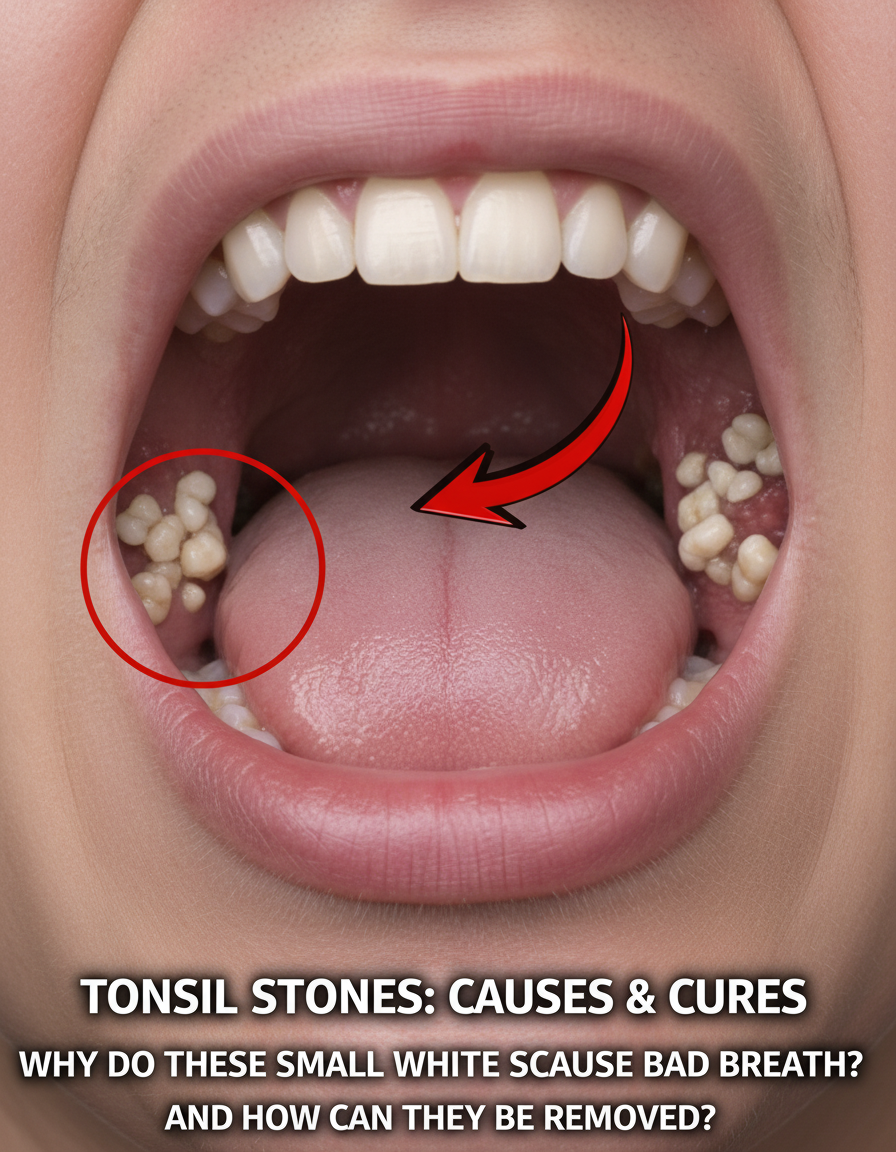
These small, malodorous formations are scientifically known as tonsilloliths, more commonly referred to as tonsil stones. Their development occurs within the small depressions or ‘crypts’ found on your tonsils. Unlike perfectly smooth surfaces, tonsils naturally feature an intricate landscape of folds and crevices. For some individuals, these anatomical pockets are unusually deep, creating ideal conditions for debris accumulation. Gradually, various particles can become lodged within these crypts, including:
- Remnants of food
- Shed dead cells from the oral cavity
- Mucus secretions
- Oral bacteria
As salivary minerals, particularly calcium, come into contact with this trapped matter, it can progressively calcify and solidify into a small, stone-like deposit. While some tonsil stones are no larger than a grain of rice, others can expand to the size of a pea. Crucially, even a minuscule tonsillolith possesses the potential to drastically impact breath freshness.
Why Do Tonsil Stones Smell So Strong?
The potent odor associated with tonsil stones stems from a fascinating biological process. The bacteria residing within these formations are primarily anaerobic, meaning they flourish in environments with minimal oxygen. Extensive oral health research confirms that these specific bacteria generate foul-smelling byproducts called volatile sulfur compounds (VSCs). These sulfurous gases are notoriously linked to:
- The distinct scent of rotten eggs
- Other sulfur-like, unpleasant odors
- Chronic bad breath, medically termed halitosis
This explains why conventional mouthwashes often fail to resolve the problem; they typically provide superficial freshness to the mouth’s front but cannot penetrate the deep tonsil crypts where these odorous compounds are produced. Furthermore, the smell may become noticeably stronger after a cough or throat clearing, as this action can expose or partially dislodge the stone, leading to a sudden release of the trapped, pungent gases.
8 Common Signs You Might Have Tonsil Stones
It’s important to note that tonsil stones aren’t always visible. A significant number of individuals experience symptoms without ever seeing the actual calcifications. Here are the most frequently reported indicators:
- Chronic Halitosis: Persistent bad breath, even with diligent oral care.
- Unpleasant Taste: A foul or metallic sensation originating from the back of the throat.
- Foreign Body Sensation: A feeling that something is lodged in your throat.
- Visible Deposits: Small white or yellowish specks appearing on the tonsils.
- Ear Discomfort: Mild aching or irritation in the ear, attributed to shared nerve pathways.
- Recurrent Sore Throats: Episodes of mild, recurring throat irritation.
- Expulsion of Lumps: Coughing up small, firm, often foul-smelling particles.
- Excessive Throat Clearing: A frequent urge to clear your throat.
Many individuals may suffer from several of these symptoms for years without realizing they are linked to tonsil stones, leading to prolonged confusion and discomfort.
Who Is More Likely to Develop Them?
Developing tonsil stones is generally not an indicator of inadequate oral hygiene; rather, anatomical factors significantly contribute to their formation. Certain demographics and conditions increase an individual’s susceptibility:
- Tonsil Morphology: Individuals possessing large tonsils or those with unusually deep tonsillar crypts.
- Age Group: Teenagers and young adults tend to be more prone.
- Post-Nasal Drip Sufferers: Those experiencing chronic post-nasal drip.
- Allergy and Sinus Issues: People with ongoing sinus problems or allergies.
- History of Tonsillitis: Individuals who frequently experienced tonsillitis during childhood.
Research within otolaryngology (ear, nose, and throat medicine) indicates that recurrent tonsil inflammation can lead to the gradual deepening of tonsillar crypts over time, thereby providing more ample space for debris accumulation. If these risk factors resonate with your experience, rest assured you are not alone in this common condition.
Why Mouthwash Alone Often Does Not Help
It’s crucial to dispel a widespread misunderstanding regarding mouthwash efficacy. While oral rinses certainly offer benefits such as:
- Surface freshening of the oral cavity
- Reduction of bacteria present on the tongue and gums
- Temporary management of breath odor
They are generally ineffective at dislodging the calcified material embedded deep within tonsil crypts. A helpful analogy is attempting to mask a foul smell by spraying air freshener in a room without removing the source of the odor. Mouthwash might temporarily cover the smell, but it fails to eliminate the underlying cause of halitosis originating from the tonsil stones.
How to Reduce and Manage Tonsil Stones at Home
Now for the actionable strategies to mitigate and manage tonsil stones from the comfort of your home. Remember, gentle consistency is far more effective than aggressive force.
Step 1: Gentle Removal (If Visible and Accessible)
If a tonsil stone is clearly visible and can be reached without strain:
- Carefully use a clean cotton swab.
- Apply only very light, gentle pressure.
- Crucially, never attempt to dig deeply or employ any sharp instruments.
Following removal, rinse your mouth thoroughly with warm salt water. If the stone doesn’t dislodge with minimal effort, do not attempt to force it out.
Step 2: Establish a Nightly Gargling Routine
Many individuals report significant improvement by incorporating these straightforward daily habits:
- Gargle with warm salt water every evening.
- Utilize an alcohol-free mouthwash.
- Maintain excellent hydration by drinking plenty of water throughout the day.
The warm salt water solution can assist in reducing bacterial accumulation and may gradually help to loosen trapped debris over time.
Step 3: Consider Gentle Oral Irrigation
Employing a low-pressure oral irrigator (like a water flosser on its lowest setting) can be beneficial for gently flushing out debris from the tonsil crypts. However, extreme caution is advised to avoid irritation or injury. Always use the device on the lowest possible setting and direct the stream carefully.