 By admin
 Tonsil Stones: Your Essential Guide to Understanding and Managing Common Throat Formations
Have you ever experienced the perplexing sensation of coughing up a small, firm, and foul-smelling lump from the back of your throat? This often puzzling occurrence leaves many individuals questioning its origin and feeling self-conscious about their breath. These peculiar formations, known as tonsil stones or tonsilloliths, can accumulate discreetly within the intricate folds of your tonsils. They frequently lead to persistent discomfort and potential embarrassment, even for those who maintain rigorous oral hygiene routines. However, there’s encouraging news: gaining knowledge about tonsil stones empowers you to take simple yet effective steps towards improved throat health. By the conclusion of this article, you’ll uncover a surprising habit that could significantly impact your well-being.
What Are Tonsil Stones?
Tonsil stones, medically termed tonsilloliths, are small, hardened deposits that develop within the natural indentations or ‘crypts’ of your tonsils. Your tonsils play a vital role as part of your body’s immune system, acting as a filter at the entrance to your throat. They capture various elements, including bacteria, minuscule food particles, dead cells, and mucus. When these organic materials become entrapped and combine with calcium, they undergo a calcification process, solidifying into distinct white or yellowish lumps. While most tonsil stones are typically modest in size, often comparable to grains of rice, some can expand considerably. According to medical experts, such as those at the Cleveland Clinic, these formations are quite prevalent and generally do not indicate a serious health concern. You might detect them during a casual self-examination in a mirror or they could be identified during a routine dental check-up. Nevertheless, comprehending their formation mechanism is crucial for effective management.
Common Symptoms of Tonsil Stones
Many individuals unknowingly harbor tonsil stones, as their symptoms can be subtle and easily overlooked. Yet, when these signs do manifest, they can be quite bothersome and interfere with daily activities.
Persistent Bad Breath
One of the most frequently reported and challenging symptoms is chronic bad breath, or halitosis, which often resists improvement from regular brushing or mouthwash. The anaerobic bacteria thriving on tonsil stones release potent sulfur compounds, which are the primary culprits behind this unpleasant odor. Studies suggest that tonsil stones could contribute to up to 10% of all cases of chronic halitosis.
Sore Throat or Irritation
You might experience a scratchy sensation or a mild, nagging discomfort, particularly when swallowing. Larger tonsil stones can exert pressure on the surrounding delicate throat tissues, causing that irksome feeling of something perpetually lodged in your throat.
Visible White or Yellow Spots
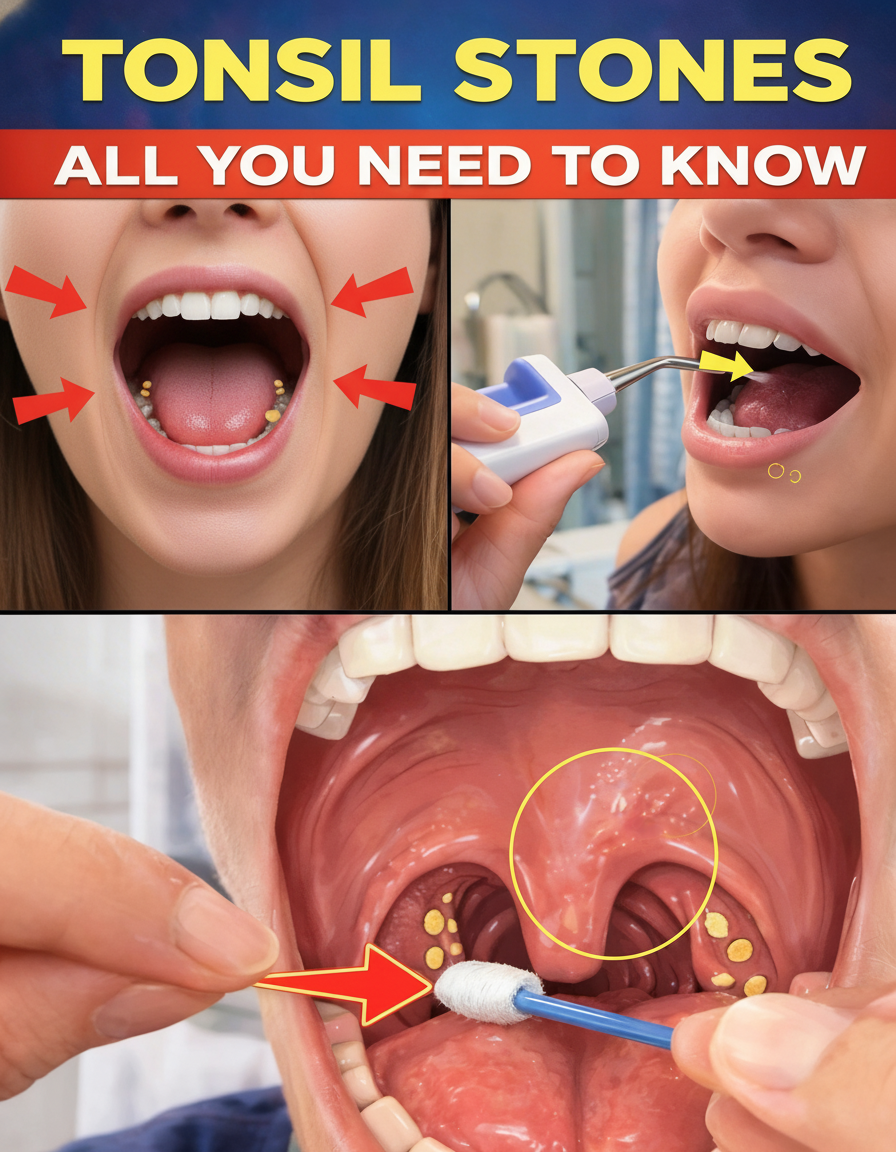
Upon inspecting your throat in a mirror, you might observe small, distinct white or yellow specks directly on the surface of your tonsils. These deposits can occasionally become dislodged spontaneously or may be expelled during a forceful cough.
Ear Pain Without an Obvious Cause
Intriguingly, tonsil stones can sometimes trigger referred pain that radiates to the ears. This phenomenon occurs due to shared nerve pathways between the tonsils and the ears, potentially resulting in an ache that seems unrelated to any obvious ear issue.
Swollen Tonsils or Persistent Cough
In certain instances, the irritation caused by tonsil stones can lead to slight swelling of the tonsils or provoke a persistent cough, as your body instinctively attempts to clear the foreign material. While smaller stones frequently go unnoticed, recognizing these recurring patterns can help you stay informed about your throat health.
However, it’s important to note that these symptoms are sometimes confused with other conditions:
| Common Symptoms | Underlying Cause | Frequently Misidentified As |
|---|---|---|
| Persistent Bad Breath | Bacterial sulfur compounds | Poor oral hygiene or dietary issues |
| Sore Throat / Irritation | Pressure on throat tissue | Common cold or seasonal allergies |
| Visible Spots & Ear Pain | Presence of stones & nerve referral | Throat infection or earwax buildup |
| Cough & Swelling | Body’s irritation response | Acid reflux or smoking-related issues |
What Causes Tonsil Stones?
While tonsil stones can affect anyone, several specific factors significantly increase their likelihood of development. Inadequate oral hygiene practices can allow food debris, bacteria, and other particles to accumulate more readily within the tonsillar crypts. Chronic inflammation of the tonsils, often from repeated infections, can cause these natural pockets to become enlarged and more effective at trapping material. Individuals who naturally possess larger tonsils or have particularly deep crypts are inherently more susceptible to this buildup. Furthermore, post-nasal drip, a common symptom of allergies or sinus problems, introduces additional mucus into the throat, contributing to the material that forms stones. Research indicates that tonsil stones are quite common among adults, especially those whose tonsils feature pronounced crypts. Ultimately, daily habits and individual anatomical predispositions play a substantial role in their formation.
How to Safely Remove Tonsil Stones at Home
<p