 By admin
 Understanding Small White Spots on Arms and Legs: Common Causes and What They Mean
Discovering small white spots on your arms, legs, or back can often lead to questions and concern. These lighter patches frequently become more noticeable after sun exposure or tanning, creating an uneven skin tone that might affect your confidence, especially when wearing summer clothes or enjoying a day at the beach. The reassuring news is that in most instances, these spots are linked to harmless, everyday factors rather than serious underlying health conditions. However, understanding the distinctions between various causes is crucial for knowing when to seek professional advice.
This comprehensive guide delves into the most prevalent reasons these skin discolorations emerge, drawing on expert dermatological insights. Our aim is to equip you with knowledge about their common triggers, developmental patterns, and practical care habits – including a vital protective measure often underestimated.
Understanding Hypopigmentation: Why Skin Loses Its Natural Color
At its core, the appearance of lighter skin patches is known as hypopigmentation. This phenomenon occurs when specific areas of the skin produce reduced amounts of melanin – the crucial pigment that determines your natural skin tone. Consequently, these patches appear lighter and create a noticeable contrast with the surrounding skin, a difference often amplified in regions frequently exposed to the sun.
Dermatological research indicates that these pigmentary changes frequently stem from a combination of environmental influences, minor skin processes, or the presence of common microorganisms on the skin’s surface. Typically, these spots are benign, flat, and do not cause pain or significant discomfort. Nevertheless, their presence naturally sparks curiosity about preventative measures and optimal daily skin care routines.
Tinea Versicolor: A Common Yeast-Related Skin Condition
Among the most common culprits for lighter skin patches, particularly on the back, chest, arms, or upper body, is tinea versicolor. This condition arises from an overgrowth of a specific type of yeast (Malassezia) that naturally resides on the skin. It thrives in warm, humid, and sweaty environments, making it prevalent in tropical and warmer climates.
Scientific studies reveal that this yeast overgrowth interferes with the skin’s normal melanin production and distribution. The result is distinct patches that typically appear paler than the surrounding skin, though they can occasionally be darker. These areas often have a fine, powdery, or slightly scaly texture and tend to become much more prominent following sun exposure, as the tanned skin around them emphasizes the contrast.
To manage or prevent tinea versicolor, consider these simple daily habits:
- Ensure your skin is kept clean and dry, especially after periods of sweating.
- Opt for mild, non-irritating soaps and body washes.
- Choose loose-fitting, breathable fabrics, particularly in hot and humid conditions.
Should these spots persist, spread, or cause you discomfort, consulting a dermatologist is recommended. They can provide an accurate diagnosis and suggest effective over-the-counter treatments or prescription medications.
Idiopathic Guttate Hypomelanosis (IGH): The Tiny “White Sun Spots”
Commonly referred to as “white sun spots,” Idiopathic Guttate Hypomelanosis (IGH) presents as small, discrete, round, and pale dots, typically measuring between 2 to 5 millimeters in diameter. These characteristic spots are predominantly found on chronically sun-exposed areas, such as the forearms, shins, and legs.
Extensive research connects IGH directly to prolonged and cumulative ultraviolet (UV) radiation exposure over a lifetime. This consistent sun exposure is believed to gradually impair the pigment-producing cells (melanocytes) in susceptible individuals. While IGH can affect various skin types, it often becomes more apparent with advancing age, particularly after 40. It is a completely benign condition, posing no health risks and causing no physical discomfort.
Although these spots do not spread aggressively like an infection, they can slowly increase in number and size over many years of continued sun exposure. It’s worth noting that IGH tends to be more noticeable on individuals with darker complexions, where the stark contrast between the pale spots and the surrounding tanned skin is more pronounced, even though the underlying physiological process remains the same for all.
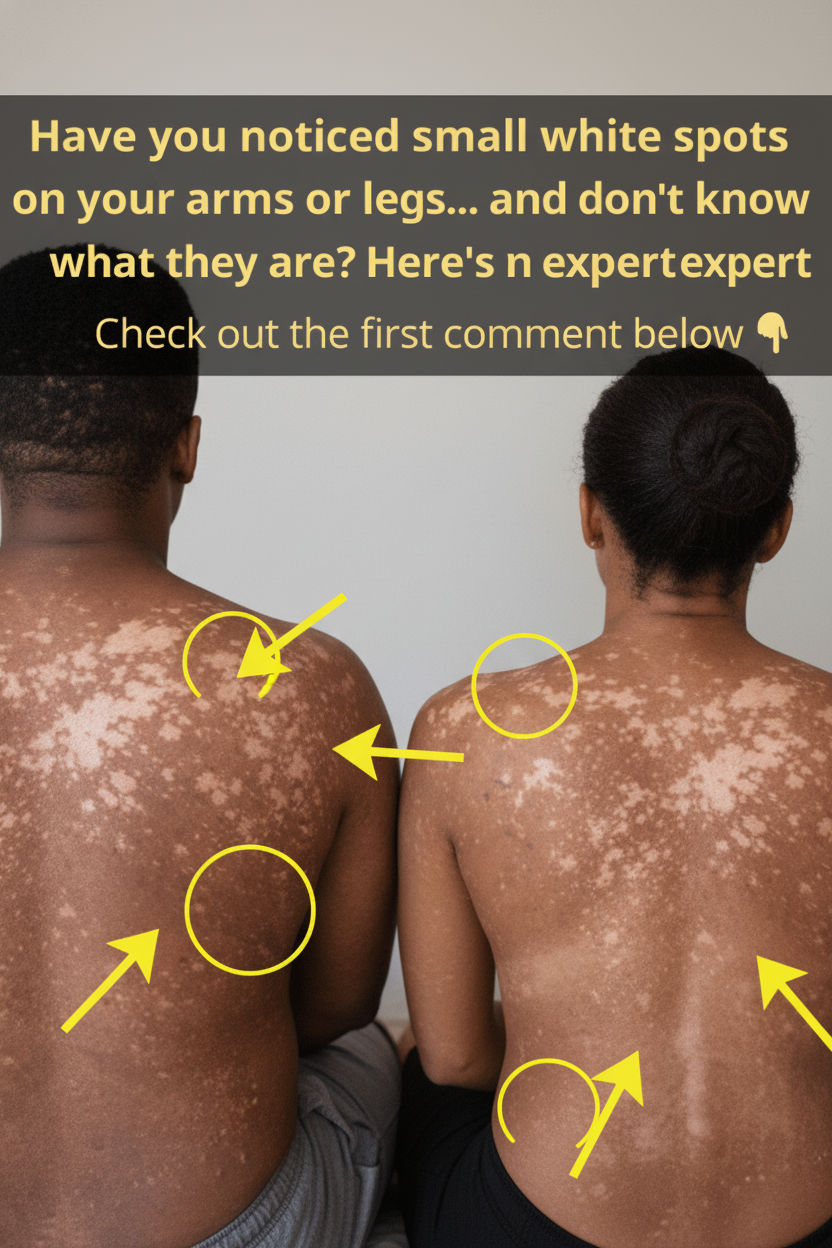
A critical preventive measure against the development and progression of IGH is the diligent and consistent application of broad-spectrum sunscreen to all exposed skin areas. This habit can significantly help in limiting further damage and the appearance of new spots.
Pityriasis Alba: Mild Patches Often Linked to Dry Skin and Eczema
Pityriasis alba manifests as mildly scaly, pale patches, most often observed on the face, arms, or upper torso. This condition is frequently associated with individuals who have a history of dry skin or mild forms of eczema. In these cases, a temporary inflammatory process within the skin can disrupt normal pigment production.
Initially, these patches may have a faint pinkish or reddish hue before gradually fading into lighter, hypopigmented areas. Similar to other white spots, sun exposure can make pityriasis alba more conspicuous, as the surrounding healthy skin darkens with a tan, thereby increasing the contrast. Regular moisturizing is a simple yet effective strategy to support the skin’s barrier function and can potentially diminish the long-term visibility of these patches.
Vitiligo: Autoimmune-Related Depigmentation
Vitiligo is a distinct skin condition characterized by the immune system mistakenly attacking and destroying the pigment-producing cells (melanocytes) in the skin. This leads to the formation of sharply defined, depigmented white patches that can develop on any part of the body, including the arms, legs, face, and torso.
Globally, vitiligo affects approximately 1% of the population, and its onset is typically gradual. The size and location of the patches can vary, sometimes remaining stable for extended periods, while at other times slowly expanding or appearing in new areas. Dermatological research suggests that while the precise triggers can differ among individuals, genetic predisposition (family history) and certain environmental or stress-related events are believed to play a role.
For individuals with vitiligo, early identification and consistent sun protection are especially crucial to safeguard the depigmented areas from sunburn and to maintain overall skin health.
Other Potential Contributors to Lighter Skin Spots
While the conditions above are the most common, other factors can also lead to the appearance of lighter areas on the skin:
- Post-inflammatory Hypopigmentation: Following skin trauma such as rashes, minor injuries, or significant irritation, temporary lighter patches can sometimes remain as the skin undergoes its healing process. This is often a transient effect.
- Milia: These are not flat spots but rather small, hard, white bumps that form when keratin (a protein) becomes trapped beneath the skin’s surface. Though distinct from the flat white spots discussed, they are occasionally mistaken for them due to their color.
Quick Comparison of Key White Spot Causes
To help differentiate between the most common causes of white spots, here’s a brief overview:
- Tinea Versicolor: Often found on the back and chest, this condition is linked to yeast overgrowth and may present with a slightly scaly texture.
- Idiopathic Guttate Hypomelanosis (IGH): Typically appearing on the arms and legs, these tiny, flat spots are primarily associated with cumulative sun exposure and age.
- Pityriasis Alba: Commonly seen on the face, arms, and upper body, these mild, scaly patches are often related to dry skin or eczema.
- Vitiligo: Characterized by well-defined, depigmented patches that can occur anywhere on the body, resulting from an autoimmune attack on pigment cells.