 By admin
 Unlock Relief: Your At-Home Guide to Easing Foot and Back Tension with a Tennis Ball
After enduring countless hours on your feet or extensive walking, a familiar ache often settles into the soles of your feet. This discomfort frequently doesn’t stop there; it can ascend, manifesting as tightness in your calves and lower back, transforming routine movements into challenging tasks. This prevalent issue commonly arises from sustained activity or inadequate support, leading to accumulated tension that negatively impacts posture and overall physical comfort. Fortunately, a straightforward self-care method, utilizing an everyday item like a tennis ball, offers a promising solution. But that’s not all—continue reading to uncover a valuable, perhaps unexpected, tip that can significantly enhance your tension relief routine.
The Science Behind Tennis Ball Foot Massage for Tension Relief
Your feet are the foundation of your body, bearing your full weight through every step and stand. Over time, the demands of daily life can lead to significant tightness in the intricate muscles and connective tissues beneath them. A key player in this is the plantar fascia, a thick band of tissue running along the bottom of your foot. When this fascia becomes rigid or inflamed, it can contribute to radiating sensations of discomfort that extend upwards through the leg.
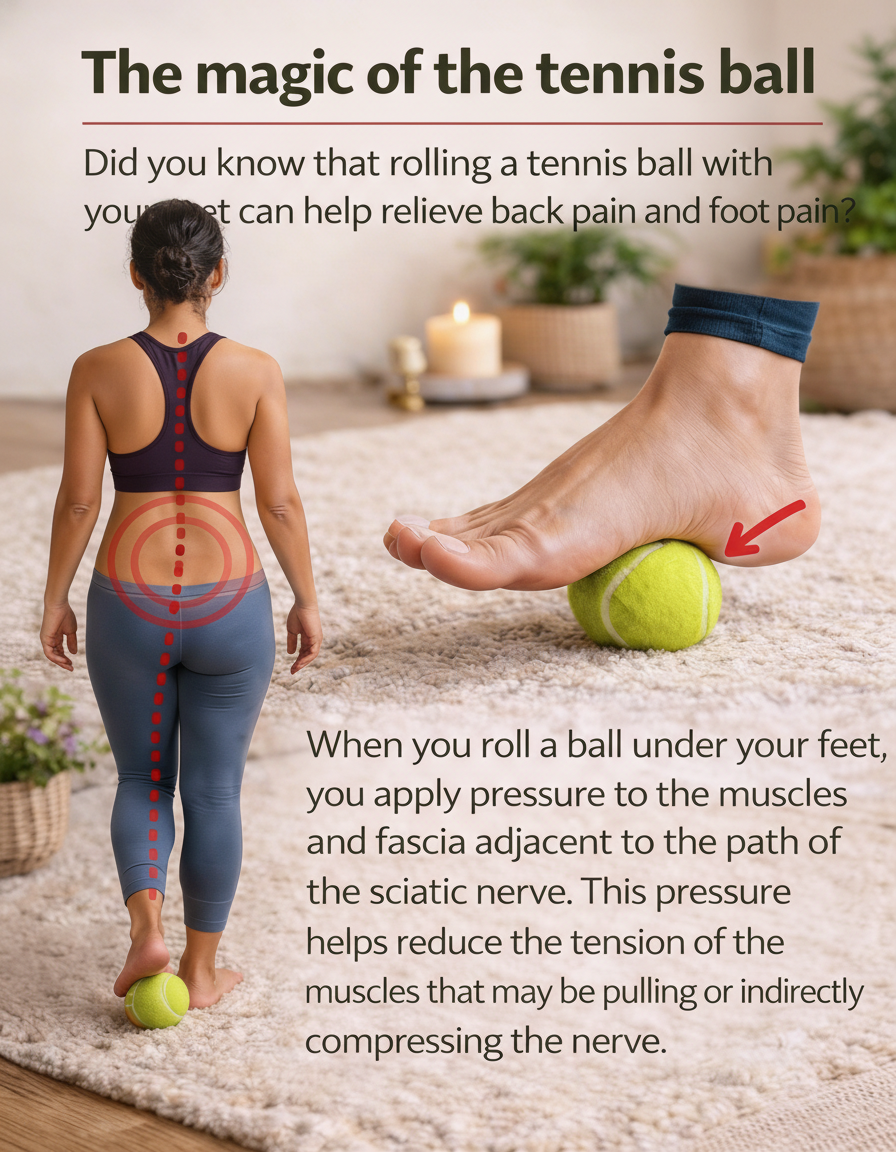
Here’s where the simple tennis ball comes into play: gently rolling your foot over a tennis ball can provide targeted pressure to this area, stimulating the tissues and promoting a sense of release. This technique is a form of self-myofascial release, a practice supported by research. For instance, studies published in journals like the Journal of Bodywork and Movement Therapies suggest that such self-massage methods can contribute to improved mobility and a noticeable reduction in muscle stiffness. This isn’t about complex therapeutic interventions; it’s an accessible method anyone can integrate into their wellness regimen.
Consider your body as an interconnected kinetic chain. Tension in one area, such as your feet, can profoundly influence other parts. For example, chronic foot tightness can alter your gait and posture, potentially leading to misalignment in your hips and lower back. By proactively addressing foot tension, you might observe subtle yet significant improvements in your body’s overall alignment and comfort. The best part? This effective strategy requires no specialized equipment beyond a common tennis ball, likely already within your reach.
Extending the Benefits: How Foot Relief Impacts Your Back
The impact of foot tension is rarely confined. It often travels upwards through the kinetic chain, potentially imposing additional strain on the lower back. Suboptimal foot mechanics, often exacerbated by unsupportive footwear, can subtly but significantly alter your natural gait and overall posture. The act of rolling a tennis ball under your foot provides a gentle, yet effective, massage. This action can stimulate blood flow and encourage relaxation in the interconnected muscles and tissues, not just in your foot but also extending to your calves and lower back.
Research into myofascial release, as frequently discussed in publications by organizations like the American Physical Therapy Association, indicates that these techniques can be instrumental in alleviating perceived tension throughout the entire body. But the benefits extend beyond mere physical manipulation. Integrating mindful breathing practices during your tennis ball routine can amplify the experience, promoting deeper relaxation and enhancing the release of tension. Many individuals report feeling a profound sense of looseness and improved flexibility after incorporating this simple practice into their daily habits. It’s a low-effort, high-reward method to support your body’s inherent structural alignment and well-being.
Your Step-by-Step Guide to Effective Tennis Ball Foot Rolling
Ready to experience the benefits for yourself? Follow these clear steps to safely and effectively use a tennis ball at home for foot tension relief.
- Gather Your Tools: You’ll need a standard tennis ball and a stable, non-slip surface. A carpeted area or a yoga mat works perfectly to prevent the ball from sliding.
- Position Yourself: Find a comfortable spot where you can either stand or sit. If you choose to stand, ensure you have a wall or a sturdy chair nearby for balance and support.
- Place the Ball: Position the tennis ball on the floor directly beneath the arch of one foot.
- Initiate Rolling: Begin to gently roll your foot back and forth, moving from your heel towards your toes. Apply only light to moderate pressure initially, gradually increasing it as comfort allows. If you encounter any particularly tender spots, pause and hold pressure on that area for 10-20 seconds before continuing.
- Adjust as Needed: Should the pressure feel too intense, simply shift more weight onto your other foot or sit down to reduce the force applied. Aim for a duration of 1 to 2 minutes per foot.
- Switch Sides: Once you’ve completed one foot, repeat the entire process on your other foot.
This entire process is remarkably straightforward and can be completed in just a few minutes, making it an ideal addition to even the busiest schedules.
Unlocking Wellness: The Core Benefits of Regular Tennis Ball Massage
Exploring this simple yet potent technique reveals a spectrum of potential advantages for your overall well-being. Here’s a concise overview of the key benefits:
| Benefit | Description | How It Enhances Daily Life |
|---|---|---|
| Enhanced Circulation | The targeted rolling motion can stimulate blood flow to the feet and surrounding tissues. | Supports faster recovery after physical activity and reduces feelings of coldness or numbness. |
| Increased Flexibility | Gentle stimulation and pressure can improve the range of motion in the foot and ankle joints. | Makes walking, running, or standing for prolonged periods feel significantly more comfortable and fluid. |
| Posture Support | Addressing underlying foot tension can positively influence the alignment of your entire body. | Potentially alleviates strain in interconnected areas like the calves, hips, and lower back, improving overall posture. |
| Relaxation Effect | When combined with deep, mindful breathing, the massage promotes a profound state of calm. | An excellent method for de-stressing and unwinding after a demanding day or before bedtime. |
| Cost-Effective Self-Care | Utilizes a common, inexpensive item, eliminating the need for costly specialized equipment or appointments. | Makes effective tension relief accessible and affordable for virtually anyone, anytime. |
These compelling points underscore why incorporating tennis ball rolling into your routine is a worthwhile endeavor. Extensive wellness research consistently supports the notion that such proactive self-care practices play a crucial role in fostering greater physical comfort and resilience. Moreover, consistent, regular application of this technique might surprise you with its cumulative and long-lasting positive effects.
Optimal Timing for Your Tennis Ball Self-Massage Routine
The timing of your tennis ball self-massage can significantly impact its effectiveness and your enjoyment. Consider integrating this practice:
- After Work or Prolonged Standing: To release accumulated tension and fatigue from the day.
- Post-Exercise: To aid muscle recovery and reduce stiffness in your feet and lower legs.
- Before Bed: To promote relaxation, improve circulation, and prepare your body for restful sleep.
For best results, aim to practice this technique daily or at least several times a week. Consistency is key to experiencing the full spectrum of benefits.
Unexpected Tip: Expand Your Relief Beyond the Feet!
While this guide has primarily focused on foot and back tension, the versatility of a tennis ball extends far beyond. For an enhanced tension relief routine, consider using your tennis ball to target other common areas of muscle tightness:
- Calves: Sit on the floor with legs extended and place the ball under your calf. Roll gently to release tight calf muscles.
- Glutes/Hips: Sit on the ball, placing it under a tight glute muscle. Gently shift your weight to apply pressure and roll to release tension in your hips and buttocks.
- Shoulders/Upper Back: Lie on your back on a mat, place the ball between your shoulder blade and spine, and gently move to apply pressure to trigger points. (Always avoid direct pressure on the spine itself.)
Remember to always start with light pressure and listen to your body, especially when targeting new areas. This simple tool can become a comprehensive part of your at-home self-care toolkit.
Embrace the Simplicity of Self-Care
In a world often filled with complexity, finding simple, effective solutions for everyday discomfort is invaluable. The humble tennis ball offers an accessible, cost-effective, and powerful way to address foot and back tension, promoting better circulation, flexibility, and overall well-being. By dedicating just a few minutes each day to this practice, you can proactively manage discomfort, improve your posture, and foster a greater sense of calm and physical ease. Start incorporating this simple self-care ritual today and unlock a new level of comfort in your daily life.