 By admin
 Many individuals unknowingly live with escalating blood sugar levels for years, as their bodies discreetly signal that something is amiss. These subtle alterations can impact daily comfort, ranging from changes in skin texture to unusual sensations in the hands and feet, frequently dismissed as normal signs of aging or everyday stress. Overlooking these indicators can allow the condition to advance, but early recognition paves the way for healthier lifestyle choices. In this comprehensive guide, you’ll uncover common, often-missed signs, validated by health experts, along with practical steps to empower your health journey. Stay tuned to the end for surprising lifestyle habits that contribute to overall well-being.
Why Early Detection of These Signs is Crucial
Persistently elevated blood sugar can lead to significant yet frequently overlooked effects on the body. Research from leading health organizations, including the American Diabetes Association and Mayo Clinic, highlights that identifying these signals promptly enables individuals to make informed decisions about their health. However, these symptoms often don’t demand immediate attention; they tend to manifest subtly. Furthermore, some signs appear on the skin or as sensations that might initially seem unrelated to internal health.
Tingling or Numbness in Hands and Feet
One of the more prevalent early indicators is a ‘pins-and-needles’ sensation or numbness, particularly in the extremities. This phenomenon occurs because prolonged high blood sugar can impair nerve function, initially affecting fingers, toes, or even the soles of the feet in a mild way. Studies suggest that this neuropathy-like feeling often develops gradually in cases of type 2 diabetes. If you’ve observed your hands ‘falling asleep’ more frequently or a slight burning sensation during periods of rest, it warrants attention.
- Intermittent tingling, often worse at night.
- Diminished sensation when touching hot or cold surfaces.
- Occasional numbness during extended periods of sitting or standing.
Prompt awareness enables timely adjustments to your lifestyle.
Unusual Skin Changes on the Face and Neck
Your skin can offer valuable insights into your internal health balance. Darkened, velvety patches—commonly found on the neck, armpits, or groin—known as acanthosis nigricans, can serve as an early clue of insulin resistance or other metabolic challenges in some individuals. These affected areas often feel thicker and appear shadowed, almost like a persistent stain. Small, yellowish bumps or rough spots on the face may also emerge. Health resources like the American Academy of Dermatology identify these as potential indicators linked to fluctuations in blood sugar levels.
- Velvety texture in skin folds.
- Sudden appearance of small, firm bumps.
- Skin changes that persist despite consistent skincare routines.
Persistent Dry, Itchy Skin and Foot Concerns
Dryness and itchiness are common complaints, but when accompanied by other symptoms, they can signal circulation or moisture imbalance issues stemming from elevated glucose. The legs and feet are often the first areas to display these symptoms, with skin feeling tight or flaky. On the feet, toenails may become thickened or discolored—sometimes yellowish—over time. Poor circulation significantly contributes to this, making nails brittle or unusually colored.
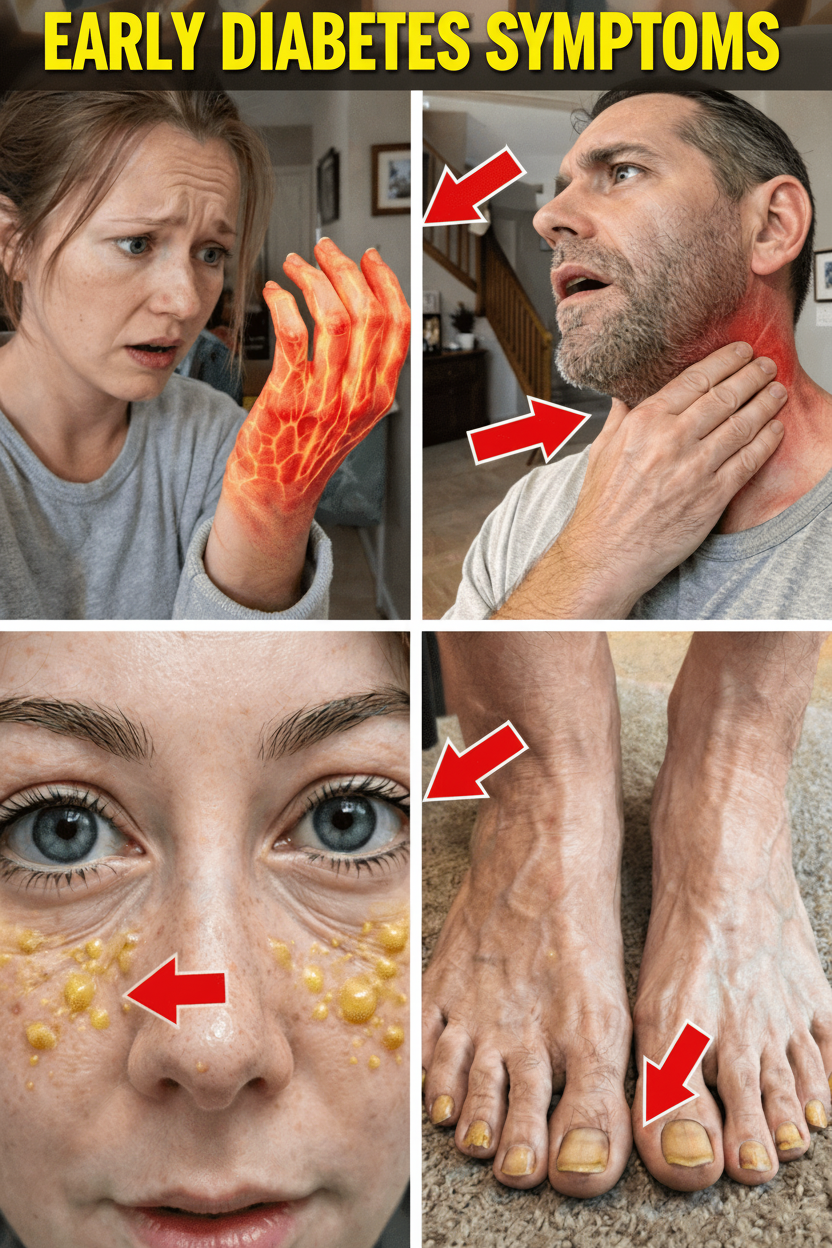
- Yellowish tint on one or more toenails.
- Thickened nails that are challenging to trim.
- Dry cracks around the heels or between the toes.
While regular moisturizing offers relief, diligently tracking these changes is paramount.
Other Subtle Clues Often Overlooked
Beyond skin and nerve-related symptoms, the body might also exhibit:
- Increased thirst and more frequent urination.
- Unexplained fatigue, even after adequate rest.
- Blurry vision that fluctuates throughout the day.
- Minor cuts or sores that heal unusually slowly.
These classic symptoms, as outlined by guidelines from organizations like the CDC and WebMD, frequently accompany the visual and sensory indicators mentioned above. Recognizing these patterns can be highly beneficial.
Common vs. Less-Obvious Diabetes Signs
Commonly Recognized Signs:
- Frequent urination
- Excessive thirst
- Extreme fatigue
- Blurry vision
- Slow-healing wounds
Less-Obvious Signs:
- Tingling in extremities
- Darkened neck or armpit skin
- Yellowish toenails
- Small facial bumps
- Persistent dry, itchy skin
Proactive Steps You Can Take Today
You don’t need to implement drastic changes; small, consistent habits can significantly support your body’s natural balance and help manage blood sugar levels.
- Monitor Your Daily Energy and Hydration: Keep a journal of how often you feel thirsty or unusually tired. Aim for consistent water intake and note any recurring patterns over a week.
- Regular Skin Checks: Use a mirror to inspect areas like your neck, underarms, and feet. Moisturize daily with a gentle, fragrance-free lotion to alleviate dryness and keep skin healthy.
- Pay Attention to Foot Health: Carefully examine your toenails and skin after showers. Trim nails straight across to prevent ingrown nails and opt for breathable socks to maintain foot hygiene.
- Incorporate Movement: Aim for 20-30 minutes of walking on most days to enhance circulation and overall metabolic health. Even light physical activity can make a difference.
- Eat Balanced Meals: Prioritize whole foods such as fresh vegetables, lean proteins, and fiber-rich options to help stabilize blood sugar and support a healthy weight.