 By admin
 Unraveling the Mystery: Dark, Itchy, Waxy Bumps on Aging Skin
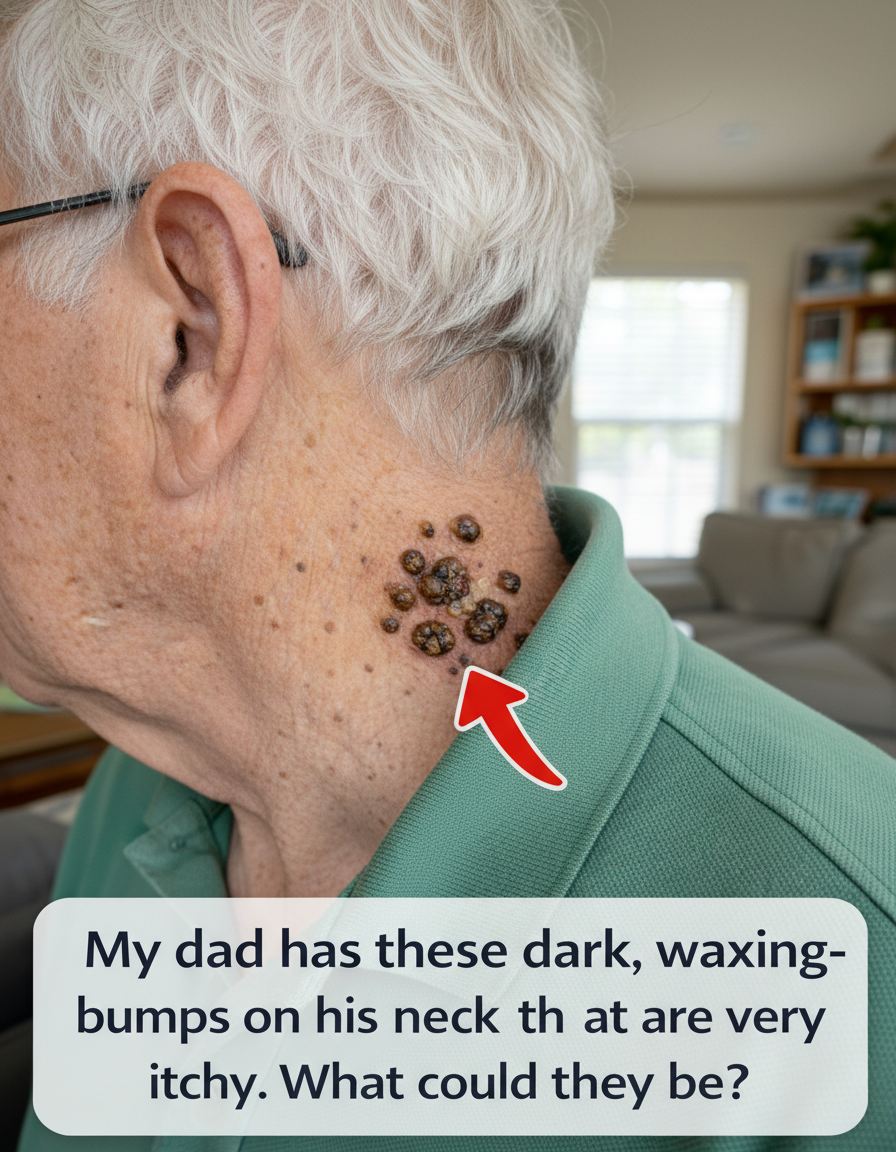
Discovering dark, waxy growths on an elderly loved one’s skin, particularly when accompanied by itching or a sudden onset, can understandably cause concern. As skin undergoes natural transformations with age, these types of growths become increasingly prevalent, often catching family members off guard and raising questions about their health implications. The reassuring news is that in the vast majority of cases, these are entirely benign indicators of normal skin aging. However, gaining a comprehensive understanding of them can offer genuine peace of mind. Stay tuned, as we will explore practical strategies for managing discomfort and determining when a professional medical evaluation is advisable.
What These Dark, Waxy Bumps Most Likely Represent
Those itchy, dark spots with a distinctive waxy feel are, in many instances, seborrheic keratoses – among the most frequently encountered benign skin growths in older adults. Extensive research from reputable sources such as the Mayo Clinic and the American Academy of Dermatology indicates that these non-cancerous lesions typically emerge after the age of 50, increasing in prevalence with advancing years. They commonly present with a characteristic ‘stuck-on’ appearance, akin to a droplet of candle wax or a small piece of clay affixed to the skin’s surface. Their coloration varies widely, encompassing shades from light tan to deep brown or even black, and they often feel slightly elevated with a somewhat rough or scaly texture. The neck, chest, back, and face are common sites for these age-related skin changes, largely due to increased friction from clothing or daily activities. Furthermore, it’s not uncommon for individuals to observe them appearing suddenly in clusters, which might initially heighten alarm.
Distinguishing Features You Can Observe at Home
Identifying seborrheic keratoses is generally straightforward once you are familiar with their characteristic traits. Here are the key indicators commonly noted by individuals:
- A Distinctive ‘Stuck-On’ or Waxy Appearance: They often look as though they have been superficially applied to the skin, rather than being an integrated part of it.
- Rough or Scaly Texture: Gently touching them often reveals a bumpy or somewhat warty surface.
- Variable Coloration: Their hues can range from a pale, light tan to a dark brown or almost black, frequently maintaining a uniform color within a single growth.
- Size and Shape Diversity: While initially small (just a few millimeters), they can sometimes expand to over a centimeter, typically presenting as round or oval shapes.
- The Itch Factor: Mild to moderate itching is a common complaint, especially if clothing rubs against them or following periods of sweating.
If the skin bumps exhibit several of these features, it strongly suggests they are benign seborrheic keratoses. Nevertheless, any rapid or unusual changes warrant professional medical attention.
How They Differ from More Serious Skin Concerns
It’s entirely natural to question whether these growths could signify something more serious, such as skin cancer. While seborrheic keratoses can visually resemble certain malignant lesions, crucial differentiating features exist:
- Uniformity vs. Irregularity: Seborrheic keratoses typically display uniform color and regular borders, contrasting with the irregular borders or multiple shades often seen in melanoma.
- Superficial vs. Integrated Growth: Their ‘stuck-on’ appearance differs from cancerous lesions that tend to be integrated within the skin or change rapidly.
- Stability vs. Rapid Evolution: These benign growths usually exhibit slow growth and stability, unlike worrisome spots that show quick changes in size, color, or may bleed easily.
Numerous studies consistently confirm that seborrheic keratoses bear no causal link to developing into cancer – they are entirely distinct entities. Yet, if any spot begins to bleed without significant trauma, grows rapidly, or appears markedly different from other growths, seeking a professional opinion is essential for confident diagnosis and peace of mind.
The Significant Role of Age and Other Predisposing Factors
After the age of 50, the skin naturally tends to accumulate these growths; dermatological experts estimate that over 75% of individuals in their 70s have at least one. Cumulative sun exposure over many decades contributes to their appearance in sun-exposed areas, though they are not directly caused by UV radiation in the same way as some other skin lesions. Genetics also play a substantial role; if family members have a history of seborrheic keratoses, the likelihood of developing them increases significantly. While individuals with fairer skin types might notice them more prominently, these benign skin lesions can appear across all skin tones. Understanding that this is often a normal part of the skin’s aging process helps to alleviate emotional distress – it’s a common occurrence, not an inherent red flag.
Common Factors Contributing to Itch and Appearance
While the precise mechanism triggering seborrheic keratoses isn’t fully elucidated, several factors are believed to contribute:
- Prolonged Sun Exposure: Encourages their development, particularly in areas frequently exposed to the sun.
- Genetic Predisposition: A family history makes individuals more susceptible to developing them through generations.
- Everyday Irritation: Friction from clothing (like collars), jewelry (necklaces), or habitual scratching can exacerbate existing growths and intensify itching.
The itching often flares up when the growth’s surface becomes irritated by friction or dryness – serving as a gentle reminder that consistent, careful skin care can significantly mitigate discomfort.
When to Seek Professional Evaluation for Skin Changes
Most seborrheic keratoses remain asymptomatic and harmless. However, it’s crucial to be aware of certain potential signals that warrant a visit to a dermatologist:
- Excessive or Newly Intense Itching: Itching that is persistent, severe, or doesn’t subside.
- Unexplained Bleeding: Bleeding occurring without significant trauma or rubbing.
- Sudden Alterations: A rapid increase in size, a change in shape, or an alteration in color.
- Rapid Onset of Multiple New Growths: The appearance of numerous new lesions in a short timeframe.
Detecting any significant shift early offers reassurance and helps prevent minor irritation from progressing into potential infection or other complications.
How Dermatologists Typically Confirm the Diagnosis
The diagnosis of seborrheic keratoses is often quickly established during a dermatologist’s examination. Typically, a visual inspection, sometimes aided by a dermatoscope (a specialized magnifying tool), is sufficient to identify these characteristic lesions. In rare cases, if there is any uncertainty or suspicion of a more serious condition, a small biopsy may be performed to confirm the diagnosis microscopically. This simple procedure provides definitive answers, ensuring appropriate management and peace of mind for the patient.