 By admin
 Unveiling 9 Unexpected Menopause Symptoms: Practical Strategies for Enhanced Well-being
As women navigate their 40s and 50s, many begin to encounter a spectrum of physical and emotional transformations that can initially feel puzzling or disconnected. Perhaps you’ve experienced waking up drenched in perspiration one night, only to deal with persistent skin irritation the following morning, or found yourself questioning why your body feels uncooperative despite maintaining a healthy diet and active lifestyle. Such shifts often lead to a sense of bewilderment, prompting questions about their origins and the noticeable lack of open discussion surrounding them. The reality is that the hormonal fluctuations characteristic of perimenopause and menopause extend their influence far beyond the commonly recognized hot flashes and menstrual irregularities. Insights from leading health organizations, including the Mayo Clinic and Cleveland Clinic, reveal that numerous less-familiar indicators frequently catch women off guard, significantly impacting their daily comfort and self-assurance. The encouraging news, however, is that gaining a deeper understanding of these evolving bodily processes empowers you to adopt effective, practical strategies that can genuinely enhance your daily well-being.
Why These Lesser-Known Symptoms Happen
The primary reason behind these diverse and often subtle manifestations lies in the gradual decrease of key reproductive hormones, particularly estrogen and progesterone. These hormonal shifts exert a wide-ranging impact, influencing physiological processes from dermatological health and nervous system function to sleep patterns and emotional stability. While research indicates that a significant majority—up to 80% of women—encounter well-known symptoms such as hot flashes, a substantial number also contend with more nuanced challenges. These often go unrecognized or are mistakenly attributed to general stress or the natural aging process. Early identification of these less obvious signs is crucial, enabling individuals to implement proactive management techniques and approach this life stage with greater confidence and less anxiety.
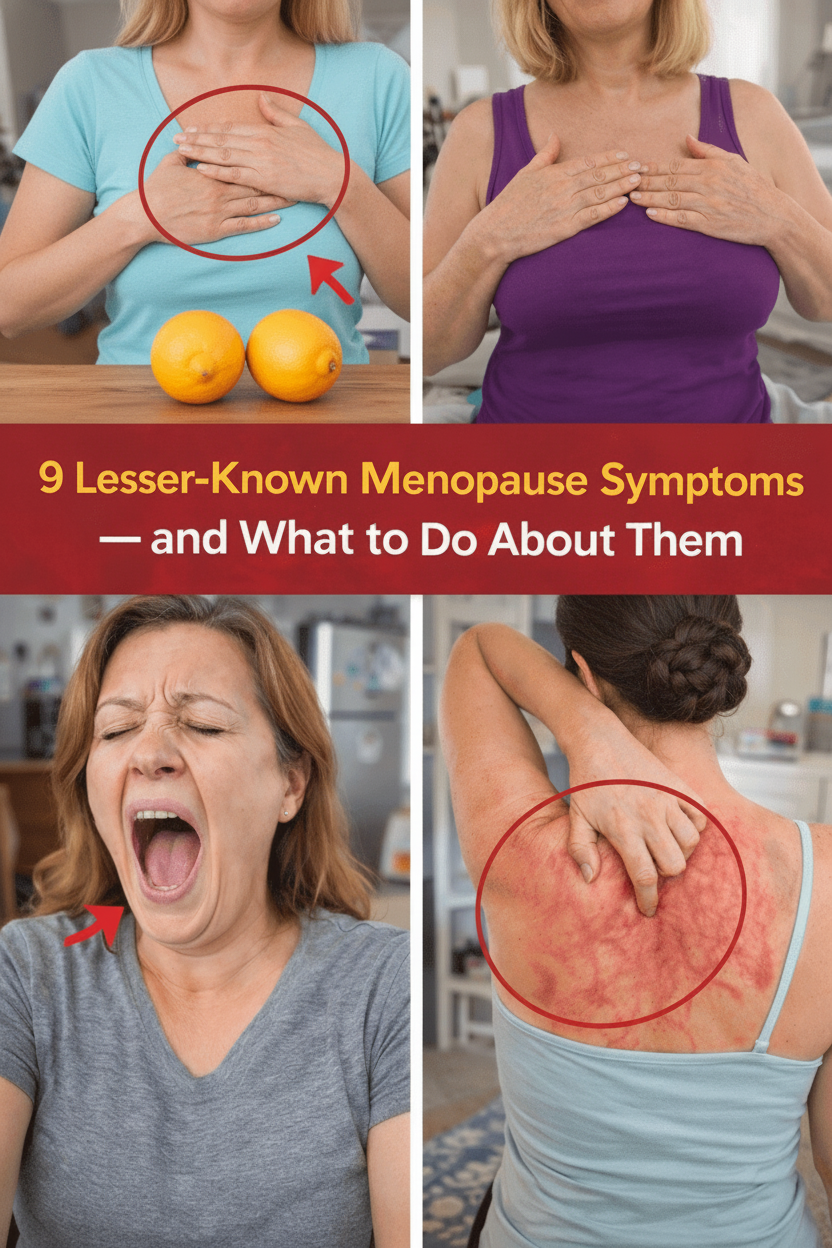
- Itchy or Crawling Skin Sensations
Among the more unexpected physical changes is a sudden onset of dry, persistently itchy skin, or even a sensation akin to insects crawling on the skin—a phenomenon medically termed formication. This occurs because dwindling estrogen levels lead to a reduction in both collagen and natural oil production, rendering the skin thinner, more delicate, and prone to irritation. To alleviate discomfort, ensure you consume ample water throughout your day to maintain internal hydration. Immediately after bathing, apply a mild, scent-free moisturizer. Furthermore, opt for moderately warm showers rather than hot ones, as excessive heat can strip the skin of its essential protective oils. Consistent adoption of these practices often brings noticeable relief within a few weeks.
- Burning Mouth or Strange Taste Changes
Some women unexpectedly develop a persistent tingling, burning, or even a metallic taste within their mouths. These oral discomforts stem from hormonal fluctuations impacting the delicate tissues and nerve endings