 By admin
 Listen up! If you or someone you care about is popping amlodipine to keep that blood pressure in check, you’ve probably heard all about the usual suspects – a little dizziness here, a warm flush there. But here’s the kicker: what *really* blindsides most folks are the sneaky, subtle changes that never seem to make it into those quick pharmacy chats or even your routine doctor visits. These aren’t just minor quirks; they can quietly mess with how your legs feel after a long day, how your gums look when you brush, or even how rested you actually feel after a full night’s sleep – all without an obvious red flag pointing back to the medication. The good news? Getting wise to these early can make a massive difference in your daily comfort, and trust us, there’s one everyday trick many people swear by that we’re gonna drop on you toward the end.
What Amlodipine Does and Why Side Effects Happen
So, what’s the deal with amlodipine? It’s part of a crew called calcium channel blockers. Its job is pretty straightforward: it chills out your blood vessels, making it easier for blood to flow, which in turn helps keep your blood pressure in a healthier zone. But here’s where things get interesting: because it’s making those blood vessels expand, some fluid can decide to take a detour and shift into the surrounding tissues. And guess where it loves to hang out? Your lower body, thanks to good ol’ gravity pulling everything down. Even big names like the Mayo Clinic point out that this mechanism is exactly why certain reactions pop up more often than others. Most of these little troubles are pretty mild and usually show their face when the dose is cranked up or after you’ve been taking the medicine for a while.
The Swelling That Shows Up in Your Ankles and Feet
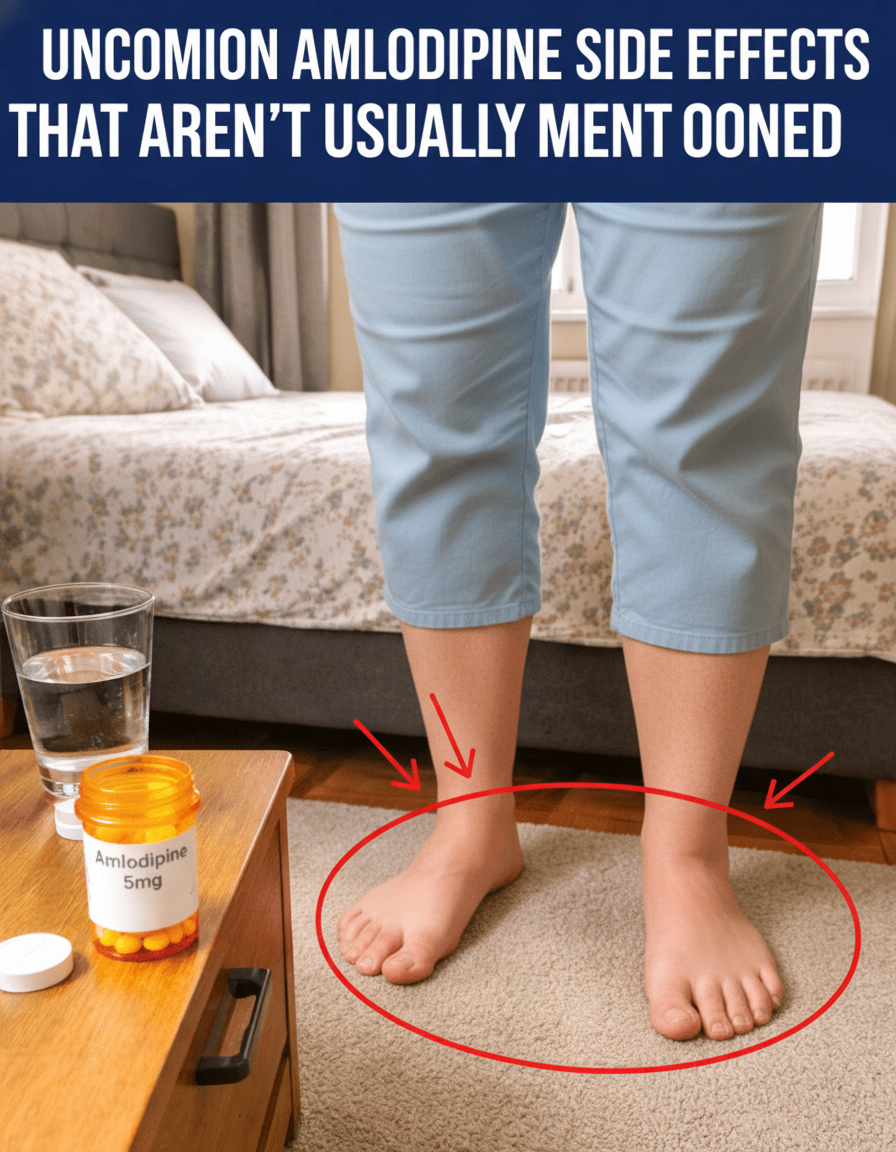
Ever look down and wonder why your ankles and feet suddenly look like they’ve gone a few rounds? That noticeably puffy look, maybe with a slight sheen or that tight feeling around your socks? That, my friend, is peripheral edema, and it’s the most reported side effect. It can make your favorite shoes feel like tiny handcuffs by evening or leave deep marks from elastic. Studies are clear: it hits up to 10-15% of people on higher doses, and the longer you’re on the meds or the higher the dose goes, the more it tends to make itself known. Why does it happen? Basically, your arteries relax more than your veins, allowing a bit of fluid to collect in the tissues below your knees. Here’s what that can look like in your daily grind:
- Your socks leave deep indentations, even if they felt loose that morning.
- Your feet feel heavy, like you’re dragging anchors, especially when you’re on them for ages.
- The swelling usually plays fair (both sides) and tends to chill out a bit overnight when you’re finally laid back.
Less Commonly Discussed Reactions That Surprise People
Alright, so you’ve got the visible swelling figured out. But what else is flying under the radar? One thing that doesn’t always get a shout-out upfront is changes in your gums. Some folks notice their gums getting extra sensitive or even looking a bit overgrown over time. Pro tip: staying on top of your oral hygiene game can make a huge difference here. Another reaction that rarely gets highlighted is that sudden feeling of warmth or redness in your face, neck, or upper chest – sometimes described as a sudden flush that comes and goes like a phantom. And get this: palpitations, that feeling like your heart is doing a quick, strong drum solo, also pop up in patient reports, even though they’re usually harmless. Even less common but still reported are muscle cramps, mild joint discomfort, or even an unusual drowsiness that just feels… off. And for the really rare stuff? We’re talking changes in taste or even vivid, wild dreams, according to data compiled by the FDA and clinical reviews. Yeah, it gets that weird.
How These Effects Can Quietly Change Your Routine
Picture this: You wake up, ready to conquer the day, slip on your favorite shoes, and BAM – they feel snug for absolutely no clear reason. Or maybe you notice your gums bleeding a little more than usual when you floss. These aren’t just minor annoyances; these small, persistent shifts can slowly chip away at your confidence and comfort, all without you ever pointing the finger at your medication. One study, tracking long-term users, found a clear trend: the longer someone stuck with the same dose, the more likely they were to notice those frustrating lower-leg changes. The real game-changer here isn’t just suffering through it; it’s about becoming your own detective, spotting these patterns early so you can have a real, informed conversation with your doctor instead of just shrugging it off as “just getting older.” Don’t let it sneak up on you!
Simple Daily Habits That Many People Find Helpful
- Give gravity a high-five: Elevate your legs for 15–20 minutes a couple of times a day. Prop them up on a pillow while you’re chilling with a book or watching TV – let gravity work *for* you, not against you.
- Keep that blood pumping, no excuses: Stay gently active with short walks or simple ankle circles. Seriously, even just standing up every hour can make a noticeable difference in circulation.
- Be your own detective: Keep a simple symptom log. Note down when that swelling feels worse (after a salty feast, a long car ride, or in scorching weather) so you’ve got clear, undeniable details for your next doctor’s appointment.
- Don’t let your gums go wild: Maintain excellent oral hygiene, including regular brushing and flossing, to keep those potential gum changes in check.
There you have it! Don’t let these sneaky amlodipine side effects catch you off guard. Your comfort and well-being are too important. Keep an eye on your body, listen to what it’s telling you, and always keep the lines of communication open with your healthcare provider. For more no-nonsense tips and health hacks, be sure to explore other articles on our site. We’re here to make sure you’re always in the know and feeling your best!