 By admin
 Don’t Get Played: Magnesium ‘Hacks’ Are a Trap! What Savvy Seniors *Must* Know Before You Switch
Alright, let’s get real for a sec. You’re probably standing there, bottle of magnesium in hand, wondering if you’ve been throwing your hard-earned cash down the drain. Then BAM! You see some viral ‘guru’ online screaming about a cheap food working “20 times better” than your supplement. Suddenly, you feel like a chump, maybe even a little red-faced. Thinking you’ve been played all this time? Yeah, that feeling sucks, it’s frustrating and confusing. But listen up, because here’s the cold, hard truth most folks miss: these ‘miracle swaps’ are NOT what they seem. What we’re about to drop on you could flip your whole daily routine upside down, in a good way.
Why “Magnesium Food Hacks” Go Viral So Easily
Let’s cut the bullsh*t for a moment. Who doesn’t want something simpler, cheaper, and more “natural”? Exactly! That’s precisely why these wild claims spread faster than wildfire. But here’s what’s *really* happening behind the scenes, pulling your strings:
The psychology behind it
Many viral health posts are pure clickbait, playing on your deepest fears and desires. They hit those emotional triggers hard:
- Fear of doing something wrong (and looking foolish)
- Desire to save money (who doesn’t love a bargain?)
- Attraction to “natural” solutions (because ‘chemicals’ are bad, right?)
- Distrust of supplements or medications (the big pharma conspiracy, maybe?)
And here’s the kicker, the real dirty trick…
👉 They often oversimplify complex nutrition science into catchy, bite-sized phrases like “20x better.” It’s a soundbite, not science!
The reality
Listen, folks, nutrition doesn’t work like some magic trick. There is no single food that can magically replace a well-absorbed nutrient source in *every* situation. Research consistently shows that:
- Nutrient absorption varies wildly by person (we’re all unique, remember?)
- Dosage matters – a tiny sprinkle ain’t gonna cut it
- Your specific health conditions play a HUGE role
So when you see those bold, outrageous claims, don’t beat yourself up for being curious. It’s natural! But it *is* important to hit the brakes, slow down, and look deeper before you fall for the hype.
What Magnesium Glycinate Actually Does in the Body
Now, let’s get down to brass tacks and talk about the supplement these ‘hacks’ are trying to trash. Magnesium glycinate isn’t just some random pill you picked up. It’s the real deal.
Why it’s commonly recommended
Studies aren’t just guessing; they *suggest* that magnesium glycinate is a superstar for a reason:
- It’s well absorbed compared to some other forms (meaning your body actually *uses* it, unlike some others)
- It’s gentler on the stomach (no gut-wrenching side effects, thank you very much!)
- It supports:
- Muscle function (say goodbye to those pesky cramps!)
- Nerve signaling (keeping your brain sharp and connected)
- Relaxation and sleep quality (sweet dreams, finally!)
But that’s not all, not by a long shot…
Why older adults may benefit more
As we get a little wiser and, shall we say, more ‘seasoned’ (ahem, older adults!), our bodies change:
- Magnesium absorption can take a nosedive
- Your appetite might decrease (meaning less food, less nutrients)
- Your diet may not always hit those daily nutrient targets
This is precisely why smart healthcare providers often suggest supplementation when it’s needed. It’s not because food isn’t important – absolutely not!
👉 But because food alone may not always be enough to keep your magnesium levels where they need to be.
Can Foods Like Cocoa Really Replace Magnesium Supplements?
Alright, here’s where things get juicy, and the ‘hackers’ usually trip up. Yes, absolutely, certain foods are packing some magnesium. For example, you’ll find it in:
- Cocoa powder (who doesn’t love chocolate?)
- Pumpkin seeds (a healthy snack!)
- Almonds (another good one)
- Spinach (Popeye was onto something!)
But here’s the crucial part most people conveniently overlook, the part that blows their ‘hack’ out of the water…
| Source | Approximate Magnesium |
|---|---|
| 1 tbsp cocoa powder | 25–50 mg |
| 1 oz pumpkin seeds | ~150 mg |
| Magnesium glycinate supplement | 100–200 mg (or more depending on dose) |
Now, pay attention, especially you savvy seniors!
👉 Daily needs for older adults:
- Women: ~320 mg
- Men: ~420 mg
What does this mean in real life? It’s simple math, folks.
To meet your daily magnesium needs from just cocoa powder alone, you’d have to shovel down absolutely unrealistic amounts every single day. We’re talking mountains of the stuff!
And let’s be honest, just between us…
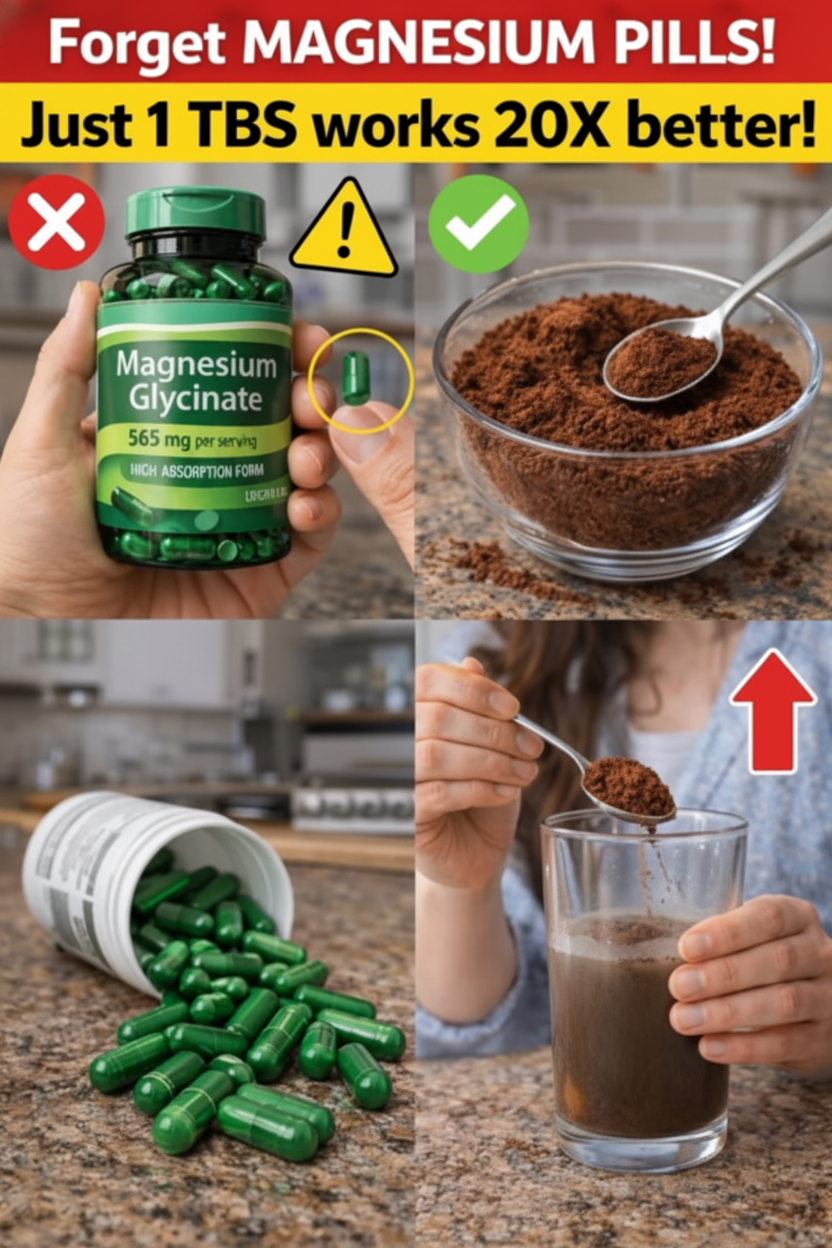
That’s not practical, it’s not enjoyable, and it’s definitely not healthy, especially if you’re trying to watch your sugar intake, calorie count, or avoid digestive distress from overdoing it.
The Hidden Risks of Following Viral Health Advice
This is the part everyone skips, the fine print that can mess you up. But it matters more than anything else, so listen closely.
Potential downsides of relying on “hacks”
Trusting those quick fixes can lead you down a dangerous path:
- Inconsistent nutrient intake (one day you’re good, the next you’re not)
- Overconsumption of certain foods (hello, new health problems!)
- Ignoring real deficiencies (masking a problem instead of fixing it)
- Delayed medical guidance (putting off seeing a doctor when you really need one)
And here’s something critically important that could be affecting you right now…
👉 Some people, especially older adults, may *already* have low magnesium levels without even knowing it! Relying only on trendy ‘hacks’ instead of a balanced, consistent intake could make things much, much worse over time. Don’t play roulette with your health!
A Smarter, Safer Approach for Daily Magnesium Support
So, you’re probably asking, “What the heck should I actually do?” Don’t worry, we got you. Here’s a balanced, realistic approach that works for most older adults, no BS involved.
Step 1: Build a magnesium-friendly plate
Start with the basics! Load up your plate with real, whole foods that naturally contain magnesium:
- Leafy greens (spinach, kale – eat your veggies!)
- Nuts and seeds (almonds, pumpkin seeds – great for snacking)
- Whole grains (oats, brown rice – keep it hearty)
- Legumes (beans, lentils – versatile and packed with good stuff)
Step 2: Use supplements wisely
Supplements are tools, not magic wands. Use them smart, and only if needed:
- Choose well-absorbed forms like magnesium glycinate (we talked about why this one’s a winner)
- Follow recommended doses (don’t play doctor, stick to the instructions!)
- Discuss with a healthcare provider if unsure (when in doubt, ask a pro!)
Step 3: Watch for subtle signs
Your body often whispers before it screams. Some common, subtle signs that your magnesium might be running low include:
- Muscle tightness or cramps (those annoying charley horses)
- Fatigue (feeling constantly drained, even after rest)
- Trouble sleeping (tossing and turning, can’t unwind)
But remember, and this is crucial…
These signs are not specific to magnesium deficiency and can have many causes. Always consult a healthcare professional if you’re concerned!
The Bottom Line: Don’t Trade Science for Hype
Let’s wrap this up and lay it all out for you, plain and simple. No more confusion, just facts.
No single food is “20x better” than a properly absorbed magnesium supplement. That’s a myth, plain and simple.
Cocoa and other magnesium-rich foods are fantastic and *can* help—but they are NOT replacements for a targeted supplement if you need one.
Magnesium glycinate remains a well-supported, effective option when your body needs that extra boost.
And most importantly, get this etched into your brain…
👉 Your health deserves consistency, real science, and smart choices, not risky shortcuts or viral nonsense. Don’t let anyone tell you otherwise!
Frequently Asked Questions (FAQ)
- Is it better to get magnesium from food or supplements?
Both can play a role. Food should always be the foundation, providing a wide range of nutrients. However, supplements may help bridge the gap, especially for seniors or those with specific needs, ensuring you get adequate magnesium without unrealistic food consumption.
We hope this deep dive has armed you with the truth about magnesium and those tempting ‘hacks.’ Your health is your wealth, so make informed choices! Want more no-nonsense health advice? Stick around and check out our other articles on dogpjs.com for more tips that actually work. We’re here to help you live your best, healthiest life!