 By admin
 For most folks, talk about dialysis barely registers. It’s just… medical stuff, right? But for millions of patients globally, this isn’t some abstract concept; it’s the grim reality that dictates almost every single beat of their daily lives. And that, my friends, is precisely why the very idea of a portable dialysis machine isn’t just powerful – it’s a damn revolution waiting to happen. So, when a Canadian teenager dropped a bombshell, suggesting a version that could be built for a measly $500, her idea didn’t just snag the attention of some science judges. Oh no. It exploded into global conversations and, more importantly, injected a much-needed shot of hope into patients, hinting that one day, their dialysis treatment might actually feel less like a life sentence and more like, well, life.
Back in 2015, Anya Pogharian, a sharp student from Montreal, stared down an age-old medical problem and dared to ask a truly basic, yet profound, question: Why the hell does dialysis technology still have to be so massive, so ridiculously expensive, and so utterly chained to clinics? That burning question, mixed with a healthy dose of raw curiosity and a whole lot of gritty persistence, transformed a simple school project into something that had people worldwide sitting up and paying serious attention. Talk about an unexpected ripple effect!
The Heavy Reality of Living With Kidney Failure
To truly grasp why this invention wasn’t just ‘neat’ but absolutely critical, you’ve gotta zoom in on what dialysis actually means for patients. When kidneys fail – and let’s be real, that’s a brutal hand to be dealt – toxic waste floods the blood. Dialysis steps in to do the kidneys’ job, but it comes with some seriously suffocating limits. Most patients are forced to trek to a clinic three times a week. Each visit? Four hours or more, easy. Think about that. Because of this relentless schedule, work lives often get torpedoed. Travel? Forget about it, it becomes a logistical nightmare. Even the small stuff, like chilling at family events, needs to be meticulously planned around those dreaded treatment days. And get this: in rural areas or dirt-poor regions, access to this life-saving treatment can be unreliable or, worse, completely non-existent. Some patients just miss treatment because they have no other damn choice. Doctors and engineers have known this painful truth for years. Sure, they’ve poked around with smaller systems, home units, and even wearable concepts. But time and again, the twin monsters of cost and technical complexity keep slamming the door shut on real progress.
Dialysis schedules often control work, travel, and family life for patients, shaping nearly every week around treatment hours. Image credit: Shutterstock
Where a Teen’s Idea Began
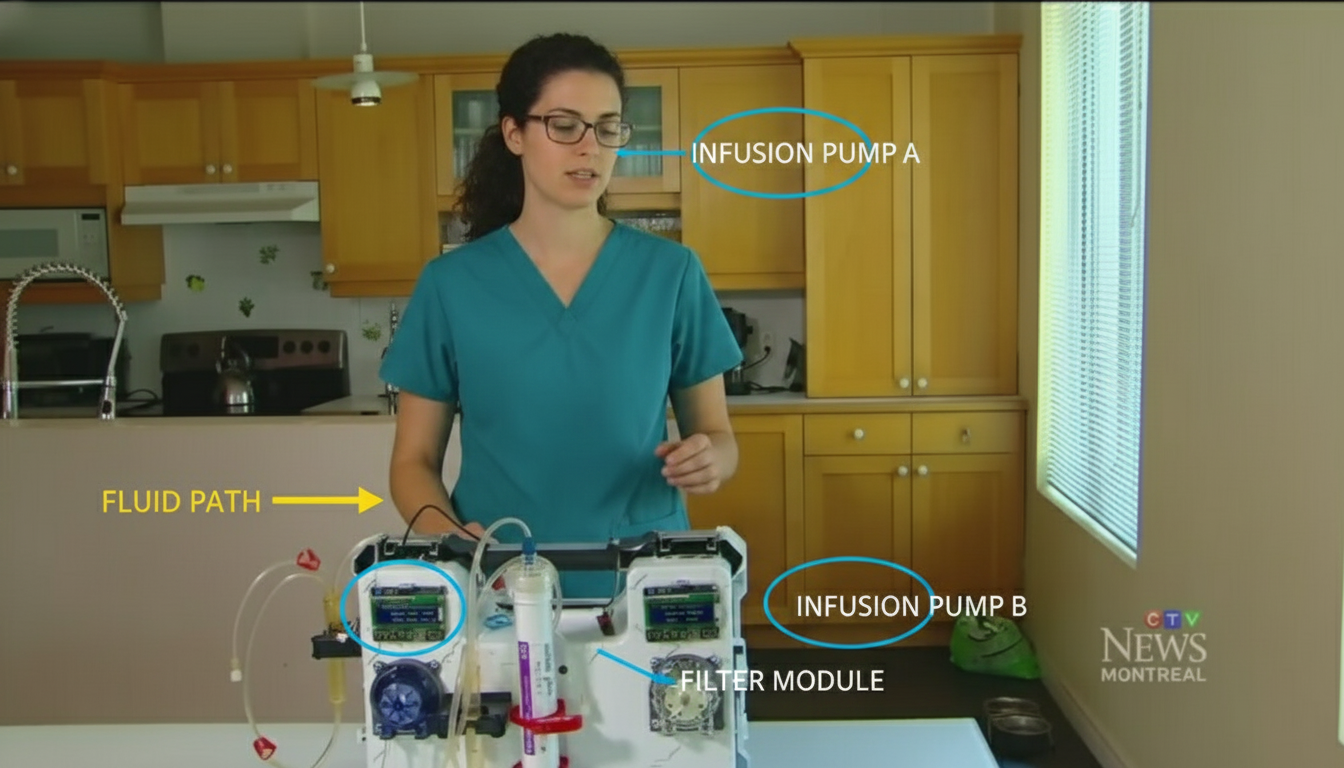
Anya Pogharian didn’t kick off her journey with a fancy lab coat or some elite medical degree. Nah. Her groundbreaking idea sprang from good old-fashioned reading, relentless research, and a keen eye for patterns that everyone else seemed to just shrug and accept. While diving deep into kidney disease and the clunky existing machines, she spotted something truly bizarre. Most systems, she noticed, used similar core science, yet hardly any of them bothered to focus on being both affordable AND portable at the same time. That ‘aha!’ moment, that simple observation, totally reshaped her entire approach. She demanded the device be compact. She insisted it be simple. And perhaps, most crucially, she wanted it cheap enough to actually make a damn difference. Her audacious goal was to strip dialysis down to its absolute essentials, without, of course, ever cutting corners on safety. The result? A conceptual design for a portable dialysis machine that could potentially be churned out for around $500. That number alone made people stop dead in their tracks, especially in a field where machines routinely cost tens of thousands of dollars. Mind. Blown.
Why Cost Changes Everything
Let’s talk cold, hard cash. Dialysis is expensive in ways most people never even fathom. Clinics need massive buildings, an army of trained staff, constant monitoring, and endless maintenance. Patients, bless their hearts, are utterly dependent on shaky insurance or public healthcare systems just to survive. In countless countries, those systems are either fragile as glass or entirely non-existent. So, a low-cost option? That changes the whole damn game. Even if it never completely replaces clinic dialysis, it could be a literal lifeline, supporting patients between their forced visits. It could also bring life-saving dialysis treatment closer to communities that don’t have big, shiny hospitals. And here’s another kicker: lower cost sparks experimentation. Cheaper devices are easier to test, tweak, and improve. That kind of agile flexibility is often missing from traditional medical equipment, where the sky-high price tag alone suffocates any real healthcare innovation. Because of all this, Anya’s idea didn’t just stand out because of her young age; it screamed for attention because of the revolutionary thinking it represented.
Recognition That Traveled Far
Once Anya unveiled her work at those science competitions, the spotlight hit her fast and hard. Judges, even the stuffy ones, instantly saw that her idea wasn’t just some pipe dream; it tackled a real, undeniable medical need. Before you knew it, media outlets were scrambling to share her story. It wasn’t long before her tale busted out of Canada and started reaching audiences hungry for news on healthcare access and the incredible power of youth-led innovation. What really stood out, though, was the sheer integrity of the tone. This project wasn’t being hawked as some finished, ready-to-buy product. Instead, it was presented honestly: a promising idea, still in its early stages of development. Let’s be honest, far too many young inventors get slapped with the ‘overnight success story’ label. But in Anya’s case, the focus stayed exactly where it should: on raw potential, relentless learning, and the grind of long-term effort. Respect.
Anya Pogharian. Image Credit: CTV Montreal
How Portability Changes Daily Life
Portability might sound like some dry technical spec, but for patients, it’s deeply, profoundly personal. Imagine this: a machine that actually moves with YOU. That changes everything about how treatment fits into your everyday existence. Instead of your entire life being a slave to dialysis, suddenly, dialysis starts fitting around YOUR life. A smaller system could slash travel time, giving precious hours back. It could empower patients to actually stick to their dialysis treatment schedules, making them feel less like a burden. It might even ease the crushing mental weight that comes with constant, suffocating dependency. While Anya’s design was still conceptual, it perfectly aligned with a massive, undeniable shift happening in medicine. More and more care is busting out of sterile hospitals and moving right into people’s homes. Devices are shrinking, becoming smarter, and putting power back into the hands of those who need it most. It’s not just a machine; it’s a ticket to freedom.
So, there you have it. A story of ingenuity, defiance, and a young mind that dared to challenge the status quo. This isn’t just about a machine; it’s about hope, accessibility, and the relentless pursuit of a better life for millions. Keep an eye on the future, because with minds like Anya’s, the game is definitely changing. Want to dive deeper into more groundbreaking healthcare innovations? Stick around and explore more articles right here on our site!